

As imported electric vehicles such as Tesla have made strong gains in the domestic auto market, damage insurers are facing deepening concerns. The worry stems from the fact that the rapid adoption of popular models like the Tesla Model Y could push up auto insurance loss ratios.
According to the Korea Insurance Development Institute (KIDI) on the 17th, the number of insured electric vehicles (valid contracts as of year-end) rose nearly fivefold, from 182,957 in 2021 to 911,797 in the first half of this year. Their share of all vehicles enrolled in auto insurance (24,787,295 units) also increased from 0.8% to 3.7%.
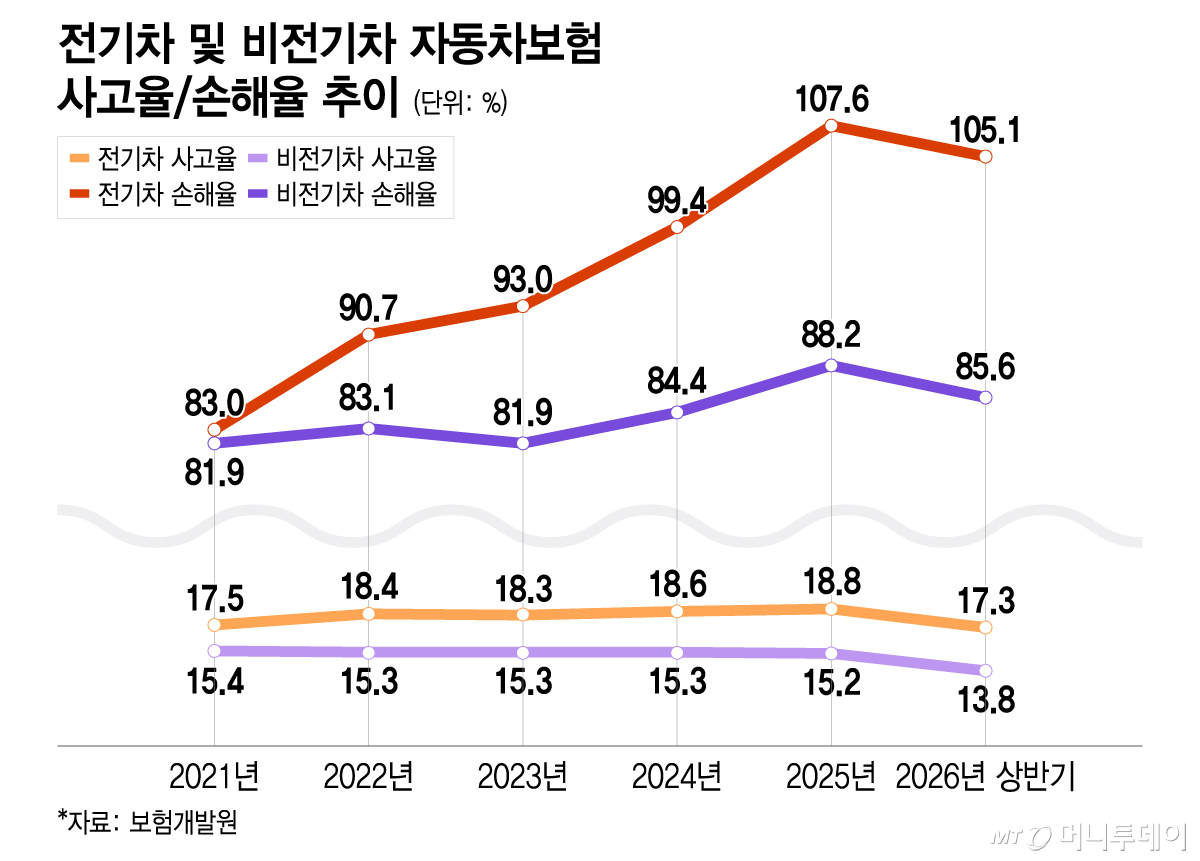
However, for insurers, the expanding market share of electric vehicles is not entirely welcome news. This is because loss ratios for electric vehicles are typically higher than those for non-electric vehicles. Last year, the loss ratio for electric vehicles (including loss adjustment expenses) was 107.6%, which was 19.4 percentage points (P) higher than that of non-electric vehicles (88.2%). A loss ratio exceeding 100% means that the insurance payouts and accident handling costs exceeded the premiums collected. In 2021, the loss ratios were nearly identical at 83.0% for electric vehicles and 81.9% for non-electric vehicles, but the gap has widened steadily since then. In the first half of this year as well, the loss ratio for electric vehicles stood at 105.1%, significantly higher than that of non-electric vehicles (85.6%).
KIDI cites high parts costs and longer driving distances leading to greater accident exposure as reasons for the high loss ratios of electric vehicles. It is estimated that electric vehicles are driven for longer distances because they have lower fuel costs per trip compared to internal combustion engine vehicles. In fact, last year's annualized accident rate was 18.8% for electric vehicles, higher than the 15.2% for non-electric vehicles. This means that not only do repairs cost more for the same type of accident, but accidents themselves occur more frequently.
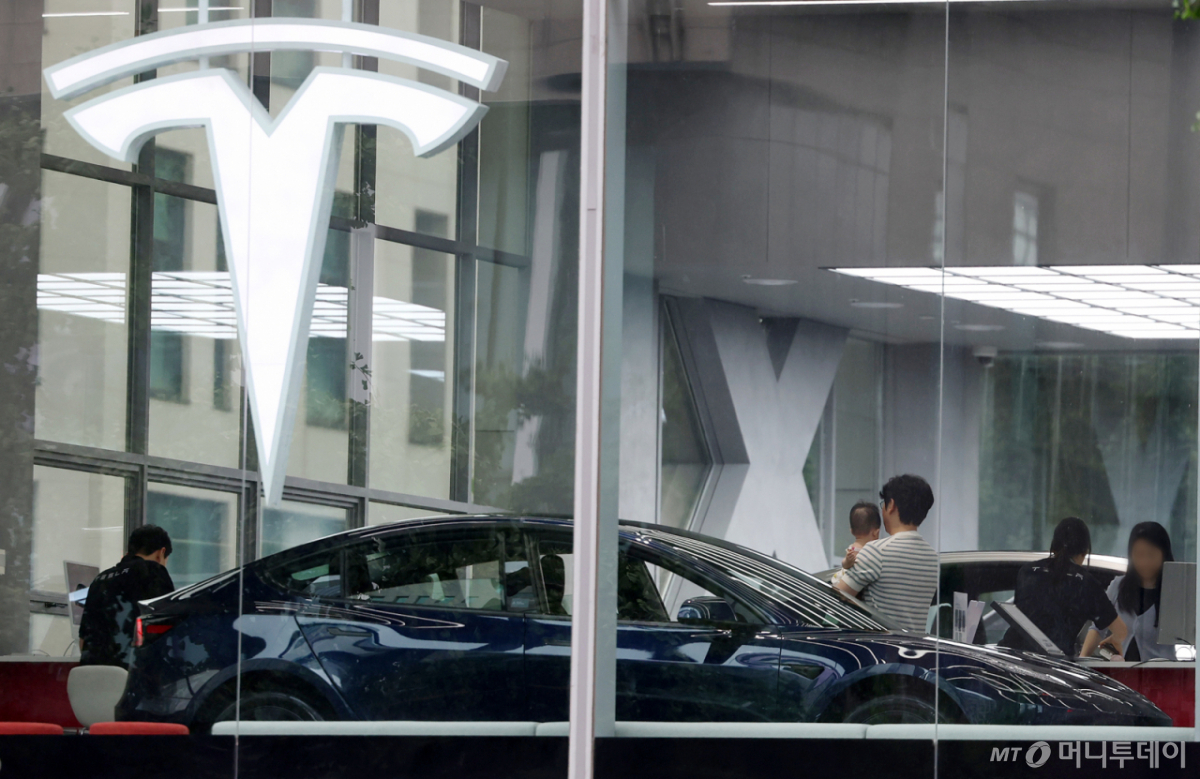
Additionally, the industry views the recent explosive increase in Tesla sales as a factor affecting loss ratios. Last year, 59,916 Teslas were registered in Korea, more than double the 29,750 units from the previous year. This year, 89,148 new Teslas were registered last month alone, already far exceeding the total sales volume of the entire previous year. Generally, imported cars have longer replacement periods due to parts procurement and incur higher repair costs compared to domestically produced cars.
On the other hand, insurance premiums are trending downward. The average premium per electric vehicle was 869,054 won last year, which is 19% more expensive than non-electric vehicles (728,227 won). However, this figure is lower than the 935,801 won in 2021 and dropped further to 856,617 won in the first half of this year.
While raising premiums is the easiest way to lower loss ratios, it is realistically a heavy burden. Moreover, in an atmosphere encouraging the adoption of electric vehicles, it is difficult for insurers to significantly increase insurance premiums for electric vehicles.
Chun Ji-yeon, a research fellow at the Insurance Research Institute, stated, "Overall, the accident rate for electric vehicles is high, so their loss ratio inevitably remains higher." She added, "To lower the loss ratio, premiums must be raised, but increasing electric vehicle insurance premiums could cause problems for the adoption of electric vehicles themselves, making it realistically difficult to raise them."
However, if the high loss ratios for electric vehicles persist, there is a high possibility that auto insurance premiums will increase slightly upon renewal in the future. Damage insurers adjust premiums based on KIDI statistics for vehicle models with higher accident rates and other factors.
A senior official at a major damage insurer explained, "Auto insurance premiums are determined based on KIDI statistics every year upon renewal." The official added, "If the loss ratio for a specific vehicle model is high, it is unavoidable that all insurers will reflect this in setting premiums for that model upon renewal."

 in FINANCE

