

The logistics industry is expanding AI (artificial intelligence), once used for safety management and dispatch, into robotics. Having built achievements through video analysis and data processing, companies are now deploying robots that physically pick up and move items, as well as trucks that drive roads autonomously, in actual operational sites. Results such as reduced accident rates and higher automated dispatch success rates are also being confirmed numerically.
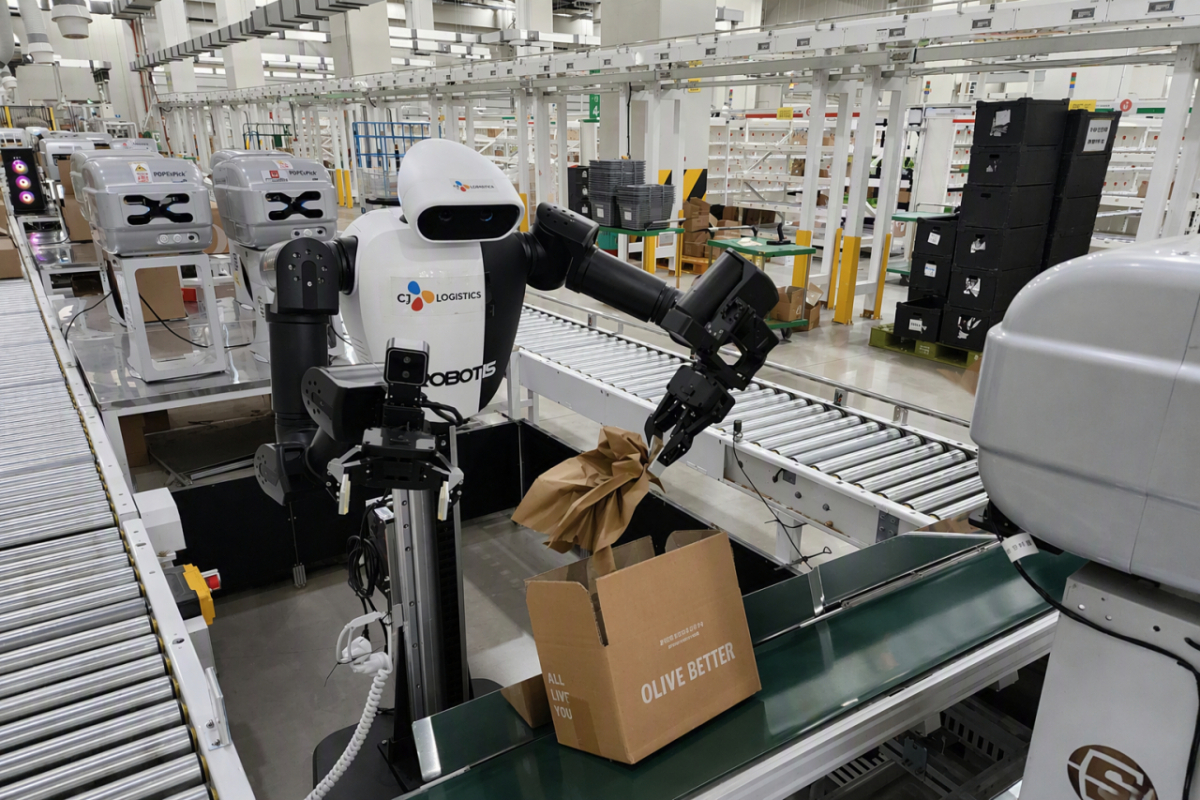
According to relevant industry sources on the 14th, CJ Logistics deployed two humanoid (human-shaped) dual-arm robots at its Olive Young logistics center in Yangji, Yongin, Gyeonggi Province, earlier this month to participate in product packaging operations. The robots are tasked with placing cushioning materials inside boxes. This marks the first case of applying humanoids to an operational site handling actual customer volumes, following last year's demonstration at the Gunpo fulfillment center. CJ plans to expand the robots' scope of work to include picking, sorting, and inspection in the future.
Safety management and dispatching are now also powered by AI. As of July, CJ Logistics had installed AI-powered closed-circuit television (CCTV) systems capable of detecting anomalies such as "workers collapsing" at 22 facilities, while expanding the number of sites under automated control by its integrated safety management organization, EHS Situation Room, to 57 locations. For Middle Mile's transportation platform, "The Carrier," which had over 7,000 clients and approximately 70,000 drivers as of late June, AI analysis of freight rates, driving history, and route-specific demand has boosted the success rate of automated dispatching from below 50% initially to over 80% recently. In addition, CJ Logistics has formed a "Logistics AI Alliance" with Robotics, Aiden Robotics, Real World, and other partners.
The logistics industry is accelerating AI adoption to simultaneously improve on-site efficiency and safety. Processes like sorting, which involve repeating fixed sequences, have already been automated using stationary equipment such as conveyors, while easily reconfigurable AMRs (autonomous mobile robots) or movable equipment have filled the gaps. However, tasks involving picking and packaging items of varying sizes and shapes still rely heavily on human hands. At the same time, the scope of application is expanding, including equipping robots with AI capable of reading situations and making decisions to take on more tasks.
Hanjin has achieved results in safety management. Since late July, it has deployed 'AI Safety Guardian', a system that analyzes CCTV footage in real time to detect unauthorized conveyor crossing and failure to wear safety helmets, at over 20 terminals in the Seoul metropolitan area and peripheral regions including Chungcheong and Gangwon provinces. When a hazardous situation is detected, the system alerts workers via flashing lights and voice messages and sends text notifications to supervisors. Terminals that adopted this system reported approximately a 60% reduction in major risky behaviors compared to before implementation.
Hanjin also applied an AI-based load prediction system at its Daejeon Mega Hub to anticipate the end times of loading and unloading for trunk vehicles, thereby reducing waiting times for the next vehicle's docking. The chatbot serving delivery customers has been completely restructured from a rule-based Q&A system to 'HanJini', an generative AI-powered assistant, enabling users to inquire conversationally.
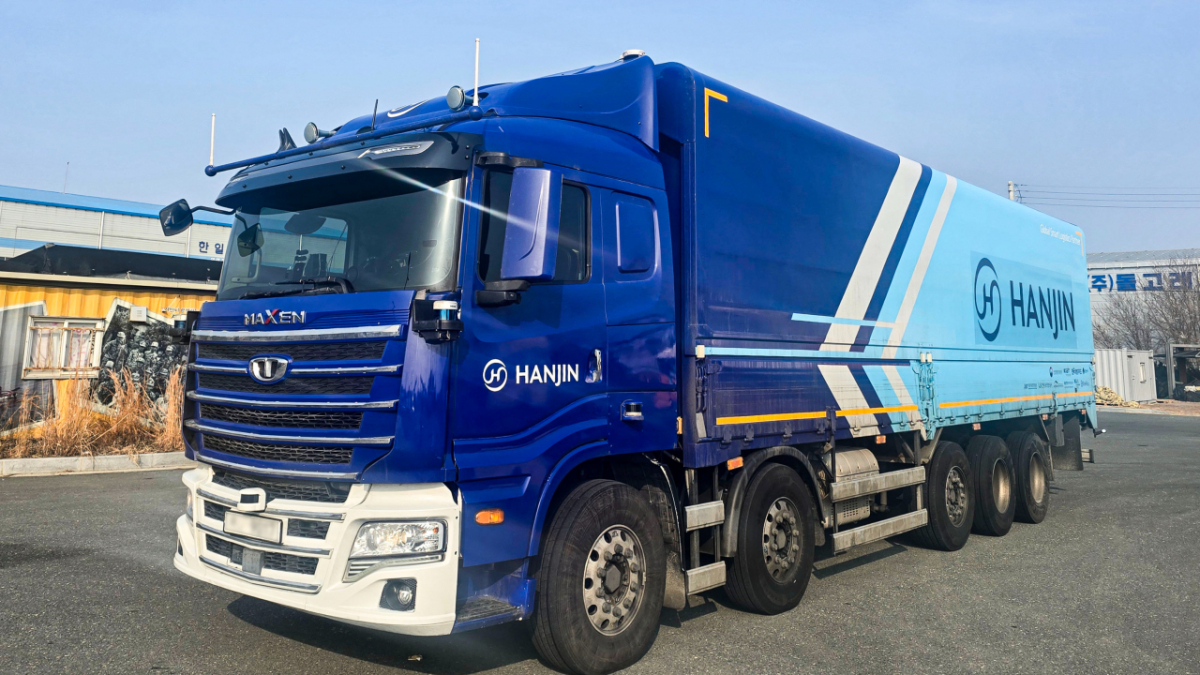
Autonomous driving has been introduced at the transport stage. In July, for the first time in Korea, a 5-ton trunk truck began paid autonomous transport services, operating three times weekly on an 118-kilometer route from Gunsan Port in Jeollabuk-do to Daejeon Mega Hub via Jeonju Express Terminal. Additionally, the company has focused on building internal capabilities, with employees completing AI training totaling 2,329 hours in the first half of this year.
An industry executive stated, "AI adoption has moved beyond demonstrations showcasing technology or pilot tests confirming possibilities," adding, "Humanoids are now transitioning to actively performing roles within actual logistics operations."

 in INDUSTRY

