

With South Korea's large-scale investment in the United States imminent, the wire and cable sector is emerging as a key beneficiary alongside nuclear power and gas generation equipment. Among domestic wire and cable companies, only Gaon Cable operates a power cable production plant in the U.S., positioning it as the primary beneficiary of expanded U.S. investments.
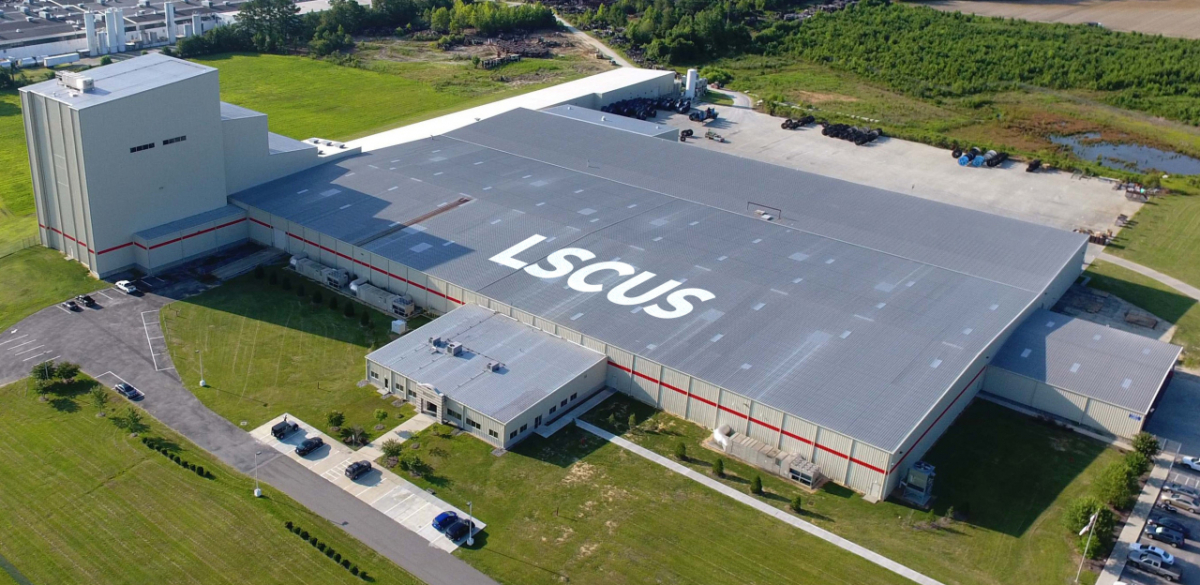
According to industry sources on Tuesday, Gaon Cable is investing an additional $50 million in its U.S. subsidiary LSCUS to more than double local power cable production capacity. LSCUS currently produces power cables in Tarboro, North Carolina. Gaon Cable is the only domestic wire and cable company with a power cable manufacturing plant in the United States.
By producing locally, Gaon Cable has reduced tariff and logistics burdens while improving delivery schedules and supply stability. The growth trajectory of its U.S. business is also steep. LSCUS, which recorded approximately 470 billion won in sales last year, is expected to see this year's sales double. Growth is being driven by expanded supply of power cables for U.S. solar power plants and AI data centers, as well as bus ducts.
As investment in power generation facilities accelerates, investment in transmission and distribution networks that deliver generated electricity to data centers and industrial facilities is also expected to rise alongside nuclear and gas generation equipment. The more power sources such as solar, nuclear, and gas expand, the greater the demand for power cables becomes. This explains why Gaon Cable, with its local production plant, is anticipated to benefit significantly.
Gaon currently supplies URD (Underground Residential Distribution) cables for underground distribution at U.S. solar power plants. As solar power plant expansion accelerates, the volume of supplied cables is increasing rapidly. Exports from Gaon's headquarters to the U.S. for AI data center and solar power grid cables are projected to rise from approximately 100 billion won last year to around 200 billion won this year.
AI data centers represent a new growth axis. The company is supplying distribution cables not only for global big tech companies' data center power grids but also for self-generation projects that supply power to AI data centers. LSCUS's bus duct sales are expected to surge from several hundred billion won last year to the scale of several trillion won this year.
The spread of AI data centers is simultaneously promoting investment in both power generation facilities and transmission/distribution networks. Based on its U.S. production base, Gaonis expanding its business across the entire power infrastructure chain—from URD cables for solar power plants to cables for power plants and transmission/distribution networks, and bus ducts within data centers—spanning "power generation → transmission/distribution → AI data centers."
The expansion of U.S. operations is driving Gaon's performance growth. Consolidated sales for the first half of this year reached 1.633 trillion won, a 27.3% increase compared to the same period last year. Operating profit rose 41.8% to 64 billion won, marking the highest semi-annual record in company history.
A securities industry official stated, "U.S. investment in nuclear and gas generation facilities is highly likely to lead to follow-on investments in transmission and distribution networks," adding, "Gaon Cable should be closely watched as a representative beneficiary of expanded U.S. power infrastructure investment."

 in INDUSTRY
