

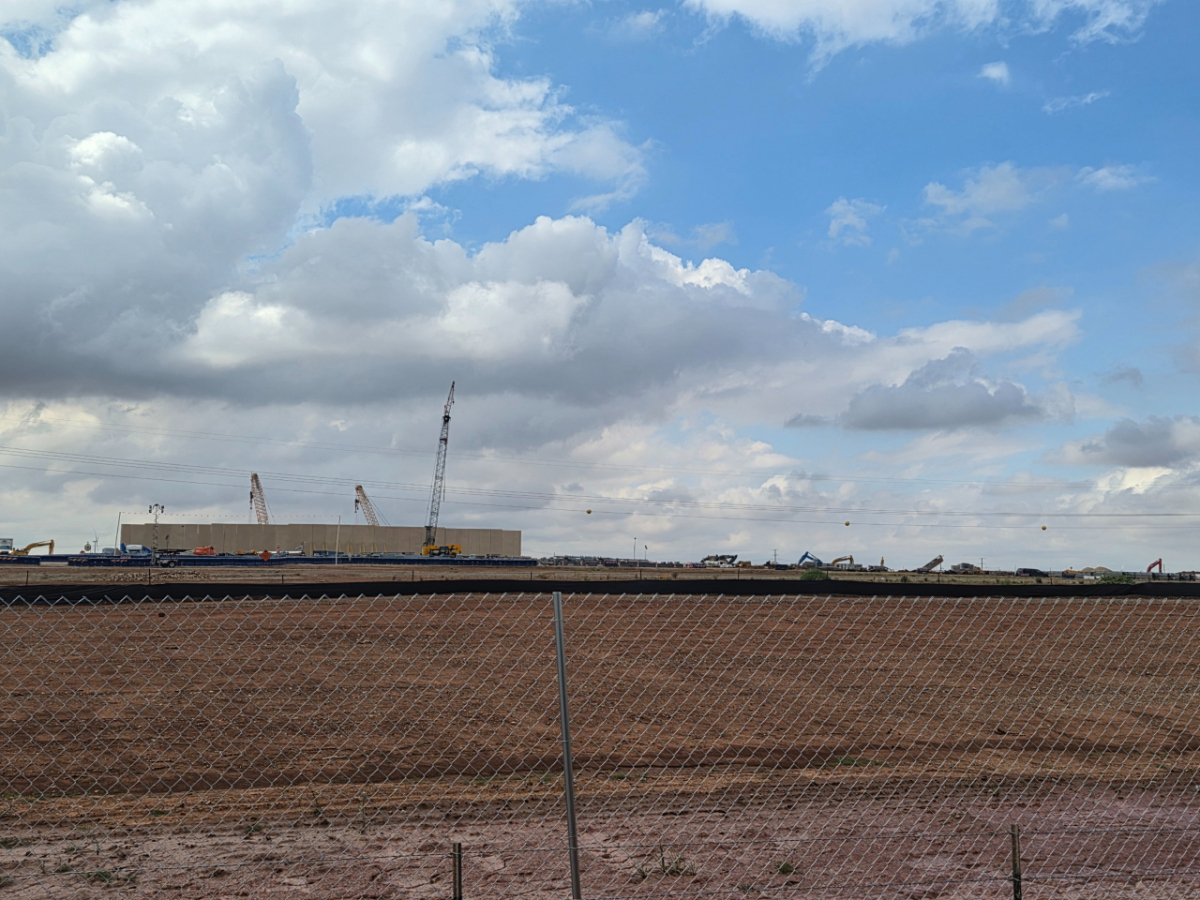
Haskell County, located approximately 340 kilometers west of Dallas, Texas. The area embodied the typical landscape of West Texas, with a plain of yellowish-brown pastures and cotton fields stretching to the horizon.
After driving for a long time on an uninhabited rural road, the silence was suddenly broken by heavy machinery and a line of large trucks kicking up red dust. This is the site where Google's large-scale artificial intelligence (AI) data center campus is being built.
The construction site of Google's Thelma data center, visited on the 3rd (local time), was situated amidst vast farmland around nearby Stamford Lake. Even though it was Saturday, countless aggregate transport trucks came and went without pause, and a scene of foundation work being carried out busily was captured through the dust.
In the same county area, about a 20-minute drive from here, construction on Google's Journey data center was in full swing. At the site visited on the 2nd, the day before, buildings with their steel frames being erected were clearly visible from the roadside.
According to data from the Texas Department of Licensing and Regulation (TDLR), the registered area of the two buildings at the Thelma data center reaches approximately 58,500 square meters. The combined area of the two buildings at the Journey data center is approximately 46,100 square meters. These are massive scales equivalent to 8.2 and 6.4 soccer fields, respectively.
Google Building Data Centers Next to Large-Scale Solar Power and BESS
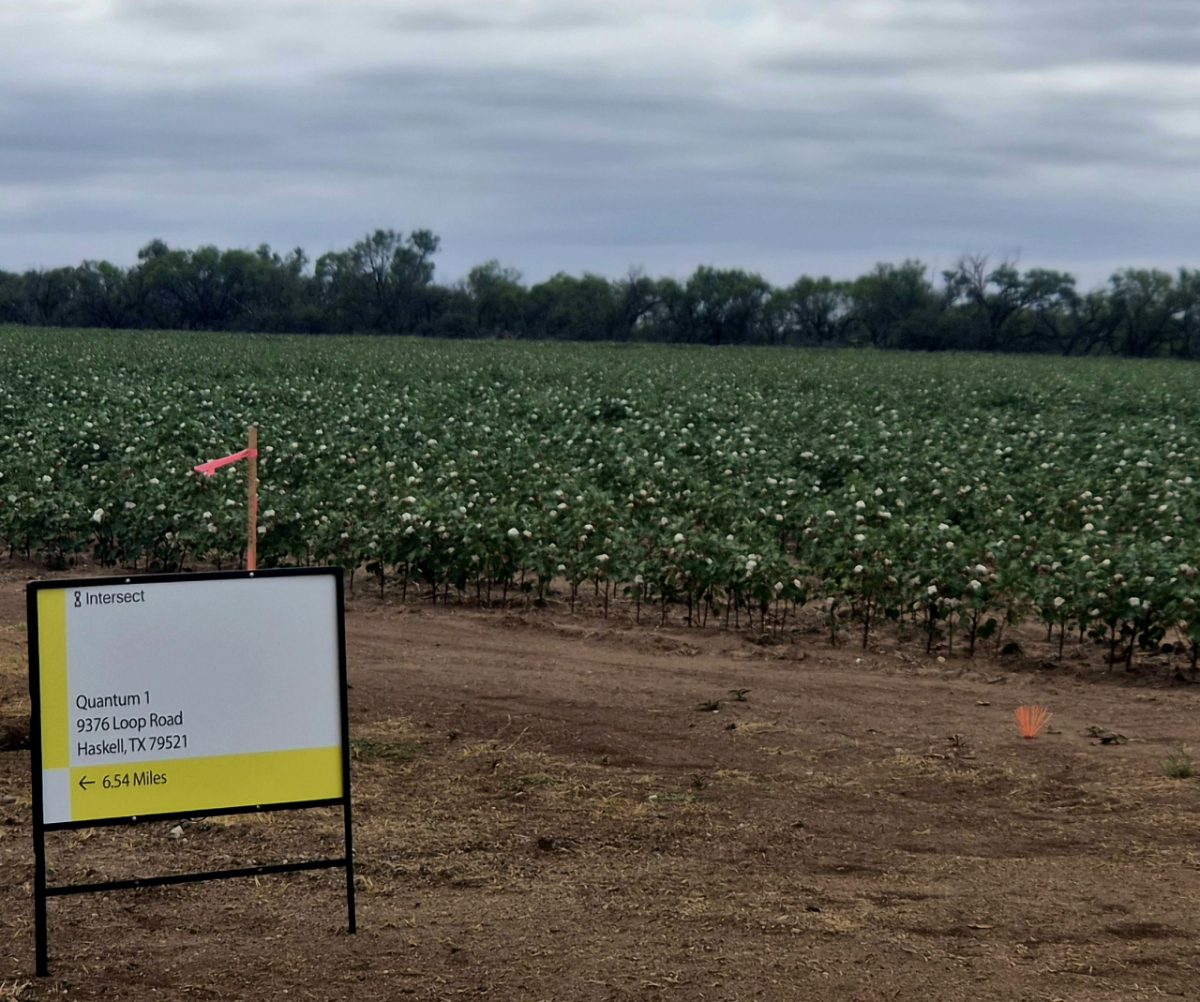
What particularly caught the eye at both sites was the solar power generation facility and energy storage system (ESS) widely spread near the data center Gong (President). At the entrance of the cotton field road leading to the Thelma data center construction site, a sign announcing Intersect's solar power and battery energy storage system (BESS) project, 'Quantum 1,' appeared first.
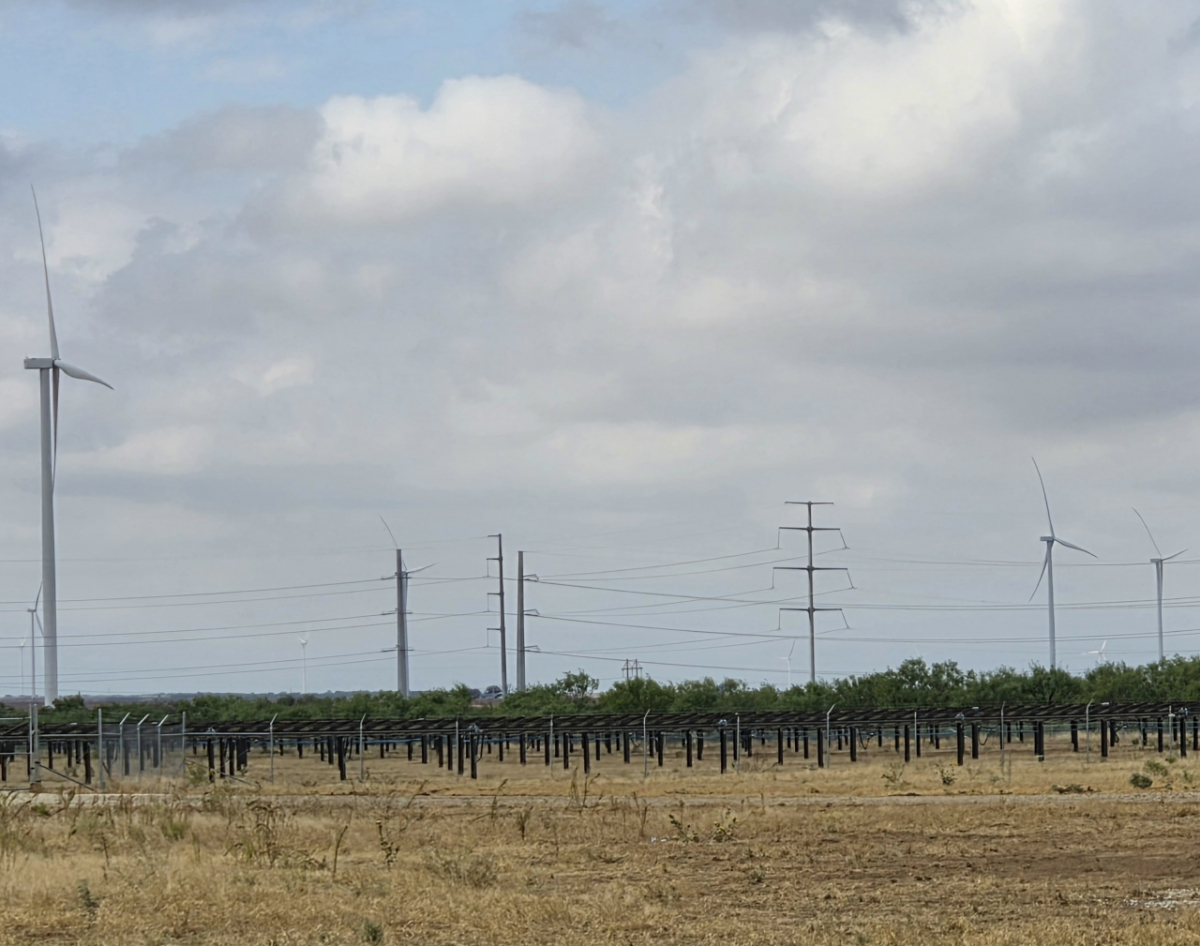
Another vast solar power generation facility was revealed near the Journey construction site as well. The total scale of the Quantum 1 and 2 projects disclosed by Intersect reaches a solar capacity of 640 megawatts (MW) and a BESS storage capacity of 1.3 gigawatt-hours (GWh). This is a scale capable of producing the electricity used in households by approximately 270,000 people in Texas for one year, while the battery storage capacity equals the daily power usage of approximately 100,000 residents.
This massive solar and battery complex, which began full commercial operation this year, is a key testing ground for what Google calls its data center "Power-first" strategy. It involves bundling new renewable energy generation sources and ESS near the data center site to develop them together. By developing power generation facilities and power-consuming facilities like data centers together as a single industrial complex, preparations for the power supply needed for data center operation are carried out simultaneously.
The U.S. energy policy think tank Energy Innovation presents the "energy park" model—one that bundles clean power generation sources, storage devices, and power-consuming facilities like data centers in adjacent locations to develop them as a single flexible demand—as one of the models for responding to increasing data center power demand, similar to Google's Haskell case.
The energy park connects both the generation/storage complex and the data center to the grid at a single point of interconnection. By developing generation, storage, and consumption facilities together and sharing power equipment such as transformers, companies can secure the necessary power more quickly while reducing costs. When there is surplus electricity nearby, it can be used or stored, thereby alleviating the burden on the grid. In particular, the core is that data centers reduce their maximum power draw (peak load) from the external grid by using electricity generated by solar power and stored in ESS. This prevents an increase in local load, allowing data centers to receive grid interconnection approval more quickly.
Recently in the U.S., attempts to build dedicated off-grid (a method of producing and consuming power on-site without connecting to the external grid) gas generation for data centers to avoid grid interconnection delays are increasing. However, this carries the burden of having to build its own backup power and fuel networks, as well as risks related to carbon emissions and environmental regulations. On the other hand, developing clean energy and storage devices alongside data centers can be an alternative that reduces the burden on local grids while connecting to the grid, thereby advancing data center operation schedules. This method also prevents electricity rate increases because it does not increase regional peak load.
Local Communities Also Friendly to Power-Supplying Data Centers
To develop data centers in this manner, Google signed a partnership with Intersect and TPG Rise Climate in December 2024. Subsequently, its parent company Alphabet completed the acquisition of Intersect in March this year. Big tech has directly embraced an energy developer to ensure stable power supply and demand.
What Google attempted in Haskell was one of the responses to expanding supply and cost burdens due to increased power demand, but it effectively became a proactive response to policy trends strengthening the direct power supply responsibility of data center operators.
The fact that data center operators are jointly pursuing the securing of new generation sources becomes an important consideration for local communities and authorities in accepting data centers. One of the concerns of local communities surrounding the construction of large-scale data centers is the increase in residents' electricity rates due to rising power demand.
Haskell Mayor Christina Isbell emphasized in an interview with MoneyToday, "When we first began communicating with Google last year, they revealed a plan to self-generate the electricity supplied to the local grid," adding, "We believe that residents' electricity rates should not go up, so from the community's perspective, this point is very important in accepting data centers."
"Data Centers Should Be Responsible Grid Members"
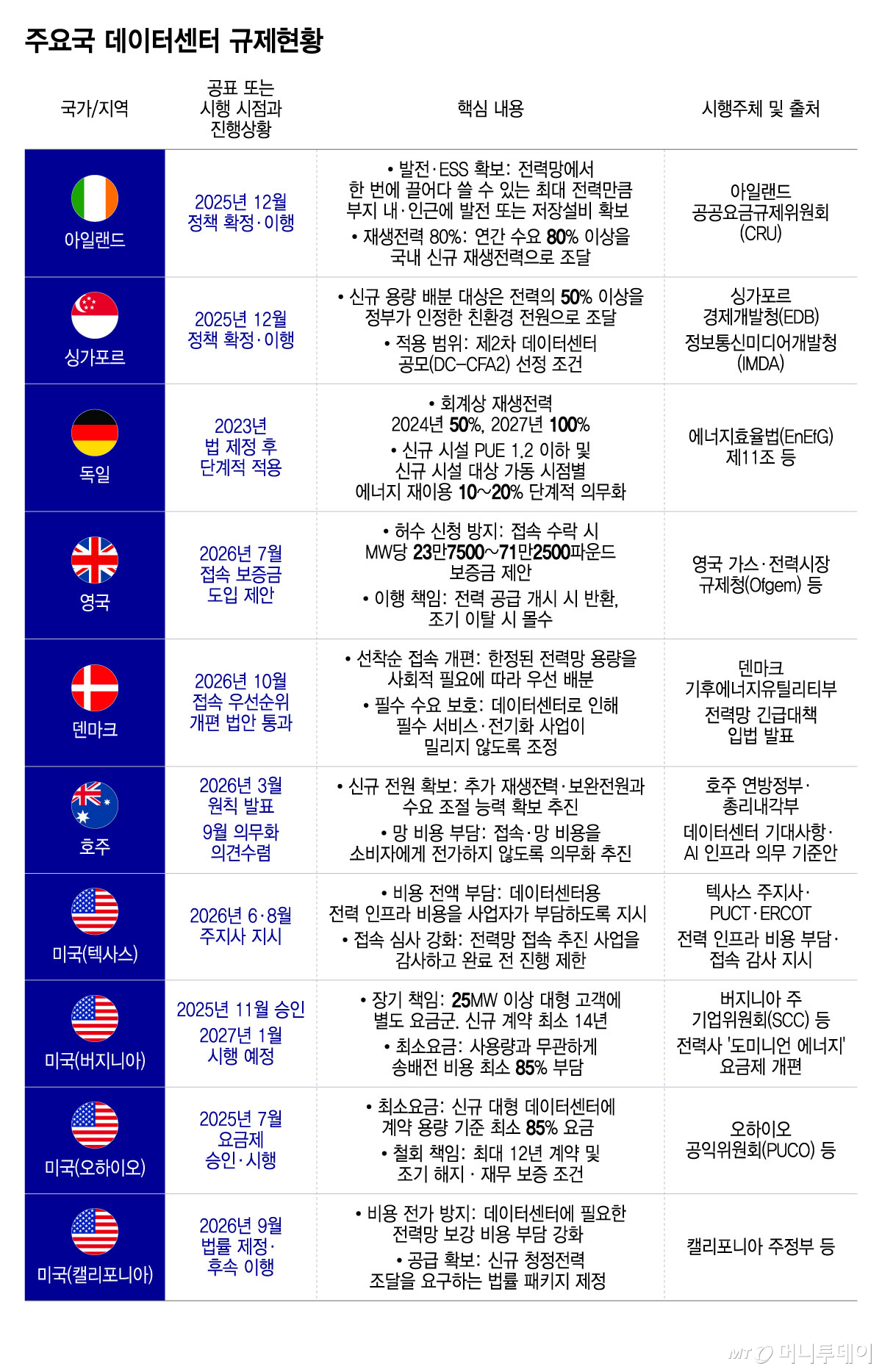
In fact, as the question of who will bear the cost of expanding power infrastructure for data centers has emerged as a political and policy issue, systems strengthening operators' cost burdens are increasing simultaneously worldwide.
Notably, even Texas, which has actively attracted data center investment, is trending toward strengthening data center operator responsibility and grid interconnection management. Texas Governor Greg Abbott instructed the state regulatory institutional investor in June to have operators bear the full cost of power infrastructure needed for data centers.
In the same month, the Texas Public Utility Commission approved ERCOT's "Batch Zero" procedure, which bundles and reviews interconnection applications from large-scale power demand sources such as data centers. This method involves evaluating the impact of multiple projects on the grid together and identifying necessary transmission line reinforcements.
Following this, Governor Abbott last month ordered a suspension of state environmental agency permits related to data centers until audits regarding grid and water resource impacts are completed. The intent is to manage things so that data center expansion does not lead to increased electricity rates for existing consumers or water burdens on local communities.
Experts also suggest that data centers' responsibility toward the grid should be strengthened commensurate with their scale expansion. Daniel Cohen, a civil and environmental Gyeong Gong-hak-gwa (Prof.) at Rice University in the U.S., who has researched energy transition and grid reliability in Texas, stated to MoneyToday, "Data centers must bear all costs for transmission lines built to supply power to their facilities and pay electricity rates at market prices without subsidies."
Thomas Spencer, Senior Energy Analyst at the International Energy Agency (IEA), also said in a written interview with MoneyToday, "Governments should prioritize establishing policy frameworks that allow data centers to be integrated into the grid in a stable and sustainable manner," adding, "We must seek ways for data centers to become responsible members of the power grid."
*This planned reporting was supported by the Korea Journalists Association and Climate Media Hub.

 in INDUSTRY


