

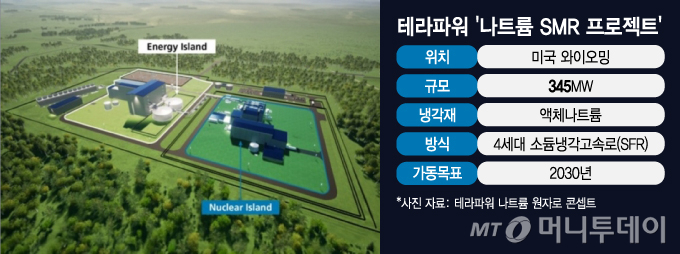
“Small modular reactors (SMRs) themselves hold significant value in the energy mix and represent a valuable new market. We must not simply wait until the first commercial unit project is completed in the United States.”
Yoo Hyung-geun, team leader of the Energy Solutions Business Division at SK Innovation, said this during an appearance on the YouTube channel “Park Jeong-ho (Prof.)’s Yeouido Mentions” on the 7th of last month. He added, “When the SMR business comes within sight, we will need to steadily build out a commercialization pipeline.”
SK Innovation has been actively investing in related businesses since it and SK Inc. jointly invested a total of $250 million in Terrapower, an SMR company founded by Bill Gates, in 2022, becoming the second-largest shareholder. Terrapower plans to complete a fourth-generation Natrium (sodium) SMR in Wyoming, United States, by 2030, and Team Leader Yoo emphasized the need to prepare for that milestone. SK and Terrapower plan to comprehensively review global regulatory, industrial, and power grid conditions, and based on this, progressively refine the direction of “K-Natrium,” a Korean-style sodium SMR business model.
Yoo explained, “In the United States, large-scale power demand that did not previously exist is emerging from AI (artificial intelligence) data centers and other sources.” He noted, “AI data centers have high power demands, but loads can drop suddenly, so it is important to have power that can follow these fluctuations.” He added, “SK Innovation began reviewing the business in 2021 after recognizing the potential of SMRs,” stating, “We viewed SMRs as a power source equipped with zero-carbon emissions, base-load generation capability, load-following response, and safety.”
Regarding tasks that must be prepared before the SMR business becomes tangible, he argued, “It is important to continuously build an initial pipeline of about 10 units so that teams with successful experience in commercial reactors can move on to subsequent projects, reduce costs, improve the business, and ensure sustainability.”
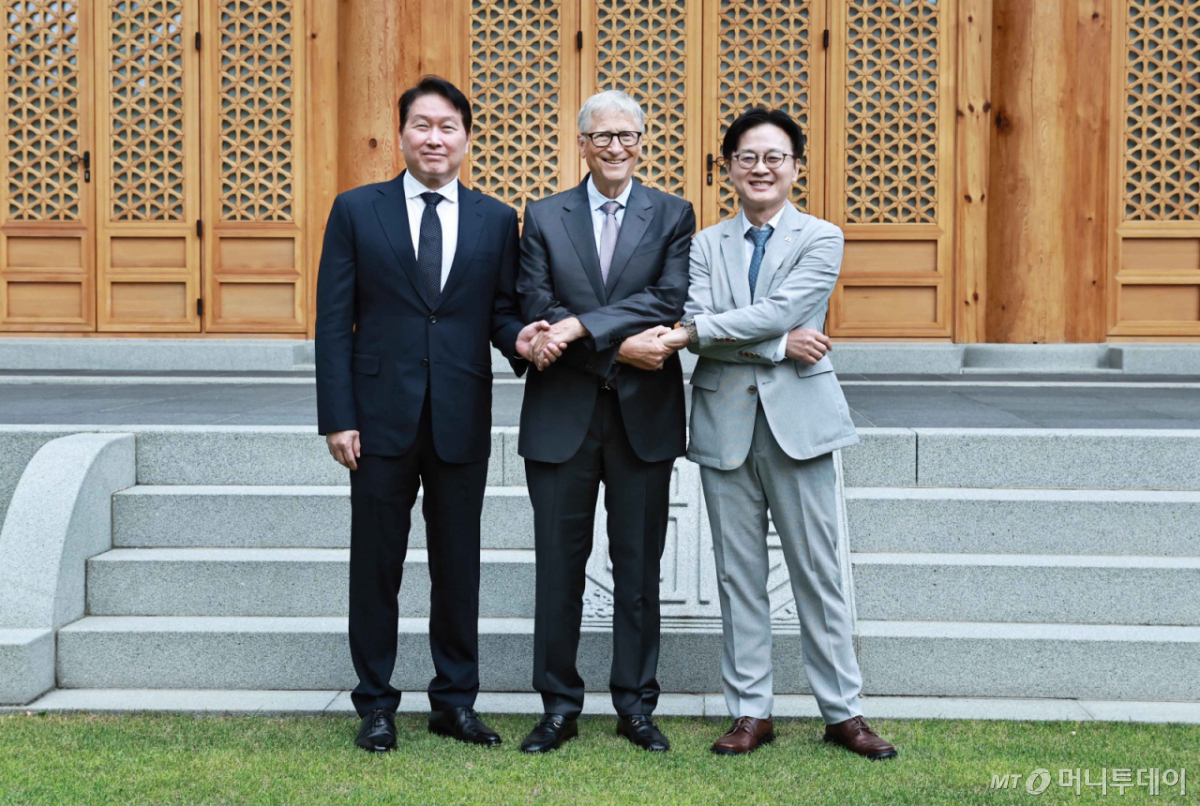
Yoo stated, “In the case of SK Innovation, we have our existing petrochemical industry, as well as the LNG (liquefied natural gas) business being pursued by SK Innovation E&S.” He revealed, “For SMRs, we are considering a business model similar to LNG power generation. We intend to operate the business in the position of a private power generator for SMRs.”
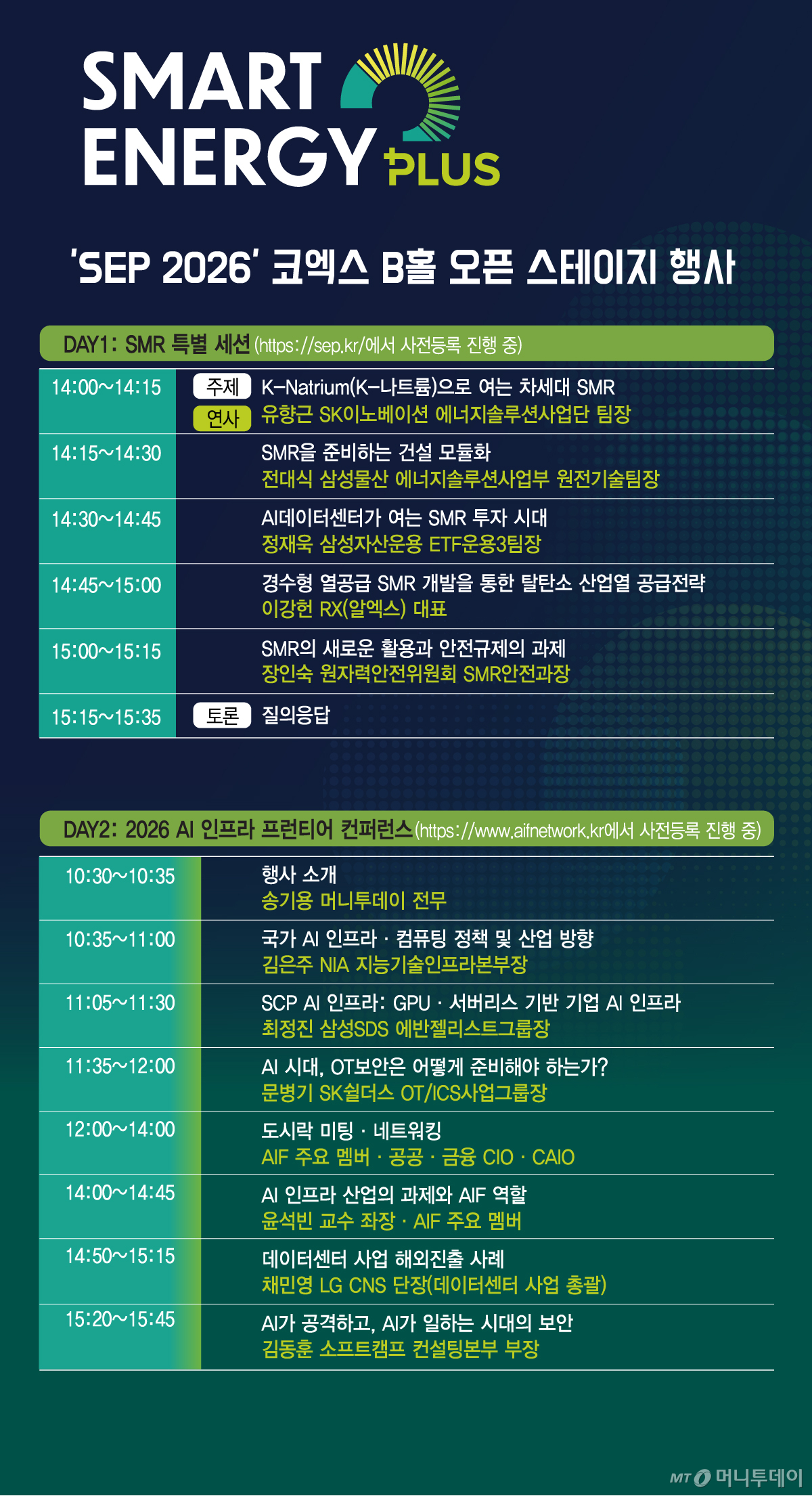
Yoo’s perspective on the SMR business can be seen at the “Open Stage” of “Smart Energy Plus (SEP) 2026,” which will be held on the 28th at Hall B of COEX in Samsung-dong, Seoul. In a special SMR session starting at 2 p.m. that day, Team Leader Yoo will deliver a presentation titled “Opening the Next-Generation SMR with K-Natrium.”
In addition, △ Jeon Dae-sik, Won Jeon-gi-sul (Team Lead) of the Energy Solutions Business Division at Samsung C&T, will discuss “Construction Modularization for SMRs”; △ Jung Jae-wook, head of the ETF Management 3 Team at Samsung Asset Management, will cover “The Era of SMR Investment Opened by AI Data Centers”; △ Lee Kang-heon, CEO of RX, will address “Decarbonized Industrial Heat Supply Strategy through Development of Light Water Reactor Heat Supply SMRs”; and △ Jang In-sook, head of the SMR Safety Division at the Nuclear Safety and Security Commission, will explain “New Applications of SMRs and Challenges in Safety Regulation.”
This event brings together figures from business planning, construction, investment, venture capital, and government sectors surrounding SMRs. Pre-registration on the “SEP 2026” homepage allows attendees to listen to the special SMR session for free.
Meanwhile, “SEP 2026” will be held at Hall B of COEX from the 28th to the 30th. This year’s themes are “Energy Transformation in the AI Era” and “Energy Security Amid Rapidly Changing International Conditions.” A Land Forces Energy Policy Forum will begin at 1 p.m. on the 28th. From the 29th to the 30th, senior executives from Samsung Electronics, SK Hynix, Hyundai Motor, LG Electronics, POSCO, Bright Energy Partners, LG Energy Solution, Samsung SDI, SK On, HD Hyundai Electric, and OCI Power will deliver lectures.
The three-day exhibition will feature booths from companies including LG Group, HD Hyundai Electric, Doosan Enerbility, and Yuneec, as well as institutional investors such as the Land Forces, Seoul City, Korea Atomic Energy Research Institute, Korea Machinery Research Institute, Korea Institute of Energy Technology, Electronics and Telecommunications Research Institute, Korea Chemical Research Institute, Korea Research Institute of Standards and Science, Korea Institute of Geoscience and Mineral Resources, Korea Construction Technology Institute, and the Technology Guarantee Fund.
In a separately designated mobility zone, visitors can check the competitiveness of electric and hydrogen vehicles from Hyundai Motor, BMW, Mercedes-Benz, Audi, Porsche, and Polestar. For Hyundai Rotem, a space will be set up where visitors can experience a hydrogen fuel cell tram through VR (virtual reality).

 in INDUSTRY


