

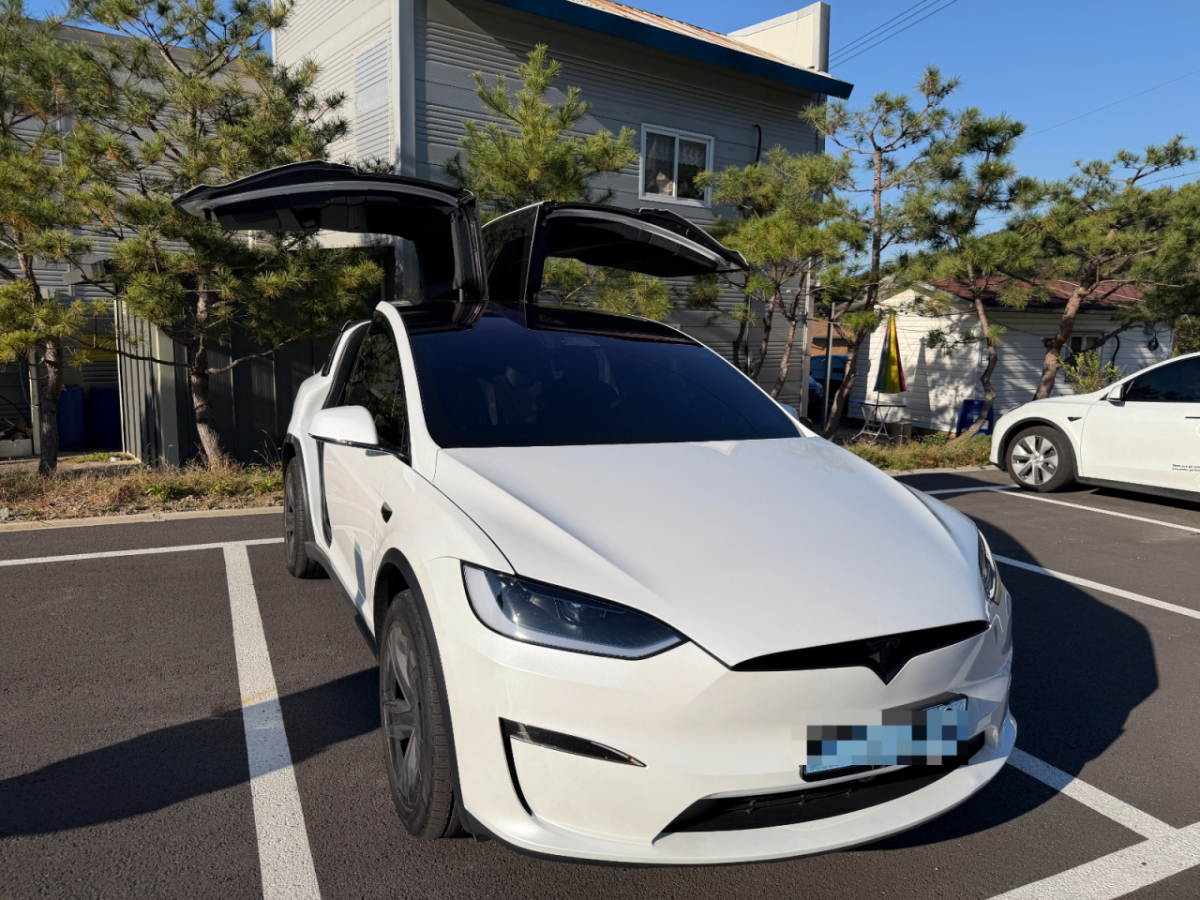
The Tesla, which had skillfully navigated complex intersections and construction zones, hesitated like a novice driver at a congested highway exit. The sight of it traveling all the way to the end of the fork without changing lanes in advance evoked so-called "reckless driving." Ultimately, the driver had to take over steering directly.
On the 22nd, I drove Tesla's large electric SUV (Sport Utility Vehicle), the Model X, for a round trip of approximately 220 km from Seoul Gwanghwamun to Geumwang Rest Area in Eumseong County, Chungcheongbuk-do. This test drive focused on examining FSD, which Tesla promotes as its core technology, and its actual road-handling capabilities.

When I activated FSD from a stopped position, the vehicle began moving naturally toward the navigation destination. It adjusted its speed to match the movements of surrounding vehicles and changed lanes. In particular, it was impressive how it drove naturally while avoiding surrounding vehicles and obstacles even in areas with complex road structures, such as intersections and construction zones. I felt that it represented a step forward from existing driving assistance features that simply follow the car ahead or maintain the lane.
It was also convenient that the FSD function did not turn off even when the driver pressed the accelerator pedal. When I pressed the accelerator while FSD was active, the vehicle changed lanes on its own to overtake the car in front. It moved as if it had judged that the driver wanted to overtake.
The problem arose in sections with heavy traffic volume. In particular, its limitations were prominent at highway exits. Even when it needed to exit toward its destination, the vehicle failed to secure a lane in advance. It only attempted to change lanes after getting close to the exit and could not find a gap to merge into when vehicles were crowded. Lane changes became even more difficult when traffic congestion caused vehicles to stop.
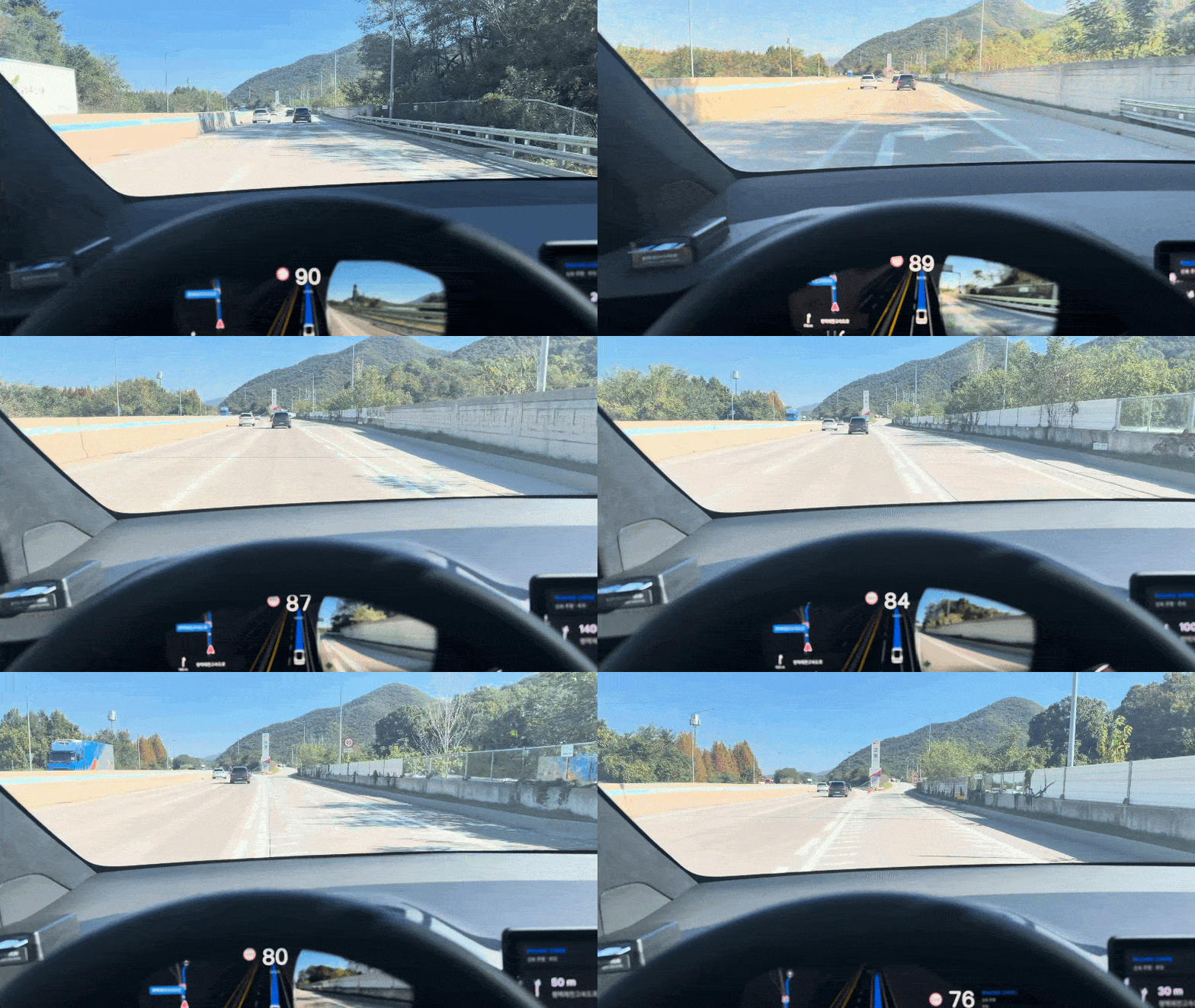
During this process, situations where the vehicle traveled all the way to the end of the fork were repeated. The driver had no choice but to change lanes directly in order to exit normally toward the destination. There was a difference compared to human driving, which secures an exit lane with ample room by considering the flow of other vehicles. It also seemed that attempting to merge only at the very end of the exit ramp could be perceived as so-called "reckless driving" by other drivers. In particular, the vehicle body shook violently during the driver's intervention process.
The response to bus-only lanes was also disappointing. When traffic congestion occurred, FSD showed movements attempting to enter the relatively smooth bus-only lane on multiple occasions. Ultimately, the driver had to check the lane and respond. Movements that did not sufficiently consider lane boundaries were observed even in sections marked with double solid lines. It raised questions about how accurately it reflects detailed traffic rules and lane markings on domestic roads.
The driver monitoring function for safety operated relatively strictly. When I failed to properly respond to the forward-attention warning, FSD was deactivated, and it could not be used again until the vehicle was completely stopped and switched to Park (P) mode. Tesla defines such a situation as a "strikeout." Depending on the vehicle configuration, if strikes accumulate three or five times, FSD use is restricted for one week.
The vehicle's control methods were also likely to divide opinions. In particular, operating the turn signals was inconvenient. Instead of a standard lever, it operates via touch buttons on the steering wheel, and there were situations where the button had to be pressed again to turn off the turn signal. It may improve with familiarity, but from the perspective of someone driving for the first time, it was not intuitive and was inconvenient.
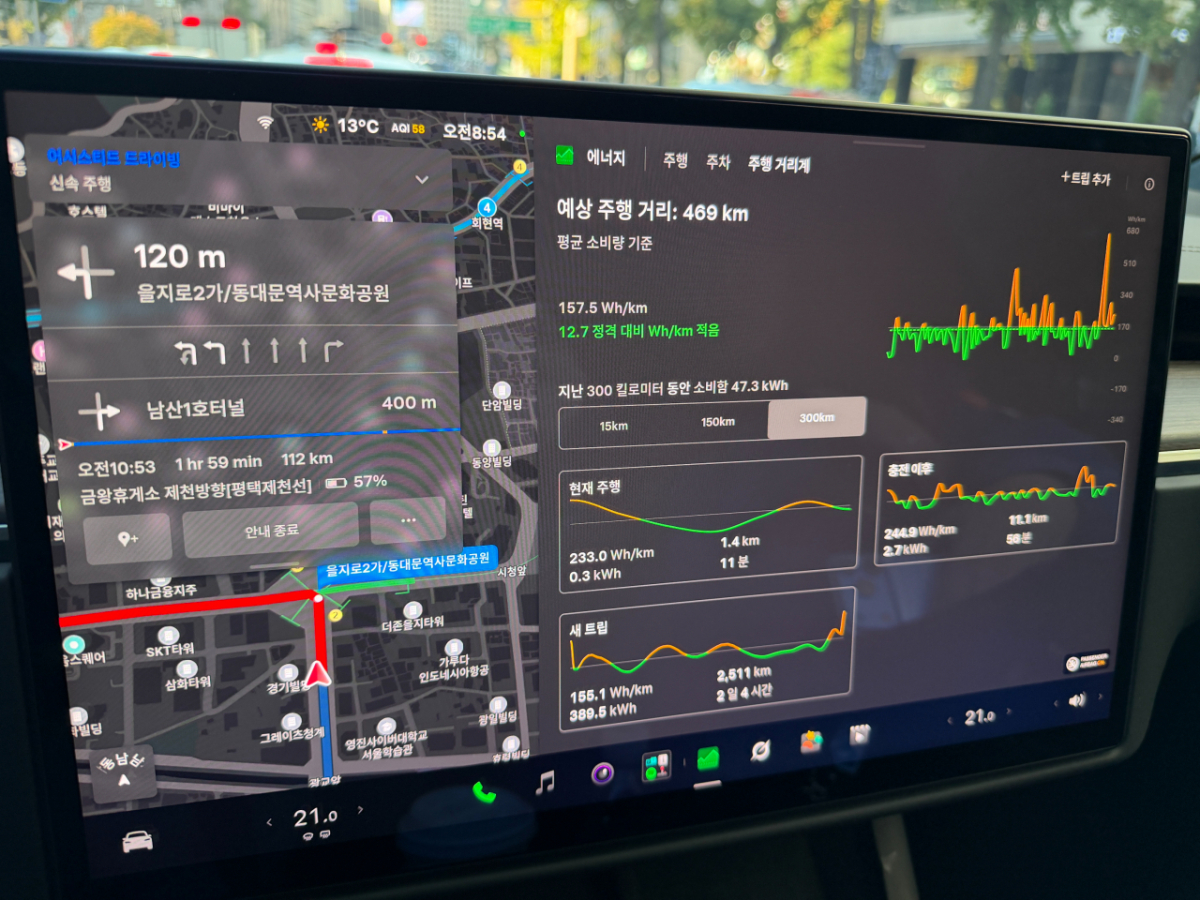
On the other hand, the artificial intelligence (AI) voice assistant "Grok" exceeded expectations. It accurately understood voice commands, and changing the destination while driving was convenient. Its utility was high in that navigation could be set verbally without complex screen operations. However, it was not yet possible to control detailed vehicle functions through Grok.
The performance of the Model X itself was also excellent. The dual-motor all-wheel drive model has a maximum output of 670 horsepower and reaches 100 km/h from a standstill in 3.9 seconds. The Plaid model has a maximum output of 1,020 horsepower, with an acceleration time to 100 km/h of just 2.6 seconds. When I pressed the accelerator pedal on a clear stretch of road, the speed increased rapidly despite the large vehicle body. However, in terms of ride comfort, I still felt it was inferior to competing models in the same class.
The FSD experienced during this test drive was certainly a technology that greatly reduces the driver's burden. The experience of setting only the destination and having the vehicle drive on its own for a significant portion was impressive. However, at complex merging sections and highway exits, human judgment and intervention were required. While driving convenience has increased, it is certain that it is not yet at a stage where the steering wheel can be completely entrusted to the system.

 in INDUSTRY


