

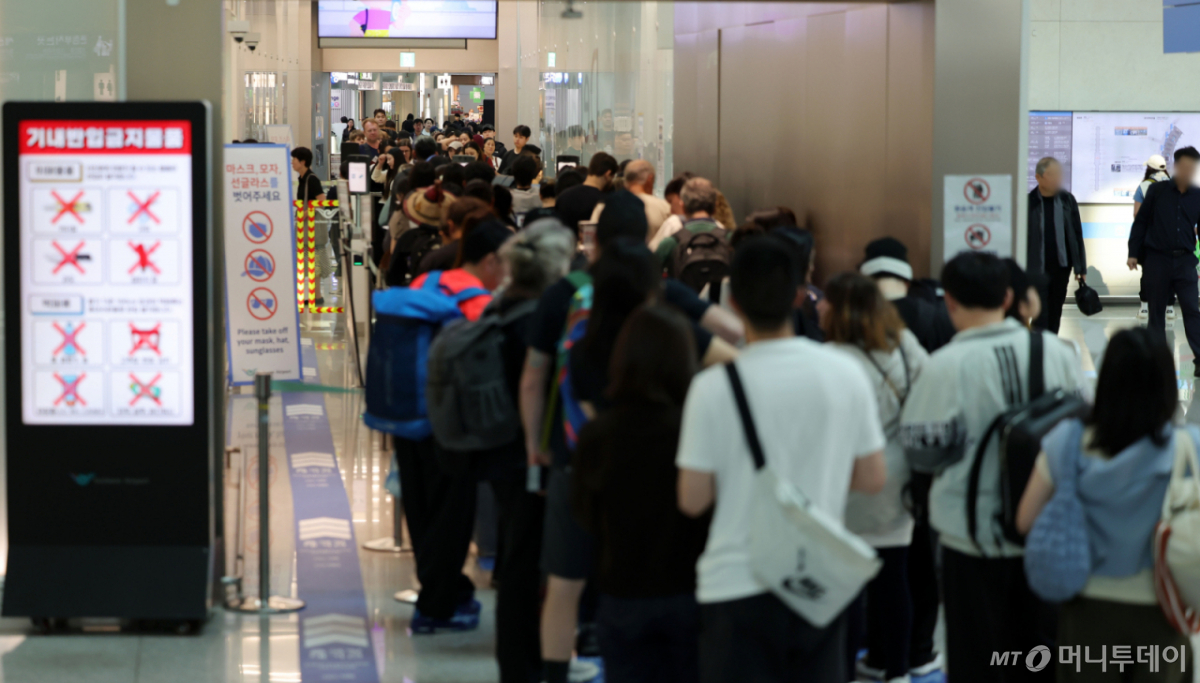
International air passenger numbers increased by 10% year-on-year last month, but excluding routes to Japan and China, they actually declined. While routes to these two countries grew thanks to the weak yen and China's visa-free policy, major Southeast Asian routes and Guam and Saipan continued to struggle. The gap between markets is widening as factors such as reduced price competitiveness at previously popular destinations and aging tourism facilities converge.
According to the Ministry of Land, Infrastructure and Transport's aviation information portal on the 9th, international passengers last month totaled 9,073,655, a 10% increase from the same period last year. Passengers on Japan routes numbered 2,945,694, up 23.6%, while China saw 1,892,610 passengers, a 23% increase. The combined share of these two countries rose by 5.8 percentage points to 53.3% this year, from 47.6% last year.
In contrast, passenger numbers on routes to 10 Southeast Asian countries, including Vietnam, Thailand, and the Philippines, totaled 1,775,959, a decrease of 10.6%. Vietnam saw a 9.8% drop to 769,682 passengers, Thailand fell by 22.1% to 285,029, and the Philippines declined by 11.3% to 267,394. With the slump in major Southeast Asian routes overlapping, passenger numbers on all other routes excluding Japan and China decreased by 2% to 4,235,351.
Industry officials believe that as tourism infrastructure in Southeast Asia develops, local prices have also risen, weakening the advantage of enjoying vacations at low cost, which has led to a decline in passenger numbers. Even Vietnam, which had been popular as a family destination for couples with infants or multi-generational trips, is seeing demand shrink due to rising travel costs and boredom from repeat visits.
In particular, Guam and Saipan are experiencing sharp drops in passenger numbers, compounded by aging tourism facilities. Passenger numbers on Guam routes fell 43.6% year-on-year to 40,453, while Saipan plummeted 68.5% to just 4,800. Combined passengers for the two regions dropped 48% to 45,253, nearly halving. These destinations had been popular for offering travel to U.S. territories at close range, but tourism infrastructure investment has shrunk since the onset of the pandemic.
Meanwhile, Japan's popularity is further increasing due to reduced local travel costs from the weak yen and accessibility that allows for short trips. The fact that there were two three-day holidays around Chuseok (Harvest Moon Festival) and Hangul Day last month also contributed. Additionally, industry officials report that shopping demand ahead of changes to the duty-free system may have had some impact. Starting on the 1st of this month, travelers departing Japan must go through customs inspection to receive tax refunds.
For China, demand for travel by Koreans to China and visits by Chinese to Korea has been joined by transit demand. As visa-free policies lower barriers to entry, group tours and demand from travelers heading to the Americas or Europe via Korea from China have supported route performance. If supply expands not only from domestic airlines but also from Chinese carriers, tourism demand is expected to increase further through fare competition.
An industry official said, "Southeast Asia has lost its cost-effectiveness due to rising local prices, and Guam and Saipan are no longer as attractive due to aging tourism facilities." The official added, "In contrast, Japan's strengths are the weak yen and accessibility for short trips, while China is seeing increased passengers as tourism and transit demand add to the benefits of its visa-free policy."

 in INDUSTRY
