

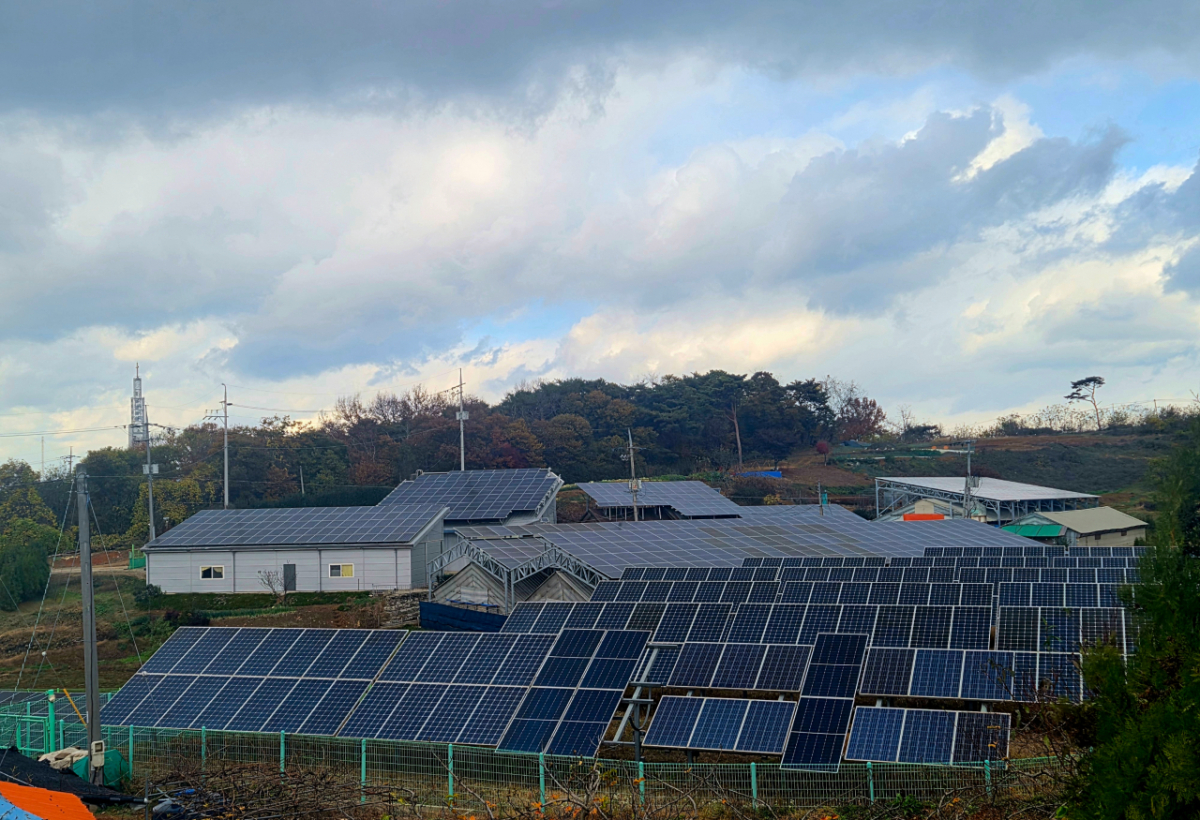
"Opposition? We had absolutely none."
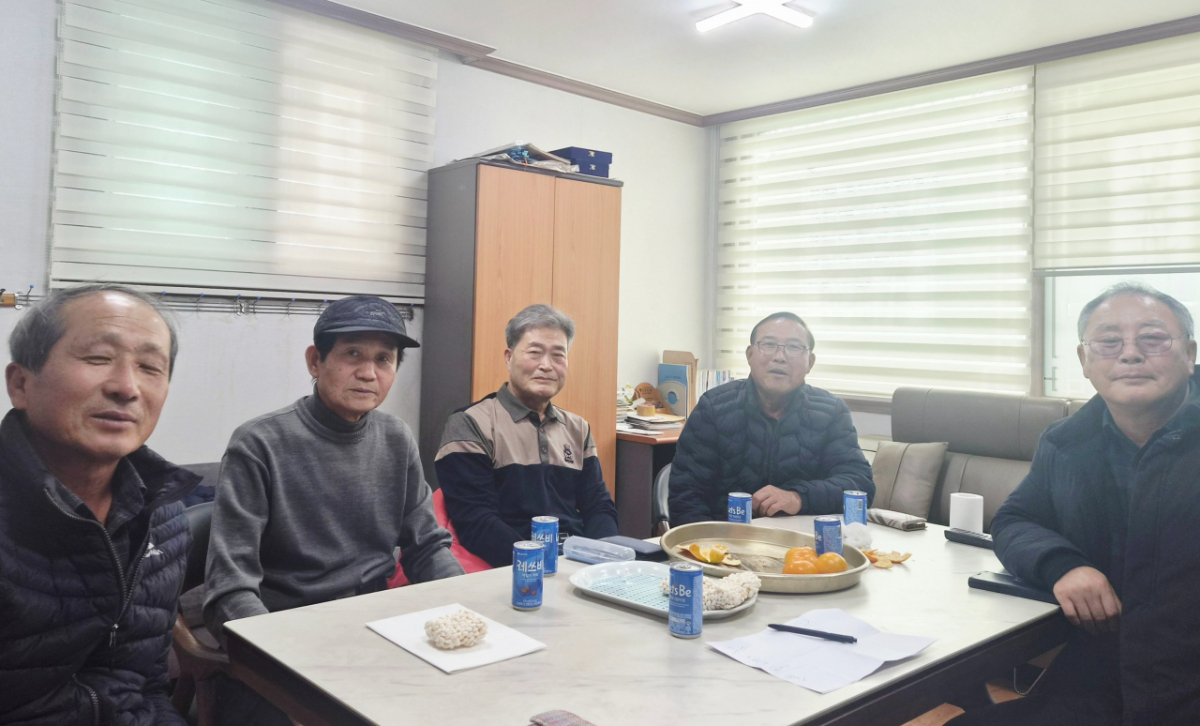
The answer from former village head Cho Byung-guk (72), whom we met at the Samhwa 3-ri Village Hall in Seokmun-myeon, Dangjin City, Chungcheongnam-do on the 19th, was clear. It was his response to the question of how many opposition complaints had been received when building a solar power plant in the village. Hwang Seong-ryeol, Executive Director of the Chungcheongnam Environmental Movement Federation, who grew up in the same village, also introduced it as "a village with no solar power complaints."
The village has built and is operating five solar power plants, units 1 through 5, totaling approximately 270kW (kilowatts), utilizing forest land, village warehouse roofs, and other areas. This was achieved by residents of Samhwa 3-ri taking the lead in establishing a Renewable Energy Cooperative.
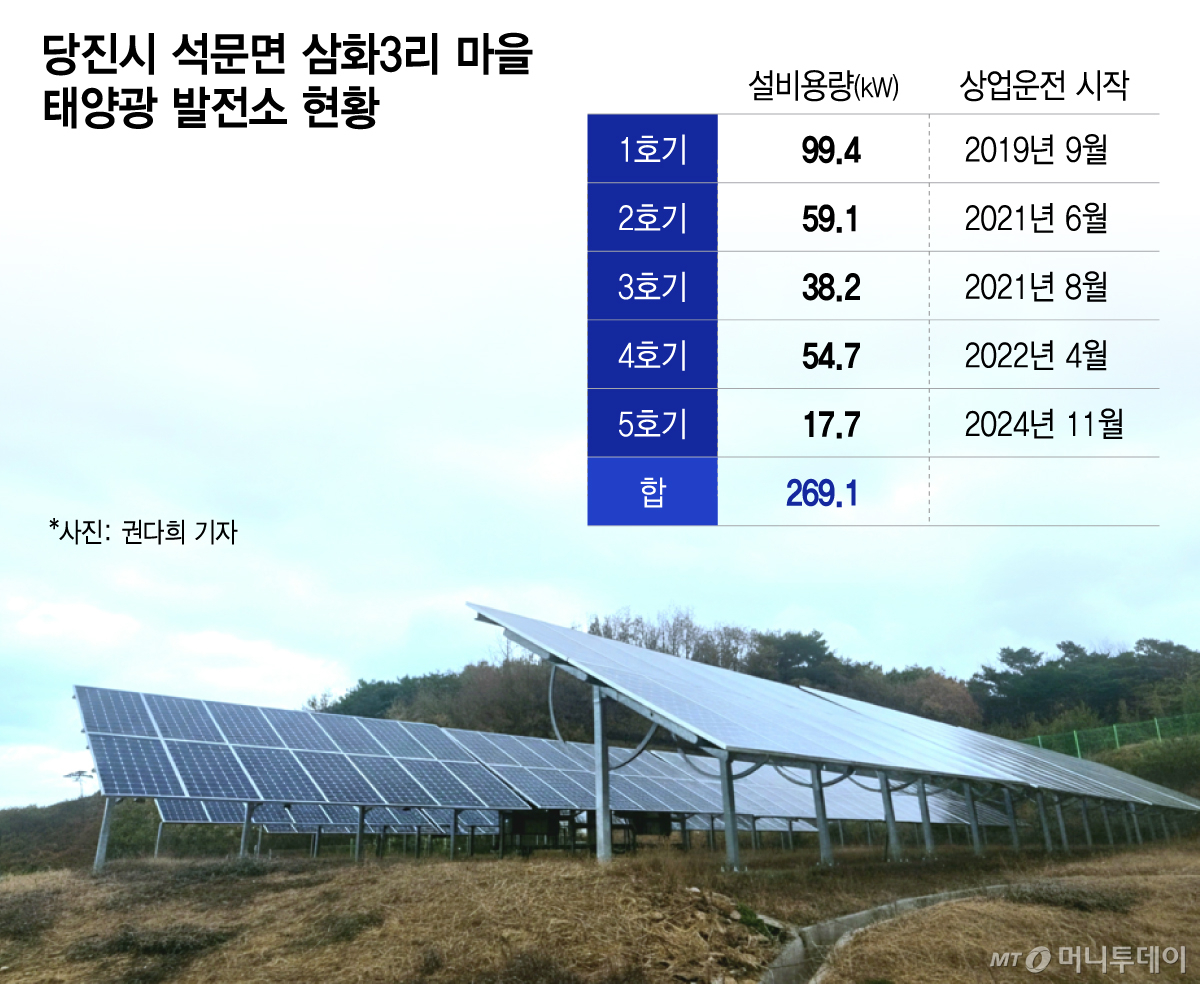
Solar Power Started with Coal Power Plant Regional Subsidies
The seed money used by Samhwa 3-ri to build its village solar power plant paradoxically originated from a coal power plant. Seokmun-myeon is home to the Dangjin Thermal Power Plant operated by Korea East-West Power. Areas within a 5km radius of the generator receive subsidies under the "Act on Support for Areas Surrounding Power Plants." The process involves the village formulating a project plan, submitting it to Dangjin City, and executing it after review.
Other villages typically used this money to buy farmland or buildings to earn rental income. Samhwa 3-ri initially intended to buy farmland, but plans changed when Cho Byung-guk, who was the village head at the time, proposed starting a solar power generation business.
Having worked at Dangjin Thermal for 18 years, he had taken an interest in solar power generation before his retirement and had experience installing solar panels on private land near his own home first. He had firsthand experience with the fact that once installed, one signs a 20-year contract with Korea Electric Power Corporation, eliminating concerns about sales channels, and that no separate management personnel are required, making it a suitable business for aging rural areas.
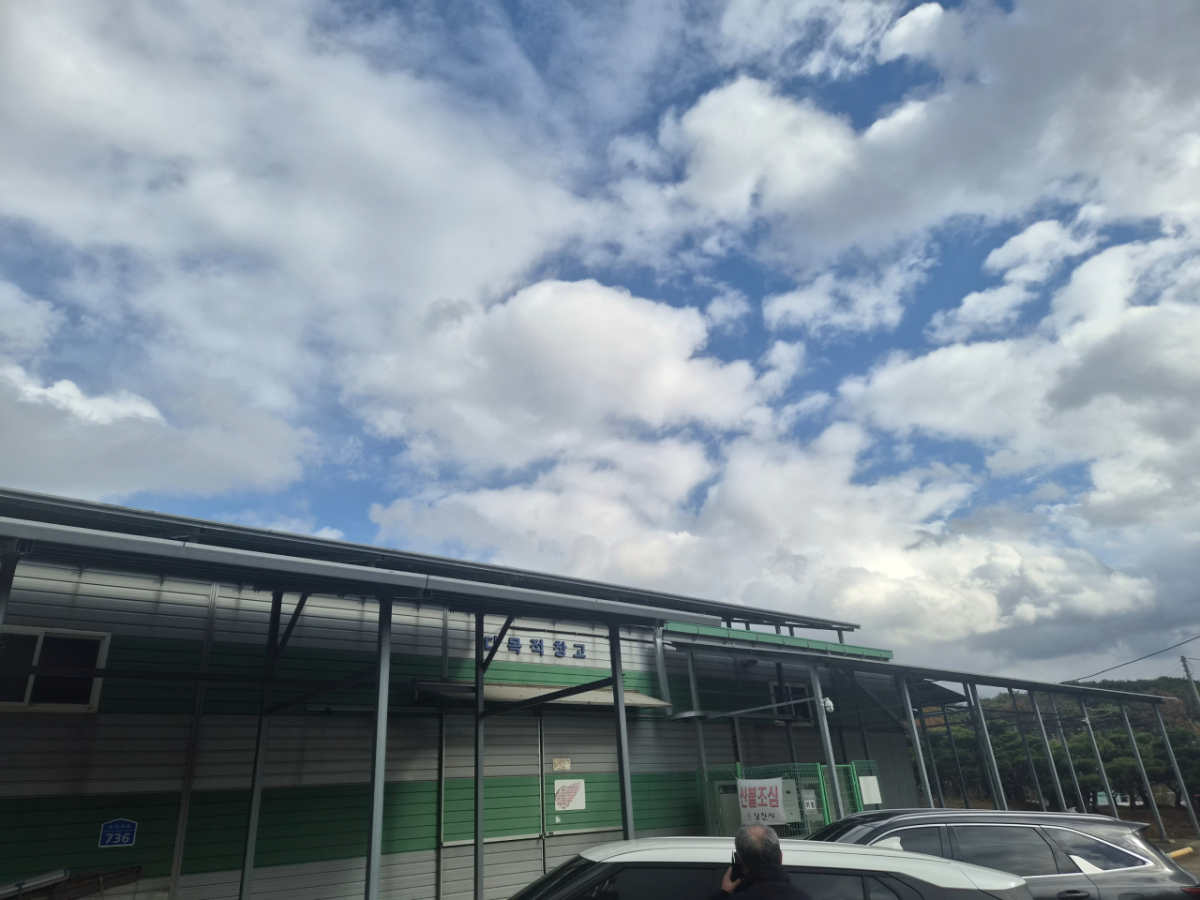
Economically, solar power was more advantageous than other options. The annual revenue from a 100kW solar power plant (based on electricity sales prices at the time) was about 10 times higher than the rental income obtained by investing the same amount in farmland.
Subsequently, residents of Samhwa 3-ri built solar power plants with this subsidy. They obtained a power generation business license for the first plant in 2018 and began operations in 2019. The person who proposed building the plant, as well as those who secured the site and wrote the project plan submitted to the city, were all village residents.
It was decided to divide the generation revenue per household. Cho Byung-du (71), the cooperative chairman who handled administrative documents during the promotion of the power plant, said, "Since the source of the subsidy is money received after suffering from coal power plant pollution, we decided on cash dividends based on the belief that it is best for residents to directly cash it out before they pass away."
Since the power plants began operating in 2019, several hundred thousand won has been returned to each household in Samhwa 3-ri every year. Initially, 1 million won per household was distributed annually, and this year, 500,000 won per household was paid to approximately 100 households in the village. Village residents who attended the interview that day said they understood that Samhwa 3-ri was the first to have residents directly build a community solar power plant using surrounding area subsidies and share its revenue.
Residents Lead Efforts to Resolve Negative Perceptions… Grid Connection Remains a Challenge
There were residents in Samhwa 3-ri who worried about solar power generation. Before promoting the village solar project, Mr. Cho Byung-guk installed solar power equipment on the land behind his house. After directly measuring electromagnetic waves around the inverter, he informed residents of the results. The experience of a neighbor installing solar equipment first and residents directly verifying their concerns helped increase acceptance of the village solar project.
As word spread about the Samhwa 3-ri case, solar panels were installed in almost all of the 20th village halls and warehouses within Seokmun-myeon. Samhwa 3-ri is also preparing for the "Sunlight Income Village" project by accumulating a portion of generation revenue as reserves. They plan to cover the self-funded portion (15%) of the total project cost with the money accumulated so far.
The barrier faced today by the village that pioneered the construction of five power plants is the power grid. Samhwa 3-ri has purchased land for additional power plants and obtained a 250kW-scale power generation business license and development activity permit. However, they have not yet built the equipment because they have not received permission from Korea Electric Power Corporation to connect the distribution lines to export the generated electricity.
Nevertheless, the reason the village is focusing on solar expansion is closely tied to the reality of aging rural areas. The average age of residents in Samhwa 3-ri also reaches their late 70s. Executive Director Hwang Seong-ryeol viewed solar power, which generates steady revenue, as the most suitable source of retirement income for elderly farmers. Mr. Cho Byung-du also said, "Solar power generation only requires sunlight," adding, "That is why it is the most necessary business in rural areas."

 in INDUSTRY


