

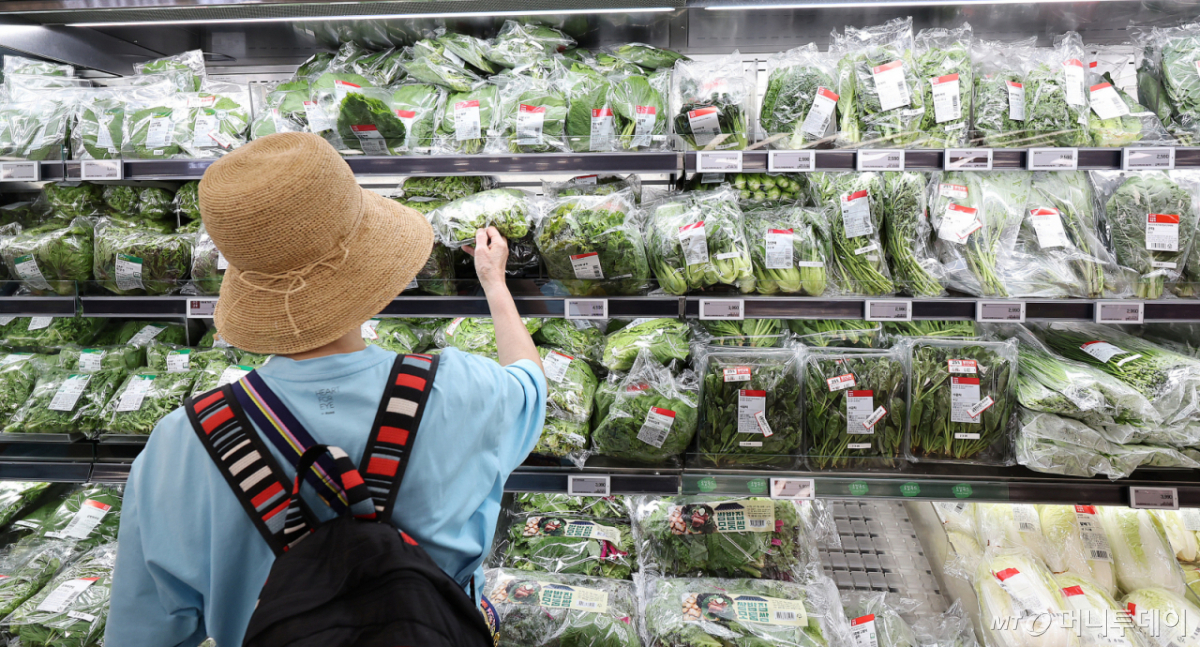
Despite significant vegetable price increases driven by recent heatwaves, the actual impact on the foodservice franchise industry remains relatively limited. While vegetable prices have indeed surged compared to a month ago, they remain lower than historical averages. However, given the increasing frequency of extreme weather phenomena, the industry is focusing on establishing proactive systems to ensure raw material supply stability.
According to Korea Agro-Fisheries & Food Trade Corporation (aT) agricultural product distribution information (KAMIS) released on the 10th, as of the 7th, the retail price for cucumbers (spiny variety, based on 10 units) was recorded at 10,088 won per 10 units. This represents a 44.32% increase from the previous month's net price of 7,475 won.
Tomato retail prices rose 11.54% compared to the previous month to 4,301 won per kilogram, while cabbage increased by 4.06% to 3,205 won per head during the same period. Zucchini (one unit) surged 48.32% to 1,504 won compared to the previous month. This sharp price increase resulted from reduced production volumes due to consecutive heatwaves over the past month. aT researcher Jin Chang-seon explained, "Weather conditions have led to an increase in produce that failed to meet quality standards."
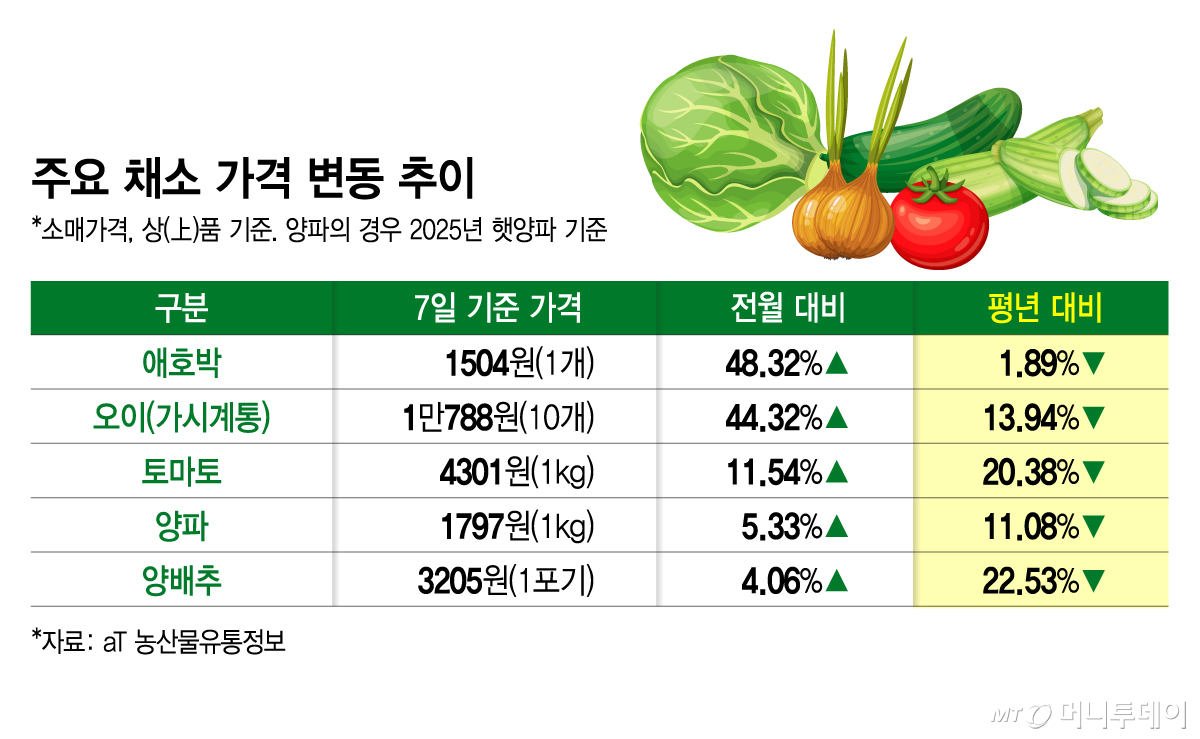
However, foodservice franchise operators such as burger chains drew a clear line, stating it is premature to discuss immediate supply emergencies. They noted that vegetable prices typically rise during summer months, and this year's increase falls within expected ranges. In fact, current cucumber prices are 13.94% lower than the historical average (12,535 won). Cabbage (commercial grade) also rose slightly compared to last month but remains 22.53% cheaper than the historical average (4,137 won). Tomatoes (commercial grade, 1 kg) are priced 20.38% below the historical average (5,402 won) and 32.99% below last year's price (6,418 won).
A Lotteria representative stated, "Certain agricultural and aquatic products are inevitably affected by summer heatwaves," adding, "Lettuce, tomatoes, and onions used in hamburgers currently face no impact on pricing or supply." McDonald's Korea also confirmed, "Based on our stable supply chain established with farms and partner companies nationwide, we are securing raw materials without any disruptions to key ingredient supplies." Burger King similarly maintains that menu operations remain largely unaffected.
In the case of Mom's Touch, agricultural products like lettuce have been completely removed from mandatory purchase items for franchisees, except for core ingredients directly tied to taste standardization such as sauces. A Mom's Touch representative explained, "Franchise owners can now purchase agricultural products through their preferred distribution channels, enabling them to autonomously respond to supply instability and price increases."
Group meal providers and major foodservice companies have also established response systems treating summer vegetable price fluctuations as a constant factor. Hyundai Green Food and Texas Roadhouse stated, "Since these items experience significant price volatility due to adverse weather each summer, we have prepared proactive measures such as securing sufficient inventory in advance."
However, the industry remains vigilant about the possibility of unexpected supply disruptions as extreme weather phenomena become increasingly common rather than exceptional. A foodservice industry representative noted, "Even if sudden climate changes disrupt raw material supplies, reflecting these immediate price fluctuations directly to consumers is realistically impossible," adding, "The company must absorb the immediate cost of price volatility."

 in LIVING

