

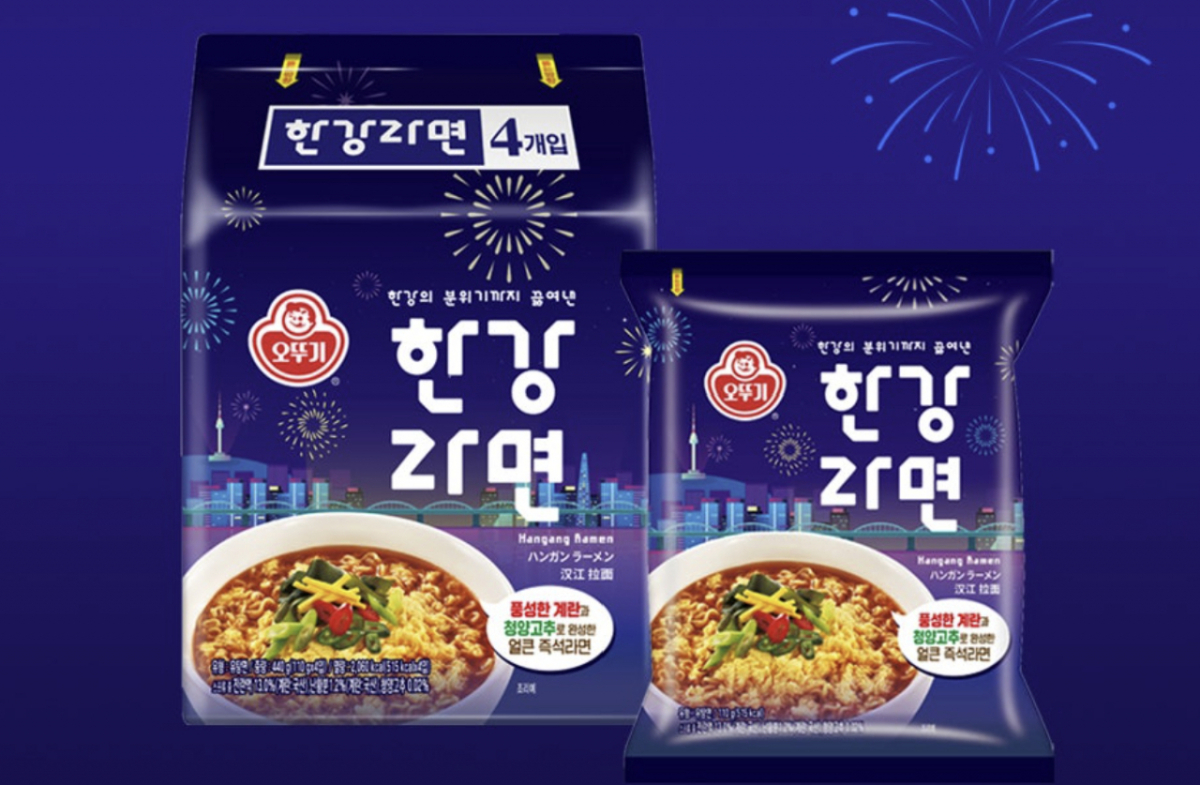
Ottogi is commercializing the so-called 'Han River Ramen,' which was previously enjoyed by boiling it instantly at Han River Park, into a bagged product. The 'Han River Ramen' product, which adapts the experience of cooking ramen at Han River Park—a cultural phenomenon established through K-tourism and cultural content—into a ready-to-eat bag form, is drawing attention as a potential new card to boost Ottogi's market share.
According to the food industry on the 31st, Ottogi plans to launch its new bagged product 'Han River Ramen' next month. The product replicates the spicy broth flavor of Han River Ramen by pairing it with egg and Cheongyang peppers. It focuses particularly on maintaining a chewy texture so that the noodles do not easily break down even when cooked outdoors. It can be prepared using instant ramen cookers installed at convenience stores in Han River Park, as well as in regular pots at home.
The experience of boiling instant ramen at Han River Park has become a representative 'K-food' experience tour for both domestic and foreign tourists. Accordingly, Ottogi did not limit itself to simply replicating specific flavors or cooking methods but expanded the very experience of enjoying ramen at Han River Park into a product concept.
An Ottogi official stated, "Han River Ramen is scheduled for release next month," adding, "It is a product that can be prepared in the same way as regular bagged ramen while capturing the unique culture and sensibility of Han River Ramen."
Ottogi has been accelerating its expansion of market share in the ramen industry through a series of recent new product launches. Each new product it releases gains word-of-mouth buzz on social media (SNS), sustaining consecutive successes. In March, it launched 'Jinmilmyeon,' which commercialized Milmyeon, a local Busan dish. In May, it introduced 'Royal Ramen,' applying the popular Rosé recipe for Yulramen that had gained traction on SNS. The product is in the form of stir-fried noodles called 'KRosé,' which adds the flavors of cheddar cheese, mascarpone cheese, and cream to the spicy taste of Yulramen. Additionally, in July, it launched a new ramen product titled 'Dongdaemun-style Whole Chicken Kalguksu,' which captures the 'K-old shop vibe.'
Jinmilmyeon surpassed a cumulative sales volume of 3 million units just 25 days after its launch. Royal Ramen also broke through 2 million units in cumulative sales within about a month of its release, while Dongdaemun-style Whole Chicken Kalguksu recorded 500,000 units in cumulative sales within 18 days of its launch.
The reason Ottogi is focusing heavily on the ramen business appears to be that noodle products constitute the largest share of the company's total revenue. According to Ottogi's semi-annual report, revenue from noodle products, including ramen and glass noodles/noodles, reached 548.7 billion won in the first half of this year, a 4.4% increase compared to the same period last year (525.4 billion won). This accounts for 28.9% of total revenue, making it the highest among all six business segments.
However, Ottogi's market share in the domestic ramen industry continues to remain within a narrow range. According to AC Nielsen data cited in Ottogi's semi-annual report for this year, its value-based market share was 22.4% in April, 21.6% in May, and 21.8% in June.
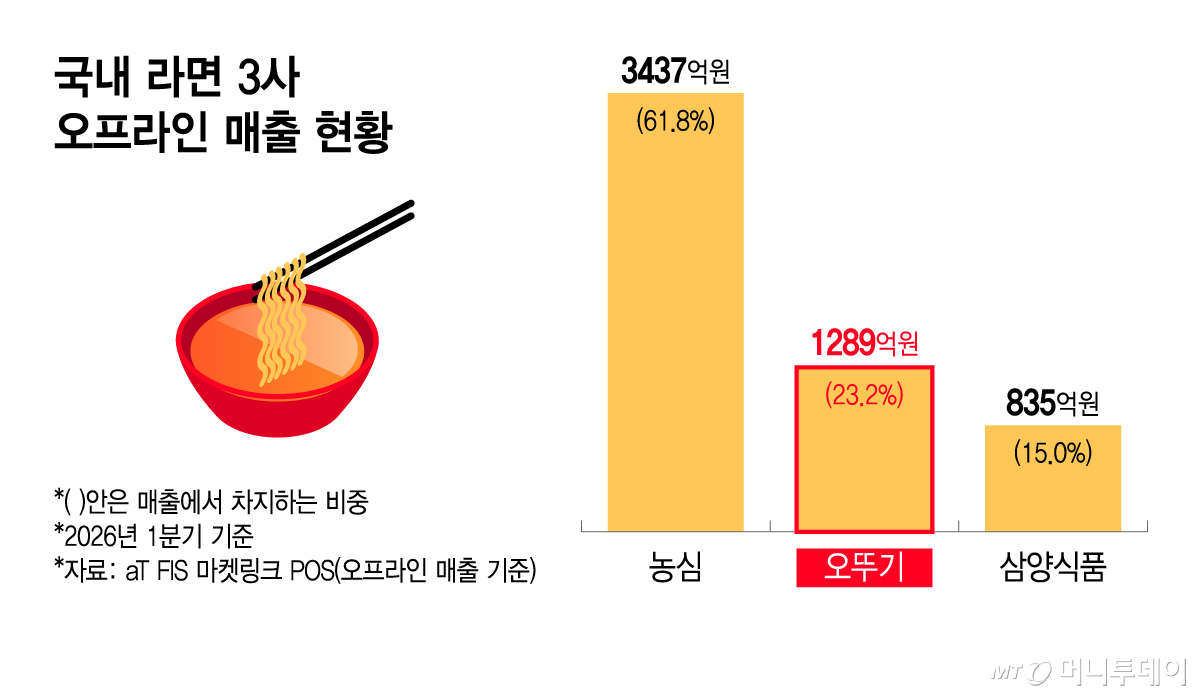
Competitors are also closing the gap rapidly. According to retail POS data compiled by aT Food Industry Statistics Information citing Market Link, domestic offline ramen sales in the first quarter of this year showed Nongshim leading with 343.7 billion won, followed by Ottogi at 128.9 billion won and Samyang Foods at 83.5 billion won. While year-on-year sales growth rates remained modest for Nongshim at 0.6% and Ottogi at 0.9%, Samyang Foods saw a significant increase of 22.4%.

 in LIVING

