


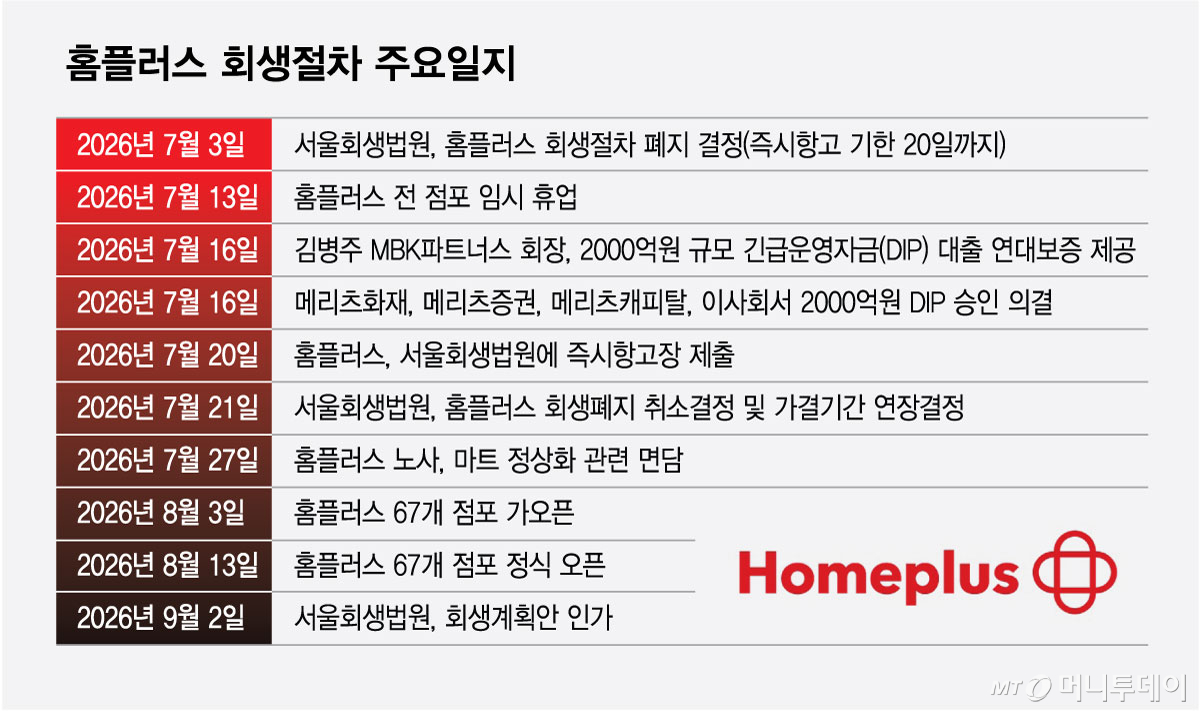
Homeplus has passed the first hurdle toward normalization by clearing the threshold at the meeting of interested parties for its reorganization plan. While Homeplus plans to improve its financial structure through business normalization and store sales, many obstacles remain before full normalization is achieved.
According to the retail industry and legal circles on the 2nd, the reorganization plan was approved at the meeting of interested parties held that day. The plan met the consent requirements: over 75% of secured creditors, over 66.7% of unsecured creditors, and over 50% of shareholders. The court determined that all conditions for approval were satisfied and officially approved the reorganization plan.
With the approval of the reorganization plan, Homeplus has gained breathing room and is now moving forward with debt repayment and securing funds. Key measures include funding repayments through operating revenues and selling closed stores.
However, industry observers expect it will take time for Homeplus to achieve full normalization. Signs of financial distress have already emerged. A representative example is the recent slowdown in sales recovery following an initial spike after the store's reopening. The industry estimates that current Homeplus sales have declined by approximately 30% compared to the early reopening period. Key factors include a shortage of product variety due to many suppliers resuming deliveries, operational confusion caused by staff reductions affecting store management, and a deteriorating shopping environment.
The plan to raise funds through the sale of closed stores is also expected to face significant challenges. Homeplus intends to sell 19 stores by February 2028 to secure funding. The strategy involves first repaying real estate trust secured bonds set by Meritz Financial Group, thereby releasing liens on its remaining stores, and then taking out additional loans based on those stores to repay the remaining debts.
However, most of the 19 stores slated for sale are located in regional areas, making smooth sales difficult. Competitors such as E-Mart and Lotte Mart have already established strong footholds in these regions, and investor sentiment toward commercial real estate has also frozen. While there may be potential demand from developments like mixed-use complexes, establishing separate district-level plans or activation plans is required, limiting the possibility of quick sales within a short timeframe.
An industry official stated, "The structure makes it inevitable for customers to leave due to weaker product and store competitiveness compared to rivals," and added, "Since high-quality assets have already been sold off, leaving mostly non-performing assets, securing liquidity through store sales will likely take considerable time."

 in LIVING

