

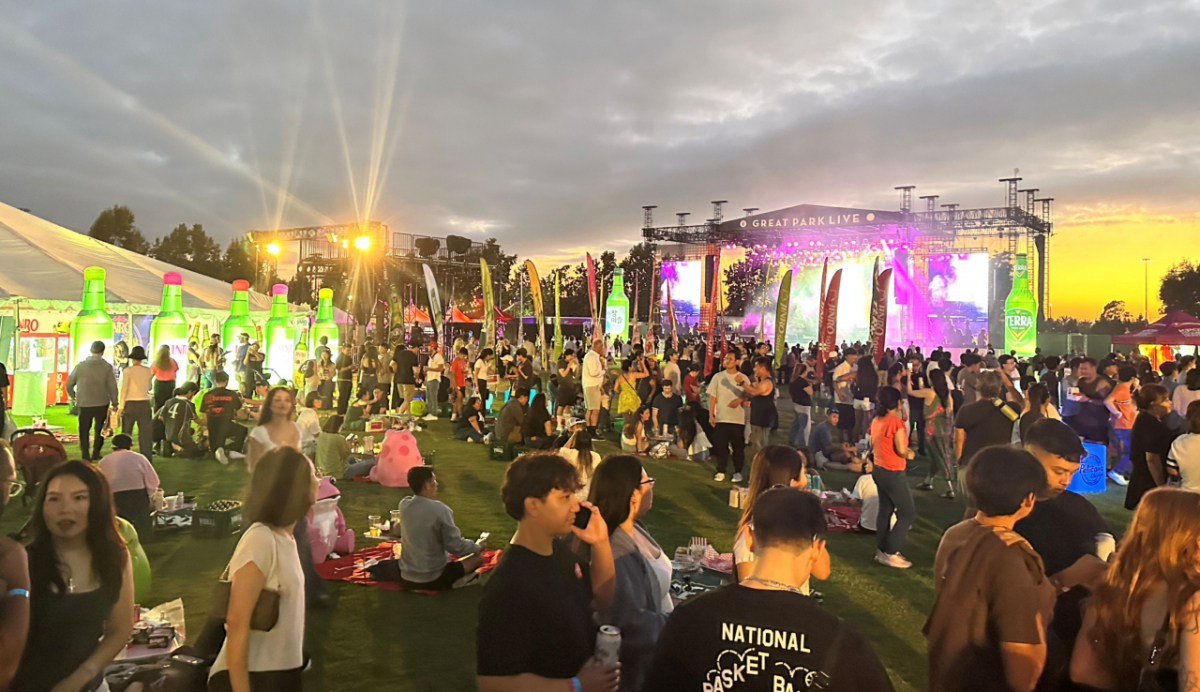
As interest in Korean culture and K-food has grown, competition among alcohol companies for the U.S. market is heating up. With the United States now established as South Korea’s largest export destination for soju, domestic liquor firms are accelerating their efforts to capture this market. Obi Macju began exporting soju to the U.S., and a local American beverage company has also launched its own Korean-style soju brand developed in-house.
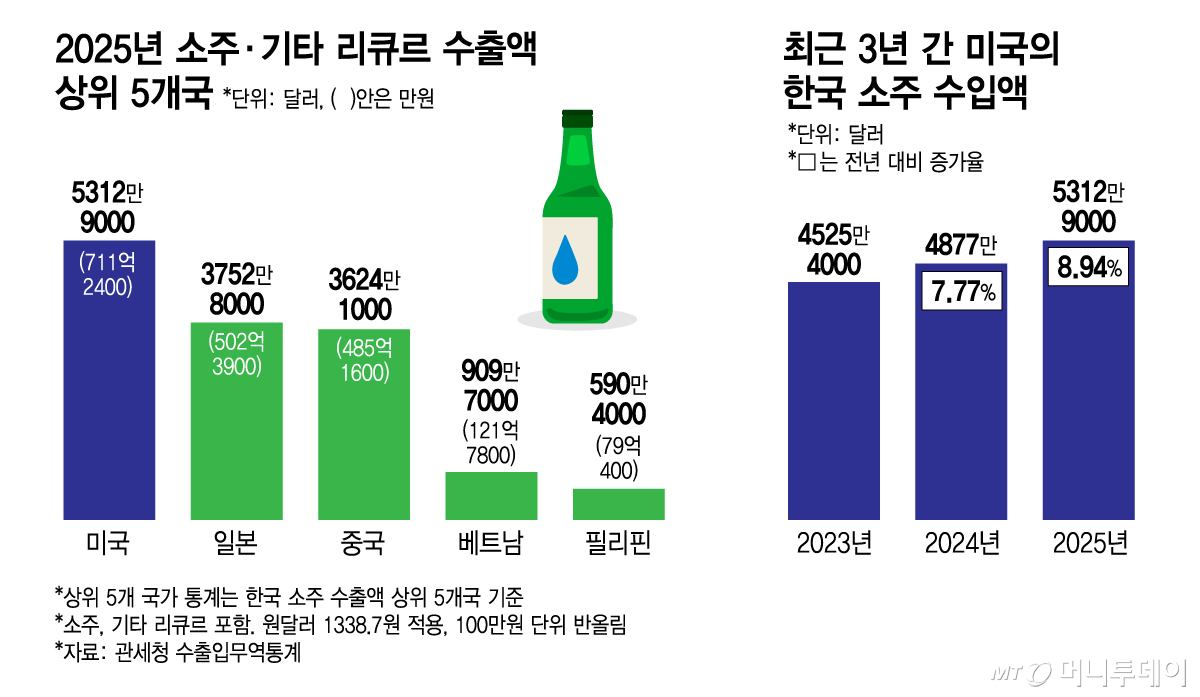
According to data from the Korea Customs Service’s import-export trade statistics released on the 7th, combined exports of soju and other liqueurs bound for the U.S. from January to July this year totaled $28.93 million (approximately 38.73 billion won), accounting for 30.2% of the total. This figure surpasses Japan in second place (19.1%) and China in third (14.4%), representing about 1.58 times the export value to Japan. The U.S. has not only overtaken Japan as the top destination since 2023 but has also widened the gap further based on total export value.
While overall soju exports have stagnated, shipments to the U.S. continue to rise independently. Last year, total global exports of soju and other liqueurs amounted to $196.94 million (approximately 263.648 billion won), a 1.7% decline compared to the previous year. However, U.S. exports reached $53.13 million (approximately 71.124 billion won), marking an 8.9% increase. The share of U.S. exports in total global shipments has steadily grown: from 23.5% in 2023 to 24.3% in 2024, and further to 27.0% last year. As of January–July this year, the share has exceeded 30%.
In response, domestic liquor companies are becoming increasingly active. HiteJinro recently appointed BTS member V as its global ambassador for Jinro, launching aggressive marketing campaigns overseas. The “My Favorite Jinro” campaign featuring V, including promotional videos and short-form content, has accumulated over 500 million views to date. Obi Macju has been producing and selling its U.S.-export soju brand “Challang” since late last year, leveraging production capacity acquired through the purchase of Jejusoju. The product is manufactured at Obi Macju’s Jeju factory, which previously produced “Blue Night” under Jejusoju, before being exported.
American companies are also entering the Korean-style soju market. Sazerac, a U.S. distilled spirits company known for bourbon and whiskey brands, recently launched its own developed soju brand named “Dalho.” The name combines the Korean words for “moon” (달) and “tiger” (호랑이). It was released in four flavors: original, peach, strawberry, and lychee. Sazerac introduced two packaging options—a 375ml bottle and a smaller 50ml version—to lower the barrier to entry for consumers trying soju for the first time.
While overall alcohol sales in the U.S. are declining similarly to trends in South Korea, projections indicate that Korean-style soju sales will continue to grow. This is driven by rising interest in K-pop, films, and dramas, which translates into demand for unique Korean foods and beverages. Global market research firm IWSR forecasts that soju sales in the U.S. will grow at an average annual rate of 16% between 2024 and 2029. This contrasts sharply with expectations that total U.S. distilled spirits sales will decline by 2% over the same period.
A domestic liquor industry executive stated, “Although Korean-style soju still holds a relatively small share of the overall U.S. market, it is gaining significant attention among younger generations in recent years thanks to its connection with Korean culture.”

 in LIVING

