

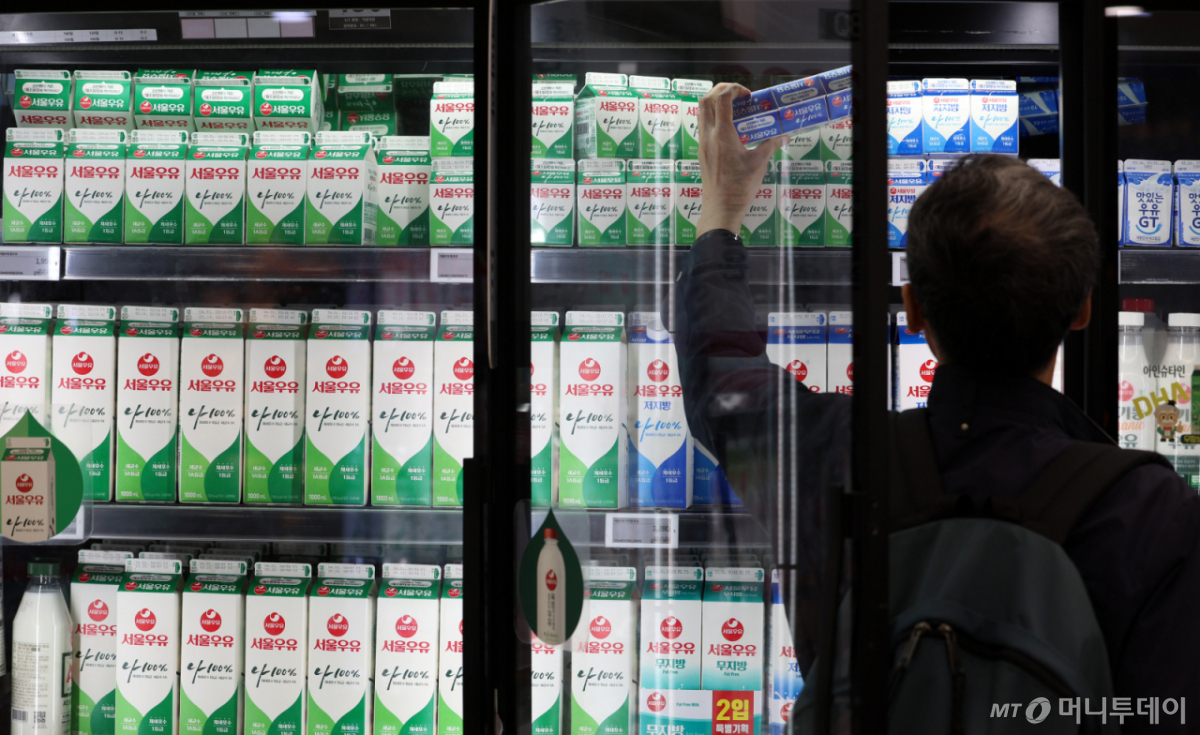
Most major low-cost coffee brands, which are locked in fierce competition to offer low prices in South Korea, have been found to use domestic milk. Even as imported UHT milk seeks to expand its presence in the Korean market with lower prices, coffee brands appear to be sticking with domestic milk, taking into account the flavor of their lattes and consumer preferences.
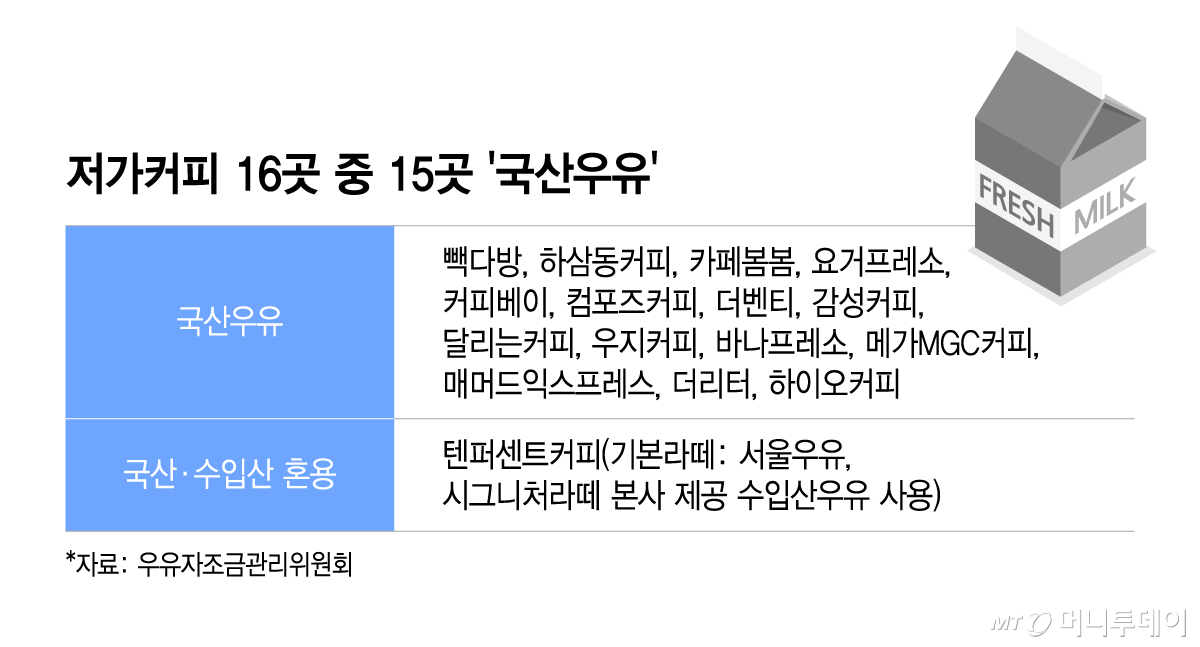
According to a survey conducted this month by the Milk Self-Sufficiency Promotion Committee on milk use at 16 major low-cost coffee brands, 15 use domestic milk, while one uses both domestic and imported milk.
Specifically, brands using domestic milk include Paik's Coffee, Mega MGC Coffee, The Venti, Yogerpresso and Compose Coffee. Ten Percent Coffee was the only brand found to use imported milk. However, it uses domestic milk for its standard lattes and imported milk supplied by its headquarters for signature lattes.
Imported sterilized milk highlights not only price but also the ability to be stored long-term as strengths. On the other hand, the franchise industry notes that they must consider potential changes in latte flavor and consumer reactions when switching milk.
A source in the coffee franchise industry said, "Domestic consumers greatly perceive the difference in flavor between domestic and imported sterilized milk," adding, "The fact that it can be stored long-term is also sometimes perceived as a lack of freshness."
Preference for domestic products is also evident in consumer perception surveys. In the '2025 Milk and Dairy Product Consumption Behavior Survey' by the Dairy Policy Research Institute of the Korea Dairy Cattle Association, 87.3% of respondents perceived milk and dairy products made with domestic ingredients as superior to those made with imported ingredients. Among respondents who had tried imported sterilized milk in that survey, 42.3% evaluated it as inferior in taste and flavor compared to domestic milk.
Meanwhile, the inflow of imported sterilized milk has been increasing in the domestic milk market. According to export and import trade statistics from the Korea Customs Service, last year’s import volume of sterilized milk was 50,740 tons, more than double that of 2021 (23,199 tons).
This year, under the Free Trade Agreement (FTA), zero tariffs were applied to U.S.-origin milk in January and European Union (EU)-origin milk in July. Conversely, domestic white milk consumption is on a downward trend.
According to the Korea Dairy Promotion Agency, per capita white milk consumption last year was 22.9 kg, a 9.5% decrease from the previous year (25.3 kg). It had been steadily decreasing from 26.6 kg in 2021, with the magnitude of the decline widening last year.
In line with these consumption changes, the allocation of raw milk by use is also being adjusted. Dairy farmers and the dairy industry have agreed to reduce the volume of drinking milk raw milk used for white milk, fermented milk, coffee beverages, etc., by 20,600 tons over the next two years starting next year, while increasing the volume of processing milk raw milk used for cheese, powdered milk, etc., by the same amount.
At the consumption stage, measures to provide origin information on milk to promote domestic milk consumption are being discussed. Currently, agricultural and livestock products subject to origin labeling in food service establishments include nine items such as beef, pork, rice, and napa cabbage kimchi, with milk excluded.
Accordingly, the Ministry of Agriculture, Food and Rural Affairs is considering a plan to include milk used in food service establishments such as cafes in the labeling targets. A source in the dairy industry said, "If origin labeling becomes established, consumers will be able to compare products based on criteria other than price, and it is expected that more cafes and food companies will emphasize the use of domestic raw milk."

 in LIVING

