

This week (the 7th–11), the domestic stock market is expected to face heightened caution as both futures and options contracts reach their simultaneous expiration dates, alongside the release of U.S. inflation data. Employment figures released in the United States on the 4th (local time) came in at three times the market's expectation, prompting analysts to highlight August producer price index (PPI) and consumer price index (CPI) as key indicators that will gauge the direction of the U.S. base rate.
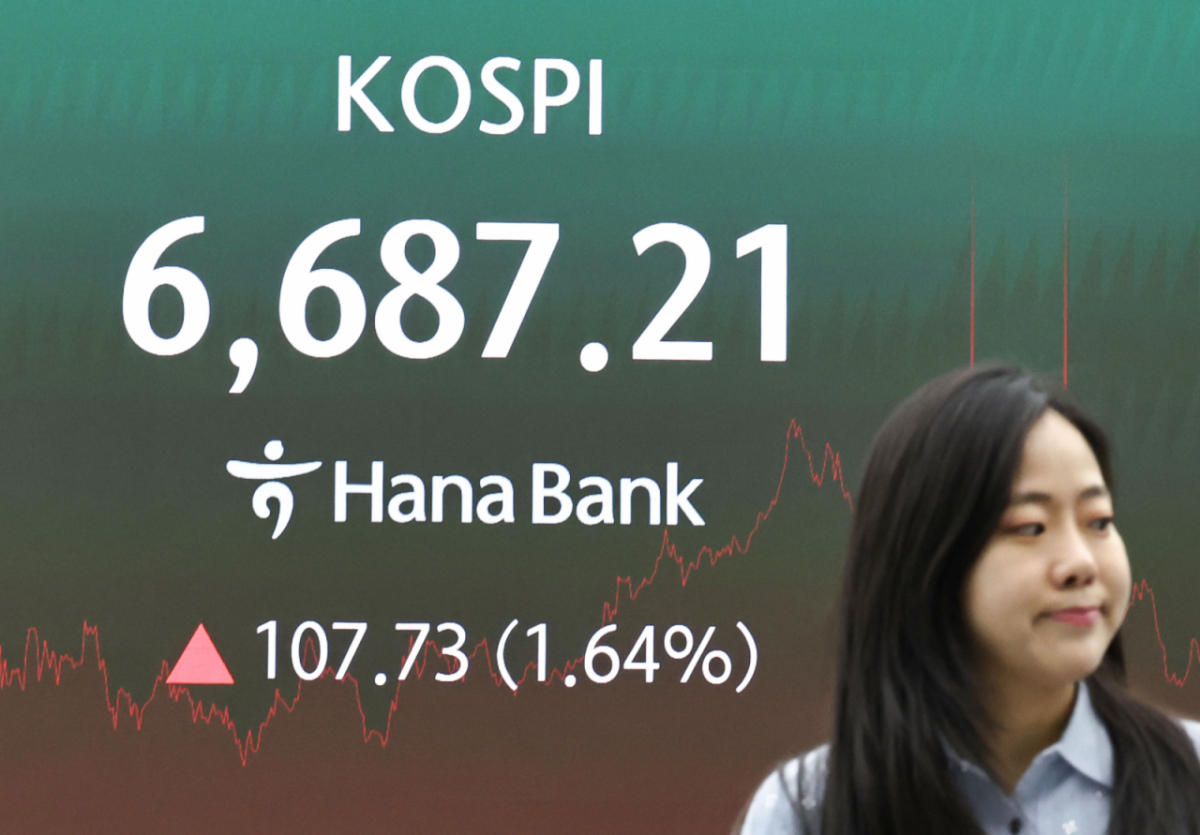
According to Korea Exchange data for last week (August 31–September 4), the KOSPI closed at 6,687.21, down 1.50% from Jeonju. At the start of the week, market anxiety intensified due to hawkish remarks by Federal Reserve Chair Kevin Warsh at the Jackson Hole conference (favoring monetary tightening) compounded by geopolitical risks in the Middle East. As fighting between the United States and Iran resumed and concerns grew over potential disruptions to oil shipments through the Strait of Hormuz, international oil prices also rose. Early in the week, surging oil prices from the Middle East pushed up U.S. long-term Treasury yields, causing the KOSPI to fall nearly 4% on just one day (the 2nd). Toward the end of the week, as the rise in U.S. Treasury yields stabilized, the KOSPI gained 107.73 points (1.64%) on the 4th compared to the previous day.
On the 10th, the domestic stock market will experience "Four Witches' Day," when expiration dates for stock index futures and options coincide with those of individual stock futures and options. As expiration dates approach, profit-taking trades driven by position closures may emerge in the market, requiring caution regarding short-term volatility.
Domestic semiconductor industry conditions and exports are cited as factors supporting the lower bound of the index. According to the Ministry of Trade, Industry and Energy, semiconductor exports last month reached $46.65 billion, a 209.0% increase compared to the same period last year. This marks the largest monthly figure in history. During the same period, total exports rose 68.7% to $98.25 billion, with semiconductors accounting for 47.5% of that total.

Net buying by other corporations, estimated to reflect share buybacks by Samsung Electronics and SK Hynix, is also cited as a factor supporting the market floor. In the KOSPI market last week, individuals sold net $306.2 billion, foreign investors sold net $251.4 billion, and institutional investors sold net $87 billion. In contrast, other corporations bought net $646.8 billion.
The U.S. Treasury Department's plan to expand its long-term Treasury buyback program is also seen as a positive backdrop for the stock market. The U.S. Treasury has decided to raise the buyback limit per session from $2 billion to at least $4 billion for 10–20-year and 20–30-year Treasuries, with implementation scheduled from the 9th through November 4. When the Treasury purchases long-term Treasuries, the supply of long-term bonds circulating in the market decreases, potentially driving up bond prices and lowering long-term interest rates.
Key indicators drawing market attention this week are August PPI and CPI, to be released on the 10th and 11 (local time) respectively. The Federal Reserve is scheduled to hold its Federal Open Market Committee (FOMC) meeting on the 15th–16 (local time) to decide on the current base rate of 3.50%–3.75%, making these inflation indicators a critical variable that could influence the September FOMC decision.
Earlier, the U.S. Department of Labor reported on the 4th that non-farm employment in August surged by 162,000 compared to the previous month, exceeding market forecasts of an increase between 53,000 and 56,000. The unexpectedly strong employment data raised concerns that it could provide justification for the Federal Reserve to raise interest rates. According to the Chicago Mercantile Exchange (CME) FedWatch Tool, the probability of a 0.25 percentage point base rate hike in September was 49.4% on the 3rd (the day before the employment data release), but rose to 59.4% as of the 5th count.
Cho Byung-hyun, a researcher at Daol Investment & Securities, stated, "I believe the range-bound movement between 6,200 and 7,000 points that has formed since August will continue next week." He added, "Given heightened sensitivity to inflation, the upcoming release of U.S. inflation data next week could also serve as a reason for investors to adopt a wait-and-see stance."

 in STOCK

