

The Korea Exchange announced plans to require KOSDAQ-listed companies to hold at least one investor relations (IR) event a year, following President Lee Jae-myung's criticism of their lack of engagement with investors.
Meanwhile, discussions on the mandatory tender offer system, whose legislative process has been temporarily suspended amid opposition from civic groups and industry players, failed to reach consensus on the required tender offer threshold, with proposals ranging from at least 50 percent plus one share to 100 percent.
KOSDAQ Firms with "IR Advance Disclosure" at 26%; Criticism of "Do They Qualify?"… IR Mandate Previewed
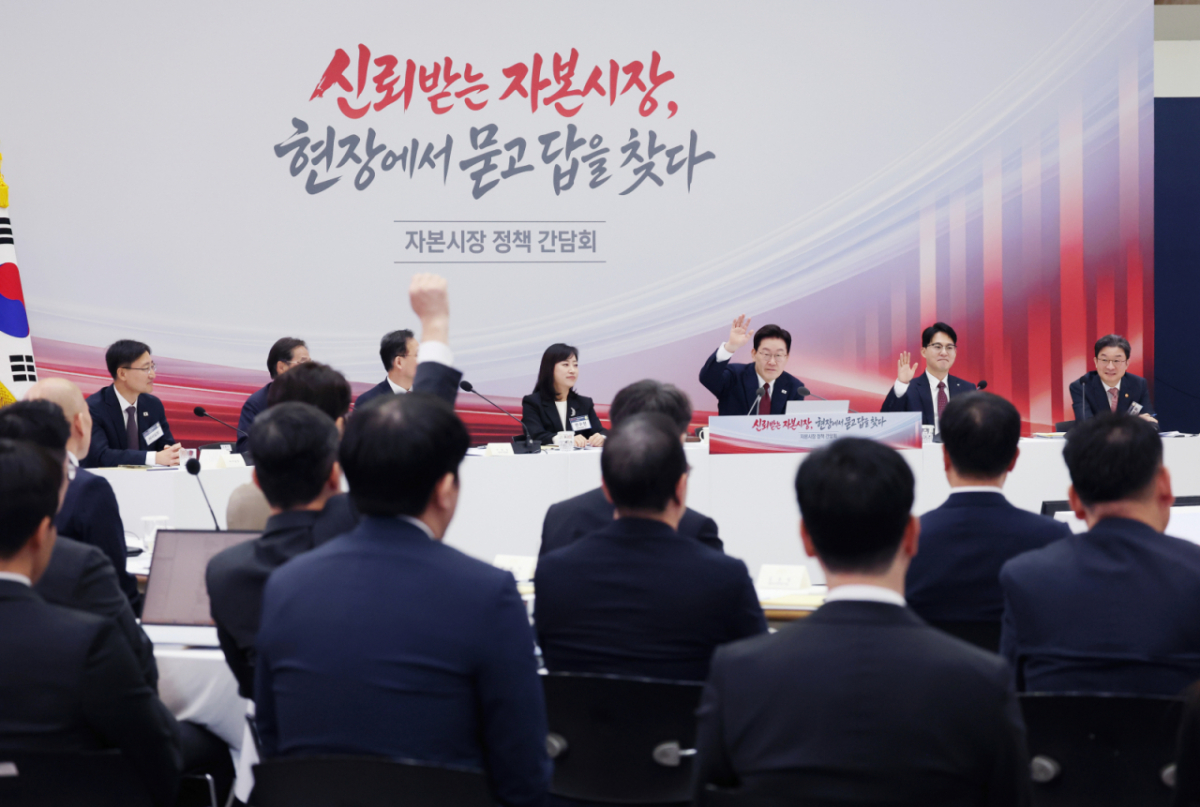
At the "Capital Market Policy Roundtable" held on the 13th at the Korea Exchange in Yeouido, Seoul, presided over by President Lee Jae-myung, efforts to mandate IR sessions at least once a year were raised as one of the measures to enhance trust in the KOSDAQ market. Chung Eun-bo, Chairman of the Korea Exchange, stated, "We are considering revising listing maintenance requirements to mandate IR sessions at least once a year."
The intent is to expand the temporary IR obligation applied after KOSDAQ listing into an annual requirement. Currently, exchange listing contracts stipulate that listed companies must hold IR sessions at least once a year for two years from their listing date to explain management content, plans, and outlooks.
This measure follows criticism that KOSDAQ companies are passive about IR. Lee Gun-jae, Head of the KOSDAQ Research Center at IBK Investment & Securities, who participated in the day's discussion, said, "Although we launched the first securities firm KOSDAQ research center, the majority of companies either refuse site visits or do not conduct IR." He added, "Many investors hold the view that companies work hard on IR when they need funds but stop doing so once they start making profits."
Indeed, according to a survey by IBK Investment & Securities, approximately 33% of KOSPI-listed companies and 26% of KOSDAQ-listed companies issued advance disclosures for IR last year. This contrasts with the fact that about 80% of U.S. companies announce their IR activities, such as earnings calls and conference calls.
In response, President Lee said, "If you have put your company's shares on the market, it is essential to strive to sell them at a fair, high price," adding, "I question whether they deserve to remain in the market." He also directed swift institutional improvements.
Regarding the market capitalization requirement for KOSDAQ delisting, opinions clashed between those who insisted that delisting is necessary and those who argued that the requirements should be relaxed. Kim Woo-chan, a professor at Korea University, stated, "We decided to delist companies with a KOSDAQ market capitalization of 20 billion won or less, but because an injunction was granted, we can currently only designate them as managed stocks and cannot delist them." He argued, "There are now 39 such accumulated companies, and delisting is essential for normalizing the KOSDAQ market."
Song Byung-jun, Chairman of the Venture Company Association, said, "Companies whose market capitalization approaches the delisting standard face increasing difficulty in securing buy orders from the market due to fears of being delisted," adding, "Please consider the difficulties faced by venture companies."
Mandatory Tender Offer System Conflict Continues… "A Matter of Policy Judgment"
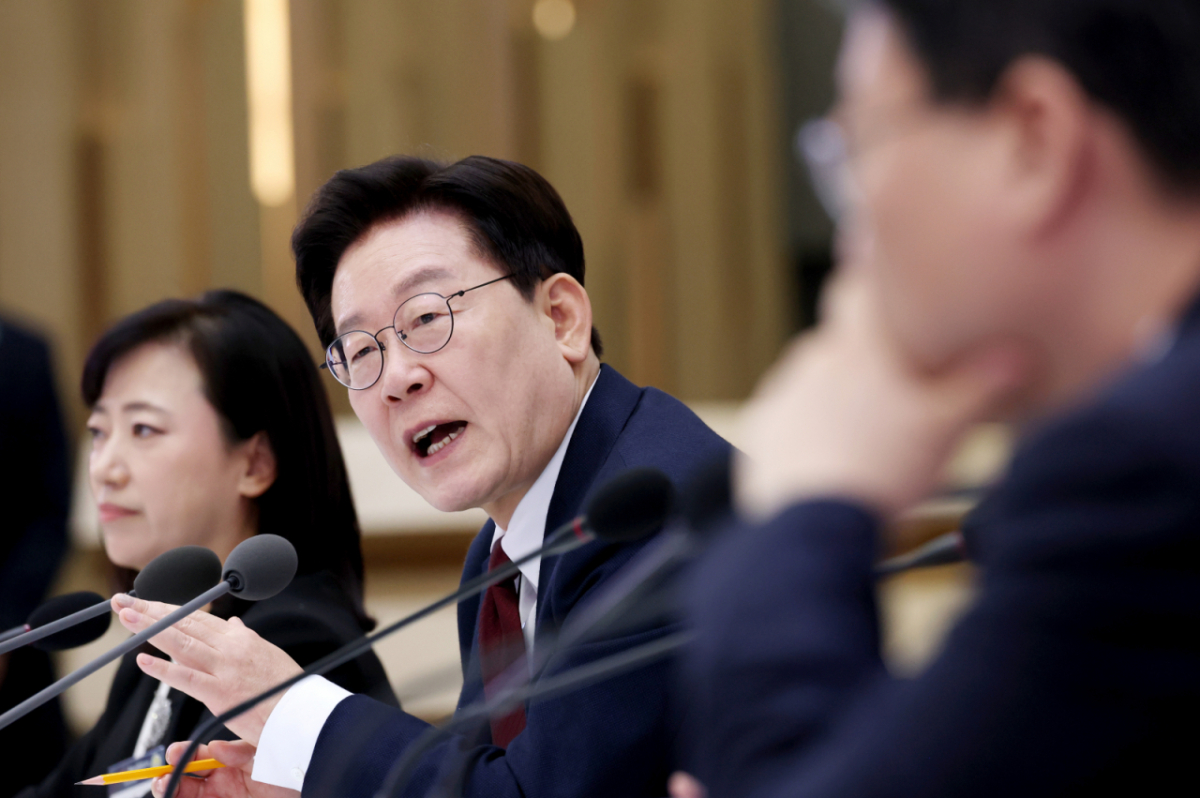
Debate continued over plans to introduce the mandatory tender offer system, specifically regarding options for a mandatory purchase ratio of "50% plus one share" versus "100%." Opinions clashed between those who argued that making all shares subject to public tenders would increase acquirers' financial burden and stifle mergers and acquisitions (M&A), and those who claimed that the premium concentrated on major shareholders would decrease, meaning costs would not rise significantly.
Park Byung-geon, Chairman of the Private Equity Fund Management Association, pointed out that expanding the public tender target to 100% could reduce transactions due to the burden of acquisition funds. Park Se-ik, Representative of Chesley Investment Advisory, explained, "People think that acquiring 100% of all shares would double the total amount, but because the (control) premium decreases, that is not the case."
President Lee stated, "Whether to activate the M&A market, or to focus on fairness and mandate 100% acquisition, or to make it easier by setting it at 50% plus one share, is a matter of policy judgment."
The mandatory tender offer system requires that when acquiring enough shares to secure control of a listed company, a certain percentage or more of the shares must be mandatorily purchased through public tenders. The core of this is granting general shareholders the right to sell their held shares at the same price as the controlling shareholder. This has emerged as a measure to protect minority shareholders, as cases have repeatedly occurred where major shareholders sell their stakes at high prices with a control premium during corporate M&A processes, while general shareholders do not receive fair value. However, due to divided opinions on the public tender ratio, the legislative processing procedure in the National Assembly was temporarily halted.
Additionally, President Lee ordered the formation of a public-private task force (TF) dedicated to promoting the normalization and advancement of the capital market.
Meanwhile, the roundtable was held under the theme "A Trusted Capital Market: Asking Questions and Finding Answers in the Field." Attendees included over 50 people from the government and related agencies, such as Lee Hyoung-il, Deputy Prime Minister for Economy and Minister of the Ministry of Economy and Finance; Lee Eui-woon, Chairman of the Financial Services Commission; Lee So-young, Minister of the Ministry of SMEs and Startups; Lee Chan-jin, Governor of the Financial Supervisory Service; and Chung Eun-bo, Chairman of the Exchange, as well as representatives from the National Assembly, the financial investment industry, the corporate sector, and experts.

 in STOCK

