

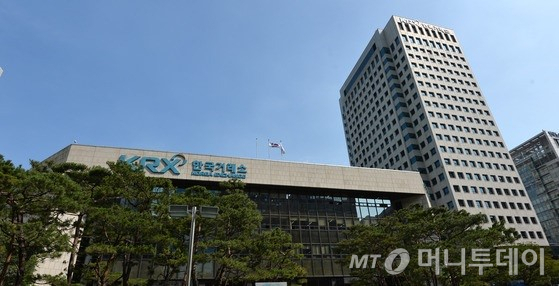
The "penny stock" (stocks priced below 1,000 won) delisting system, introduced in July this year, has faced its first legal test. If the court halts penny stock delistings following its ruling on stocks with insufficient market capitalization, the Korea Exchange's plan to significantly clean up micro-cap stocks within the year will inevitably face setbacks.
Representatives for Heungji Global and Heungji I&C argued during a hearing on an injunction against the effectiveness of their designation as managed stocks, held on the 19th before Civil Division 51 of the Seoul Southern District Court (Presiding Senior Judge Kwon Seong-su), that "the benchmark of a stock price of 1,000 won cannot serve as a criterion for identifying weak companies," and stated, "In the first half, the company's capital fell below its liabilities, and net profit turned to a surplus."
The Heungji side added, "Whether a stock is vulnerable to market manipulation depends not on the per-share price, but on factors such as the scale of circulating shares, trading volume, corporate governance structure, and disclosure transparency," and noted, "Penny stock delisting offers no opportunity for objection, limits the recovery period to 45 trading days, and less intrusive alternatives exist, such as substantive review or market surveillance."
In the same courtroom, Newintec argued that "uniform delisting would force even sound companies out of the stock market, failing to achieve public interest while causing harm to businesses," and stated, "Although there is a recovery period, the designation as a managed stock due to insufficient stock price itself makes it difficult for the stock price to recover, and thus cannot replace the right to participate that is lacking in the current procedure." The side representing Ice Cream Edu also protested, arguing that penny stock delisting was an excessive measure.
The exchange side countered, "The purpose of the penny stock delisting system is to protect general investors from the inherent risks of low-priced stocks, such as sharp price fluctuations and being targeted for stock manipulation," and added, "The system was announced in January and implemented in July, providing listed companies with sufficient time to respond through share buybacks or mergers."
The court stated, "While the previously abolished delisting regulation for stocks below 40% of par value included provisions granting the right to file objections," it also noted, "We are troubled because we can understand to some extent the risks of market manipulation and the purpose of market health improvement." The court added, "We will accept additional arguments and materials until the 10th of next month."
Representatives for the listed companies forecast that a verdict could be reached as early as year-end. This is because the same court panel held a hearing on an injunction against the effectiveness of KM Pharmaceutical's designation as a managed stock due to insufficient market capitalization on September 9, and granted the injunction about three weeks later, on October 2.
The court's decision to grant or deny the injunction is directly linked to the "Delisting Reform Plan for Swift and Strict Exit of Weak Companies" that the Financial Services Commission and the exchange have been promoting since this year. The securities industry predicts that if this injunction is granted and leads to a main lawsuit, trading suspensions for penny stocks will last at least one year longer. This analysis follows the fact that the average processing period for civil first-instance panel cases last year reached 390.5 days (approximately 13 months).
Given that the insufficient market cap and penny stock cases share a similar structure, weight is placed on the possibility of a victory for the listed companies. In the KM Pharmaceutical case, while the court stated, "It is difficult to easily assert that raising the market cap benchmark from the previous 4 billion won to around 30 billion won was itself unfair, that the means were inappropriate, or that the benchmark was excessively high," it ruled in favor of the listed companies by adding, "The right of delisting-target companies to participate in the delisting procedure must be sufficiently guaranteed."
Some predict that the exchange will supplement its objection procedures and continue its cleanup of micro-cap stocks. The view is that if the court has pointed out procedural issues, revising the relevant regulations could reduce legal burdens. However, even in this case, regulatory amendments are expected to take at least several months.
The exchange stated it would await the court's decision and has fully suspended delisting procedures for stocks with insufficient market capitalization and penny stocks. However, designations as managed stocks continue under current regulations; SM C&C was added to the "penny stock" managed stock list the day before, and the number of companies facing delisting crises continues to grow. An industry official said, "As trading-suspended stocks accumulate, uncertainty has grown, and general shareholders are blocked even from closing trades, causing considerable psychological distress," adding, "A swift conclusion is urgent in any direction."

 in STOCK
