


Red flags have been raised on the health report card for Koreans. It was found that tobacco use is increasing among those in their 20s and 30s, while the prevalence of obesity and chronic diseases is rising among those in their 40s and 50s. In particular, it was revealed that more than half of men in their 30s, 40s, and 50s are obese, heightening awareness regarding complications associated with obesity.
According to the results of the "2025 National Health and Nutrition Examination Survey" announced by KDCA on the 30th, the tobacco product usage rate among men in their 20s last year increased by 3.7% compared to the previous year (2024), while it rose by 2.6% for women in their 20s and 6.4% for women in their 30s. In particular, the usage rates of conventional cigarettes (up 2.6%) and liquid e-cigarettes (up 2%) increased among men in their 20s, while usage of all types of tobacco products increased among women in their 30s (conventional cigarettes up 3.6%, liquid e-cigarettes up 3.1%, and heated tobacco products up 1.1%).
The obesity prevalence rate for men last year was 49.1%, an increase of only 0.3% compared to 2024, but a breakdown by age showed significant increases in the 30s and 50s (up 9.9% and 5.9%, respectively). In particular, among men, the obesity rate was 59% for those in their 30s, 53.3% for those in their 40s, and 54% for those in their 50s, meaning that more than half of men in their 30s, 40s, and 50s were obese. For women, the obesity prevalence rate last year was 28.7%, an increase of 2.5% compared to 2024, with significant increases (up 3.7% and 5.9%) in the 30s and 40s.
A major factor behind this is interpreted as dietary habits involving low consumption of grains and vegetables and high intake of beverages and fats. Last year, grain intake (239.6g) decreased by 12.4g compared to 2024, and the proportion of people aged six and older consuming 500g or more of fruits and vegetables per day was only 23.4% for men and 17.7% for women. On the other hand, beverage intake (284.3g) increased by 7.9g compared to 2024, and the percentage of energy intake from fat (the proportion of total energy intake) was 28.7% for both men and women, an increase of 1.8% and 2%, respectively, from the previous year. For both men and women in their 20s and 30s, fat intake exceeded the upper limit of 30% of the appropriate energy ratio set by dietary reference intakes.
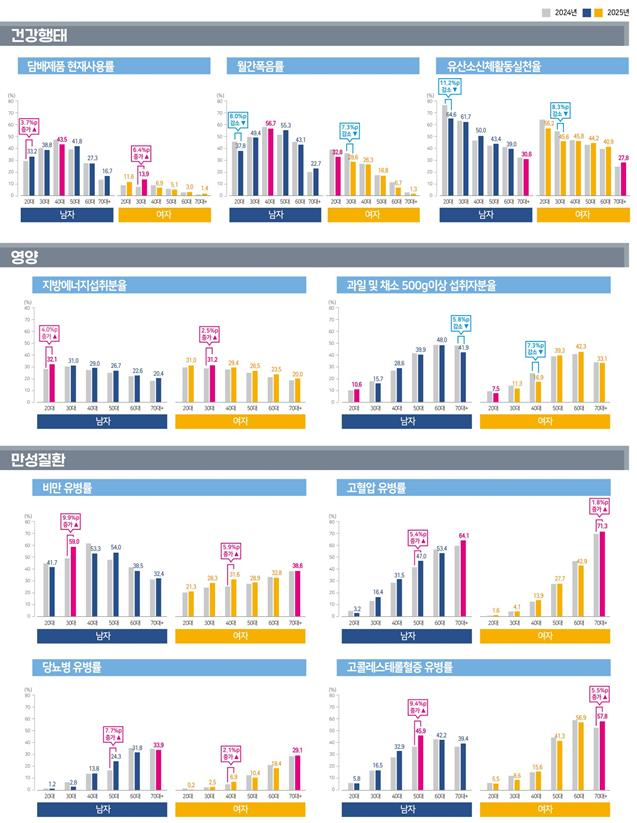
These lifestyle habits were reflected in the prevalence of chronic diseases. Last year, the hypertension prevalence rate was 28.2% (up 1.9%) for men and 17.8% (up 0.1%) for women, while the hypercholesterolemia prevalence rate was 26.1% (up 2.7%) for men and 22.4% (down 1%) for women, showing a clear increase among men.
In particular, the prevalence of chronic diseases has increased over the past decade among men in their 40s and 50s, with a significant overall rise from 2024 to 2025. Hypercholesterolemia increased by 5.4% and hypertension by 3.7% within one year for men in their 40s, while hypercholesterolemia prevalence rose by 9.4%, diabetes by 7.7%, and hypertension by 5.4% for men in their 50s.
Im Seung-gwan, Director of KDCA, analyzed, "The results of the 2025 National Health and Nutrition Examination Survey show that compared to 2024, alcohol consumption improved while tobacco product use and fat intake increased among those in their 20s and 30s, and obesity and chronic disease prevalence rose among those in their 40s and 50s. This means that the health behaviors and chronic diseases requiring focused attention differ by age group."
He added, "We plan to share analysis results on major health issues across the life cycle at the '2026 National Health Survey Results Announcement Conference' to be held on November 30, and discuss policy directions through discussions with relevant government ministries and academic experts."
KDCA plans to additionally publish indicators such as social support, loneliness, and sugar intake introduced in 2025, and to identify output indicators that serve as a basis for health policy formulation by understanding health issues arising from structural social changes such as population aging and the increase in single-person households. A statistical report containing detailed results of the 2025 National Health and Nutrition Examination Survey will be published in December, and raw data will be made available on the National Health and Nutrition Examination Survey website.

 in THEBIO

