

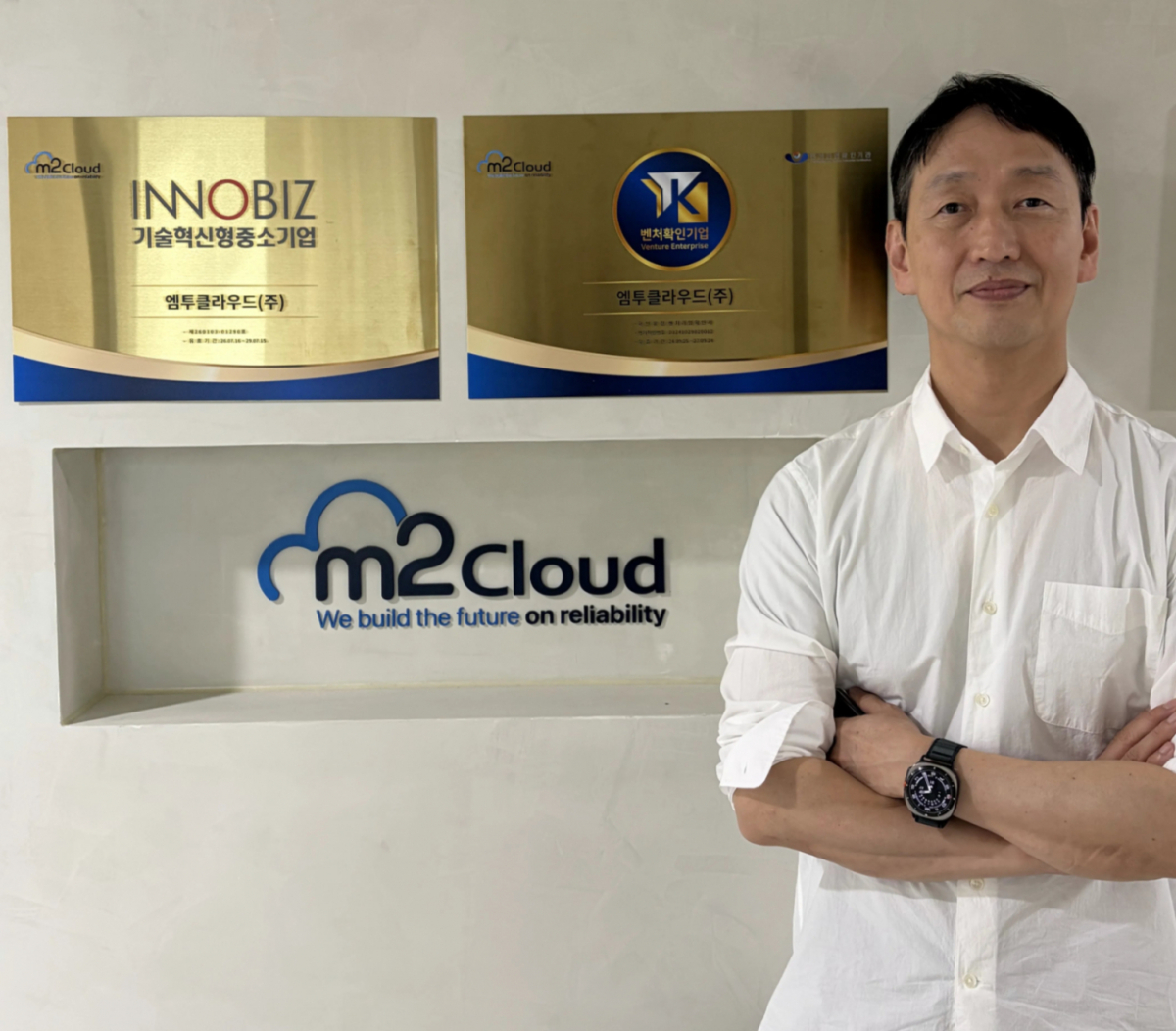
"When people get vaccinated, they don't know what state the contents are in. That's why for pharmaceuticals, evidence that prescribed temperatures and procedures were followed is itself a measure of quality."
Unlike ordinary courier services, pharmaceuticals such as vaccines lose their efficacy if the temperature deviates even slightly. Because spoilage cannot be detected by sight or smell, some people avoid vaccination due to vague fears (phobias). This is the background behind Moon Jin-soo, CEO of M2Cloud, developing a pharmaceutical supply chain management platform based on "proof of compliance" technology.
CEO Moon stated, "Handwritten records can be altered later, but encrypted data cannot be tampered with or forged," and expressed confidence that "M2Cloud was the first in Korea to receive the Internet of Things (IoT) security certification from the Korea Internet & Security Agency (KISA), and designed its platform to meet the requirements of '21 CFR Part 11,' the U.S. Food and Drug Administration's (FDA) regulation on electronic records and signatures, thereby securing global trust."
CEO Moon founded M2Cloud in 2015 with engineers who had previously developed mobile phones together at Motorola. While building expertise in IoT security, the coronavirus pandemic struck. Public anxiety was high over whether vaccines were being stored and transported properly, and the government urgently needed to ensure trust in the distribution process as much as securing vaccine supply. Based on cold chain technology optimized for vaccines, ranging from refrigeration (2 to 8 degrees Celsius) to ultra-low temperature (minus 70 degrees Celsius), and proof of compliance technology, M2Cloud was selected in 2021 as the builder of the "Integrated Logistics System for Coronavirus Vaccines," contributing to overcoming this "vaccine phobia."
M2Cloud demonstrated stable supply chain platform technology by managing the entire process of delivering approximately 140 million doses of vaccines in real time to over 17,000 medical institutions nationwide, operating without a single system outage. By digitizing all records from vaccine shipment to delivery and receipt, the company also created an opportunity for biological product shipping certificates to be permitted as electronic documents in 2022. The recipient's signature, previously received on paper, is now included in a single "electronic certificate" along with continuous temperature data from shipment to arrival.
The "landscape" of pharmaceutical logistics has also been transformed. Biological products require the recipient to verify condition and temperature and sign for them, so unmanned receipt is not permitted. If a delivery vehicle arrives at a hospital after treatment hours have ended and the doors are closed, the vaccines must be reloaded and returned, increasing the risk of temperature deviation and damage in the meantime.
M2Cloud solved this problem by developing an AI engine that predicts arrival times by training AI on distribution data accumulated during coronavirus vaccine delivery. CEO Moon recalled, "Every week, hundreds of vehicles had to deliver vaccines to thousands of locations," and noted that "calculating travel times between tens of thousands of points one by one using map services was not realistic in terms of time and cost." M2Cloud's AI quickly predicts travel times based solely on location coordinates and departure time, and optimizes dispatch and routes by factoring in medical institution operating hours. Related research was published twice, in 2024 and 2025, in the international academic journal "IEEE Access," receiving recognition for academic value beyond commercialization.
M2Cloud's technology is expanding beyond logistics to examination rooms and warehouses. The company's cold chain platform for pharmaceutical and distribution use, "VSK," and its pharmaceutical management platform for medical institutions, "mChain," are being serviced to over 150 pharmaceutical and distribution companies and over 1,000 medical institutions. In particular, mChain manages status information based on the serial number of vaccines, rather than recording temperature by storage facility units such as refrigerators or warehouses. Previously, even if an adverse reaction occurred, it was difficult to confirm what temperatures that specific vaccine had undergone, but mChain links temperature history to manufacturing and serial numbers, enabling post-hoc tracking even for administered vaccines.
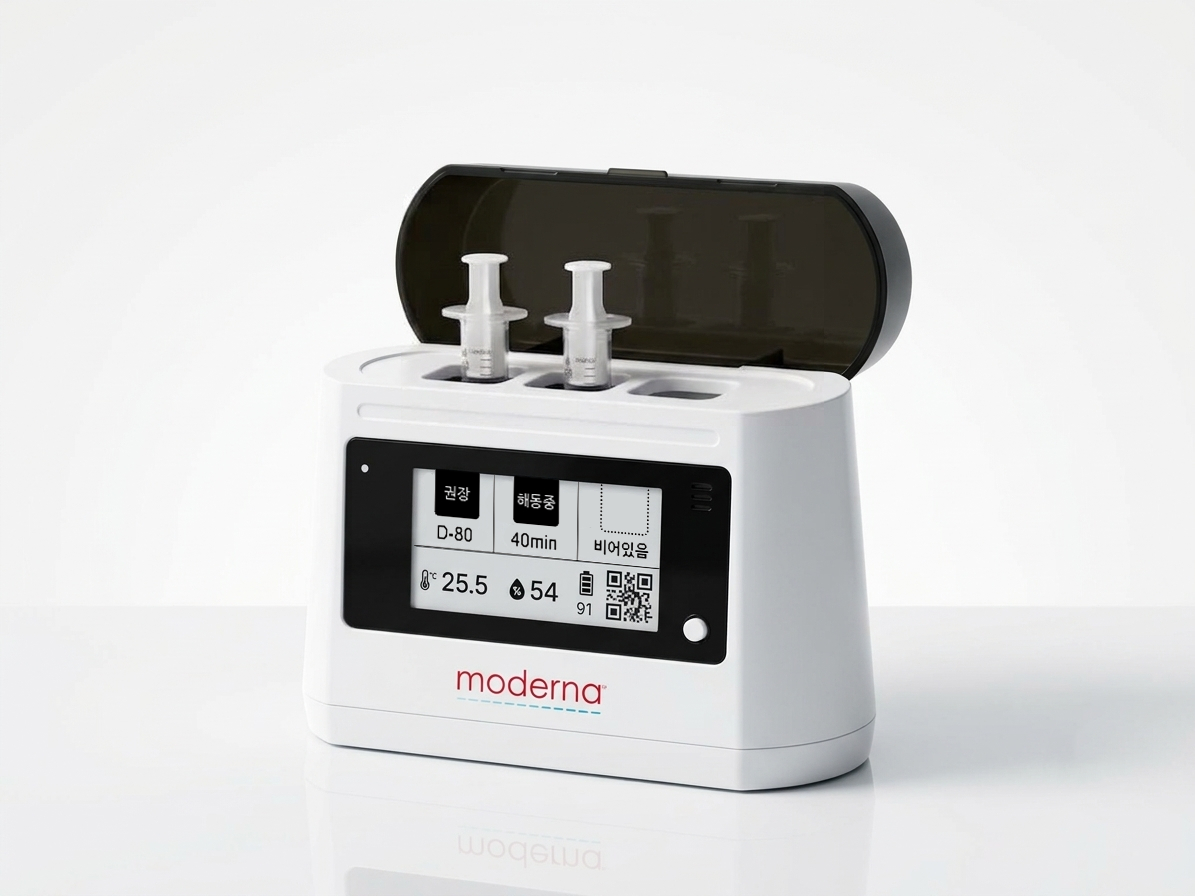
Starting from the end of this month, the company is also supplying "ColdCare Trays" to global pharmaceutical company Moderna. It is a "smart device" that displays temperature history and remaining shelf life after thawing individual vaccine units, and prevents use via alarms if problems arise. The ColdCare Tray is the world's first device for managing mRNA vaccines on an individual unit basis.
CEO Moon emphasized, "The United States and Europe require technical proof that electronic records have not been tampered with or forged, and mandate tracking pharmaceuticals by packaging unit," adding, "For Korean biopharmaceuticals to compete in the global market, they must be able to provide evidence not only of product quality but also that this quality was maintained throughout the distribution process."
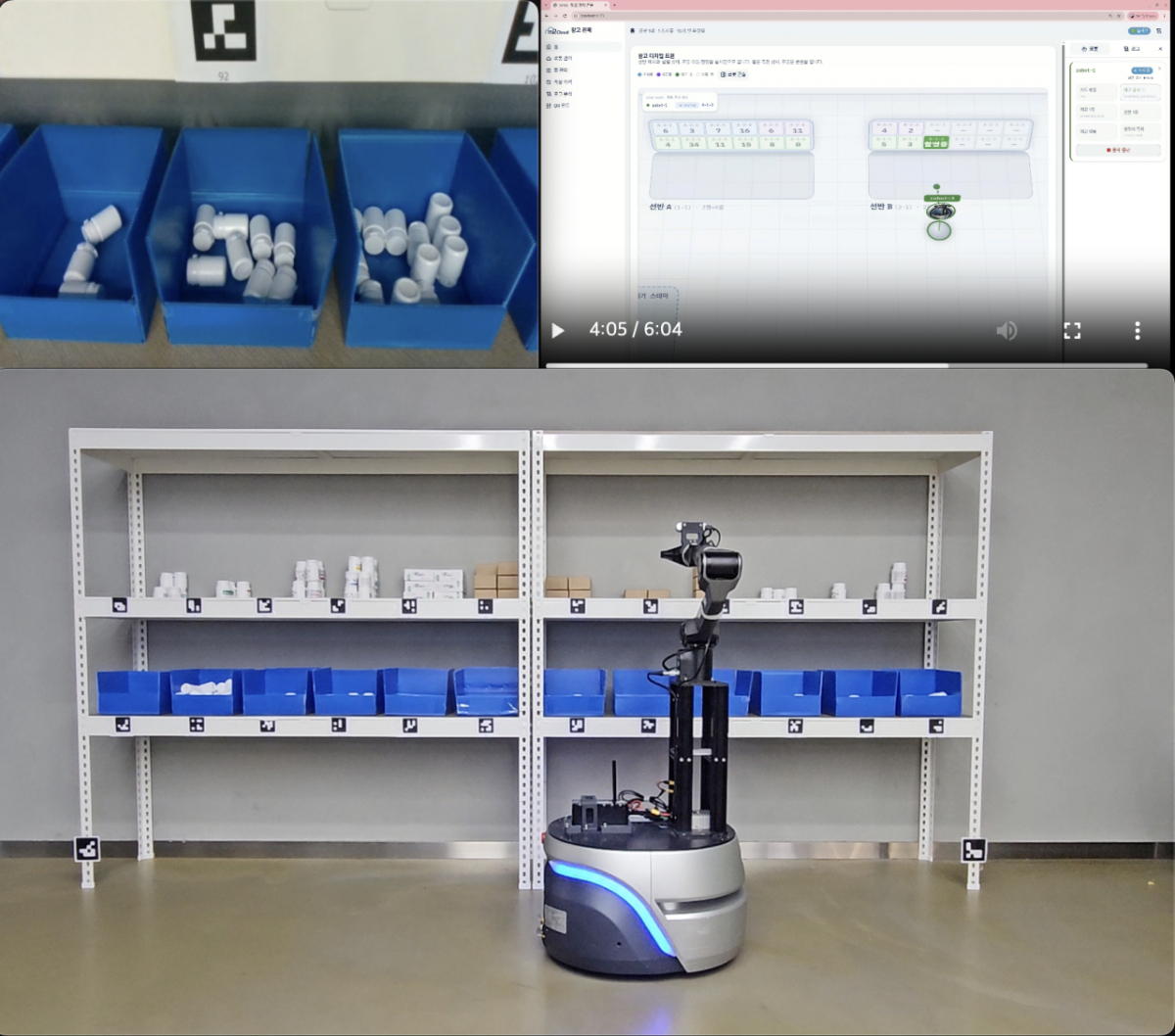
M2Cloud plans to unveil a prototype of "Physical AI" jointly developed with Kookmin University at "BIOPLUS-INTERPHEX Korea 2026 (BIX)," held at Seoul COEX starting on the 28th. Following an "AI Vision Inspection System" that reads pharmaceutical items, quantities, expiration dates, and manufacturing numbers using cameras, the company successfully developed a pharmaceutical inspection system combining autonomous driving robots with AI vision. The robot patrols warehouses to independently verify pharmaceuticals and count quantities, creating a structure where AI verifies human work and leaves the results as evidence. CEO Moon stated, "We will become a company that proves the quality of pharmaceuticals from the moment they leave the factory until the final moment they reach the patient, using data meeting global standards."

 in THEBIO


