

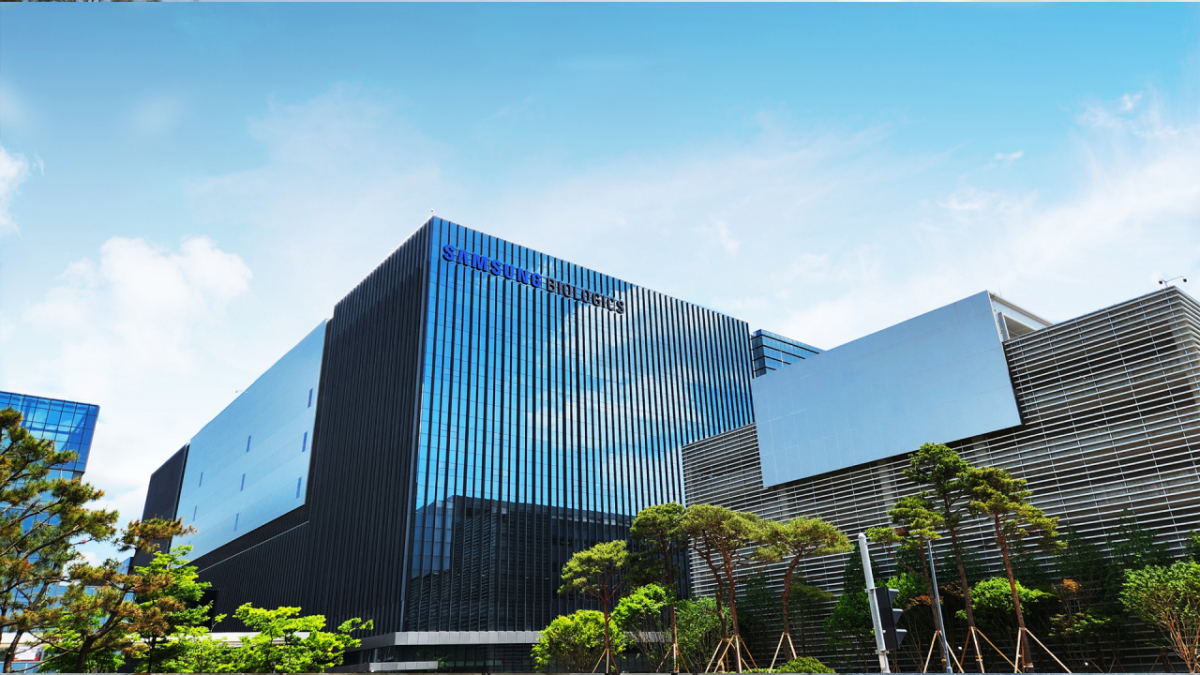
Samsung Biologics announced on the 16th that its rights offering (paid-in capital increase) of approximately 2.7 trillion won, launched to leap into a world-class contract development and manufacturing organization (CDMO) for biopharmaceuticals, was a success, attracting over 11 trillion won in margin deposits from general public subscriptions.
A total of 9,745,071 shares were subscribed to in the general public subscription for Samsung Biologics' rights offering, which took place over two days on the 12th and 13th. The subscription ratio was 135.6 to 1. Considering the new share issue price of 1,174,000 won, a margin deposit of approximately 160 million won is required to be allocated one share. The total margin deposits amounted to 11 trillion 440.7 billion won. This marks the largest scale in history among rights offerings (paid-in capital increases) with shareholder allocations that have proceeded to general public subscriptions on the domestic stock market.
This rights offering will be completed through procedures including share payment on the 17th and new share listing on the 30th.
Through a rights offering issuing 2.27 million common shares, Samsung Biologics will raise a total of 2 trillion 665 billion won based on the confirmed issue price of 1,174,000 won per share. In the prior subscription by existing shareholders and the employee stock ownership association, subscriptions were received for 2,198,146 shares, representing 96.8% of the 2.27 million shares. Despite an issue price exceeding 0.1 billion won per share and continued uncertainty in domestic and international stock markets, oversubscriptions of more than 30,000 shares were received.
Subsequently, in the general public subscription for the remaining 71,854 shares, including fractional shares, a large amount of capital exceeding 11 trillion won participated in the subscription.
Samsung Biologics will use the funds raised from the rights offering to acquire Polypeptide Group, a global peptide CDMO. In July, Samsung Biologics announced that it would acquire Polypeptide Group for 1.46 billion Swiss francs (approximately 2.7 trillion won at the time of announcement), marking the largest deal in the history of mergers and acquisitions (M&A) in the domestic pharmaceutical and bio industry.
By acquiring Polypeptide Group, Samsung Biologics can expand its service business area into the peptide sector, which has recently grown relatively rapidly, following antibody drugs and messenger ribonucleic acid (mRNA), as well as antibody-drug conjugates (ADCs). The company aims to simultaneously achieve portfolio diversification and secure medium- to long-term growth drivers. In the recently completed tender offer, 97.98% of shares were subscribed. Samsung Biologics plans to secure 100% of Polypeptide Group's shares through compulsory acquisition and other means.
Lee Myung-sun, a research analyst at DB Securities, analyzed, "Samsung Biologics will enter the GLP-1 (glucagon-like peptide-1) market, which is attracting attention as an obesity treatment, through the acquisition of Polypeptide Group." He added, "Polypeptide Group holds six production bases in five countries. Given that Samsung Biologics recently opened its European sales office, we can expect performance synergies along with the establishment of a global sales network."
A Samsung Biologics official explained, "We have confirmed shareholders' trust in Samsung Biologics' growth strategy, as evidenced by the collection of record-high margin deposits exceeding 11 trillion won." The official added, "This proves the market's high expectations for Samsung Biologics' growth potential."

 in THEBIO
