

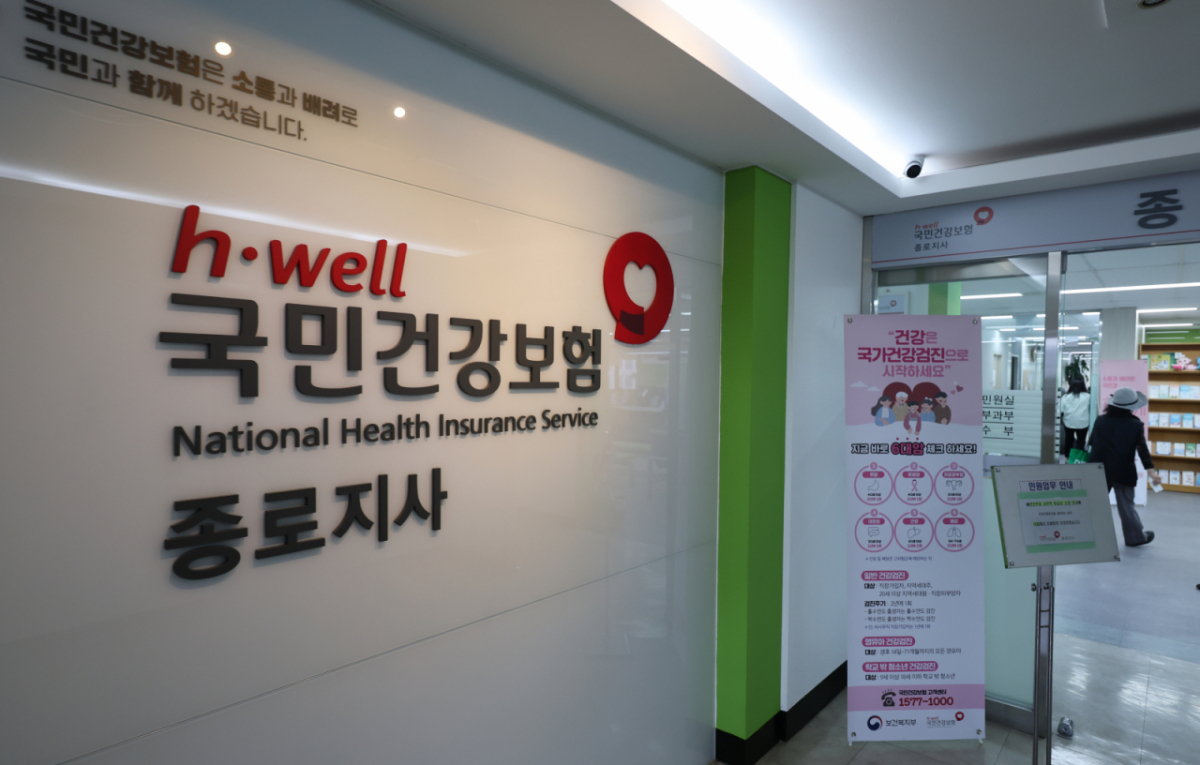
The National Health Insurance Service (NHIS) countered claims made by the Korean Medical Association, stating that more than half of the cases referred for investigation under its Special Judicial Police have been forwarded to prosecutors.
In a press briefing document released on the 16th, the NHIS stated, "The cumulative referral rate by police for cases suspected of being illegally established medical institutions (commonly known as office manager hospitals) and referred for investigation through last year stands at 50.6%." For reference, the overall police referral rate for all cases last year was 62.0%, while the referral rate for white-collar crimes such as fraud and embezzlement was 39.0%. Office manager hospitals fall under the category of white-collar crime.
The NHIS explained, "Administrative investigations into illegally established institutions are conducted by identifying target institutions based on external public interest whistleblowing and internal information from illegal or improper information systems." It added, "Target institutions are rigorously selected through a Review Committee for Selecting Investigation Targets, and investigations are carried out in compliance with all relevant laws, including the Basic Act on Administrative Investigations. Referrals for investigation to law enforcement authorities are limited to institutions suspected of illegal establishment."
The NHIS further stated, "Going forward, we will continue to strive to enhance the objectivity and fairness of administrative investigations so that conscientious medical professionals who comply with legal regulations can be protected."
Previously, on the 12th, the Korean Medical Association issued a statement at a rally opposing the NHIS Special Judicial Police held in front of the stairs of the main building of the National Assembly in Yeouido, Seoul. The association claimed, "The rate at which cases from the NHIS's administrative investigations into office manager hospitals are referred to the Prosecution Service with an opinion for prosecution was 4.9% in 2025. This means that 95% of hospitals, which have no issues, have suffered harm despite having committed no crime."
According to the NHIS, as of June, the cumulative amount determined for recovery from 1,822 illegally established medical institutions reached 2 trillion 919.5 billion won. However, the actual collection rate was only 9.02% (263.277 billion won). The NHIS noted that related investigations take an average of 11 months, during which time evidence destruction and asset concealment often occur, making it difficult to recover unjust gains. The NHIS views the introduction of its own Special Judicial Police as a measure to prevent leakage in the health insurance fund.
In contrast, the Korean Medical Association objects, arguing that granting investigative powers to the NHIS would concentrate excessive authority and could harm legitimate medical institutions. The association is demanding improvements to the current investigation system instead of establishing Special Judicial Police. On the morning of the 16th at 9 a.m., the association also held a protest rally opposing the National Health Insurance Service Special Judicial Police in front of the National Assembly in Yeouido, Seoul, calling for the withdrawal of the bill.

 in THEBIO
