

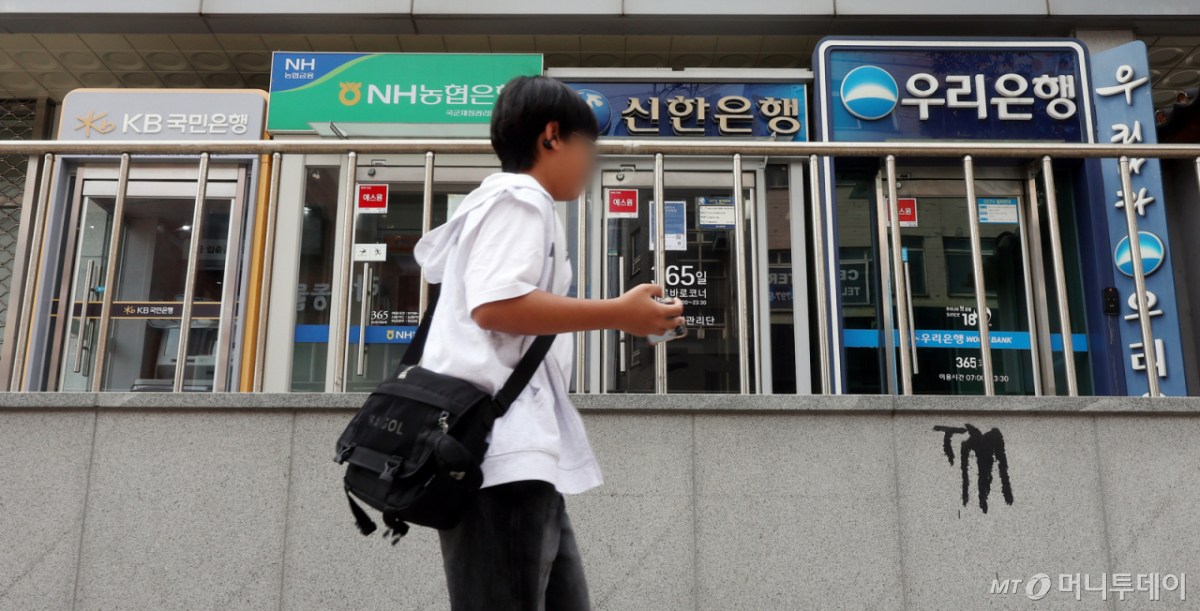
More than half of the exchange-traded funds (ETFs) sold by five major banks—KB Kookmin Bank, Shinhan Bank, Hana Bank, Woori Bank, and NH Agricultural Cooperative Bank—are classified as ultra-high risk.
According to data submitted by the Financial Supervisory Service to the office of Han Chang-min, a member of the Social Democratic Party serving on the National Assembly's Political Affairs Committee, 57% of ETFs sold in the first half of the year at the five major banks were rated as investment risk grade 1 (very high risk). By bank, Agricultural Cooperative Bank had the highest proportion at 66%, followed by Woori Bank (59%), Shinhan Bank (57%), Hana Bank (54%), and KB Kookmin Bank (47%). Including those rated grade 2 (high risk), the average reached 98%, indicating that most of the sales volume consisted of high-risk products.
Investment risk grades for financial products are assigned based on factors such as price volatility and the complexity of product structures. Bond-mixed funds typically fall below moderate risk, while equity funds are classified as high risk. The combined share of grade 1 and grade 2 products rose from 76% in 2024 and 87% in 2025 to 98% this year. This is believed to reflect growing expectations for semiconductor stocks. Indeed, sales of semiconductor-themed ETFs such as 'KODEX AI Semiconductor TOP2 Plus' and 'TIGER Semiconductor TOP10,' which are composed of shares from Samsung Electronics and SK Hynix, surged among bank-sold ETFs.

 in FINANCE
