

The system of unilateral binding force in financial disputes, a presidential campaign promise of President Lee Jae-myung, has begun to gain momentum after about 1 year and 4 months, but numerous challenges remain to be resolved before its final implementation. While it is viewed positively for enabling swift consumer relief and enhancing the effectiveness of dispute resolution, concerns persist that it infringes upon financial companies’ right to a trial. Ensuring the independence and credibility of the Financial Supervisory Service Dispute Resolution Committee is also an issue that needs to be addressed.
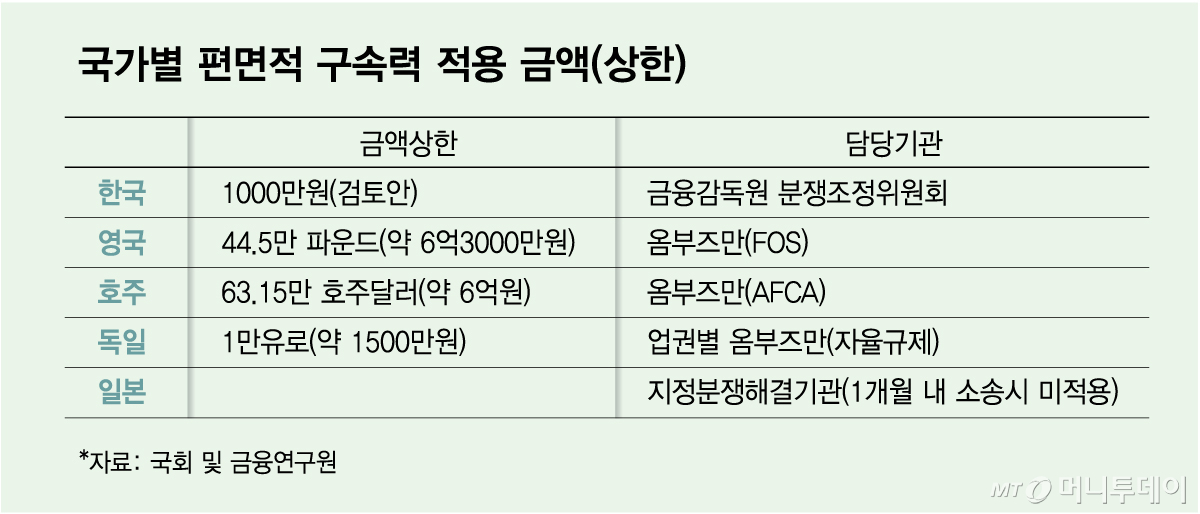
According to financial industry sources on the 30th, countries that grant unilateral binding force to financial dispute resolution include the UK, Germany, Australia, and Japan. The UK and Australia apply it to disputes of approximately 600 million won or less. However, they allow administrative litigation to challenge the legality of the dispute resolution if there are procedural defects in the monetary compensation decision or significant unfairness. Germany applies it to small-amount disputes of 10 million won or less, but it is conducted through financial companies’ self-regulation rather than by regulatory authorities. Japan operates it restrictively, allowing financial companies to file a lawsuit within one month from the date they become aware of the settlement proposal, even if the consumer accepts it.
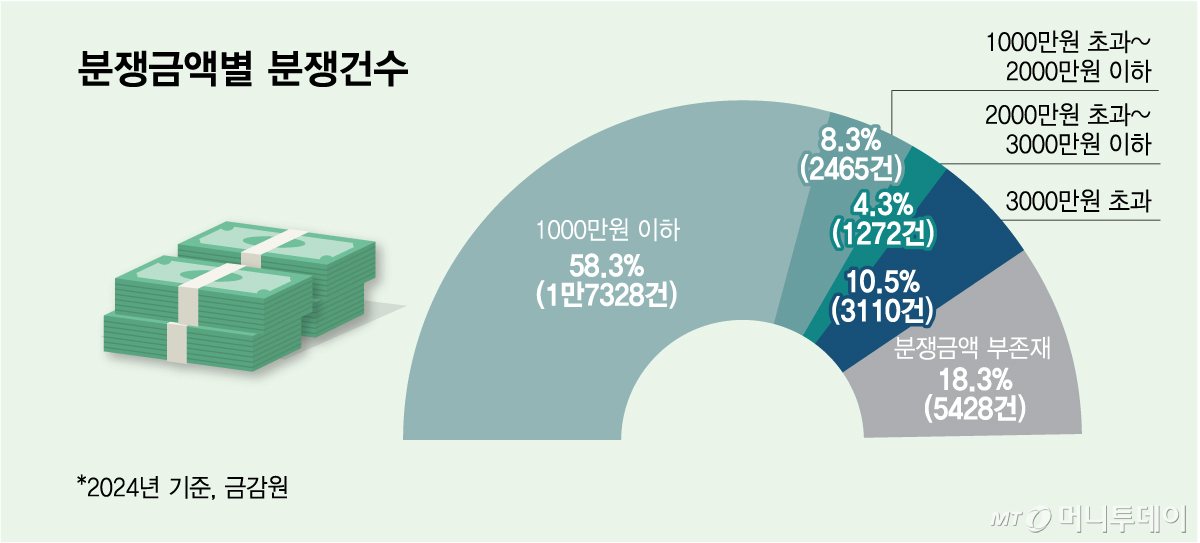
Domestically, a plan is under consideration whereby the Dispute Resolution Committee within the Financial Supervisory Service makes dispute resolution decisions for amounts of 10 million won or less, and if consumers accept them, financial companies are obligated to comply. Since disputes of 10 million won or less account for 50% to 60% of the total, it is expected that one in two cases will fall under the scope of unilateral binding force.
Pointers have emerged that side effects from restricting financial companies’ right to petition for trial must be minimized to successfully establish the unilateral binding force system. In fact, at a closed-door meeting held earlier this month with the attendance of relevant government ministries, financial companies, and experts, it was reported that legal professionals argued, “A settlement in court is established through agreement between both parties, so completely blocking financial companies’ right to petition for trial raises concerns about infringement of fundamental rights.”
The financial authorities are also considering a plan to grant financial companies limited rights to retrial in cases where procedural defects are discovered or new evidence that could not be contested before the Dispute Resolution Committee is found, similar to the practices in the UK and Australia.
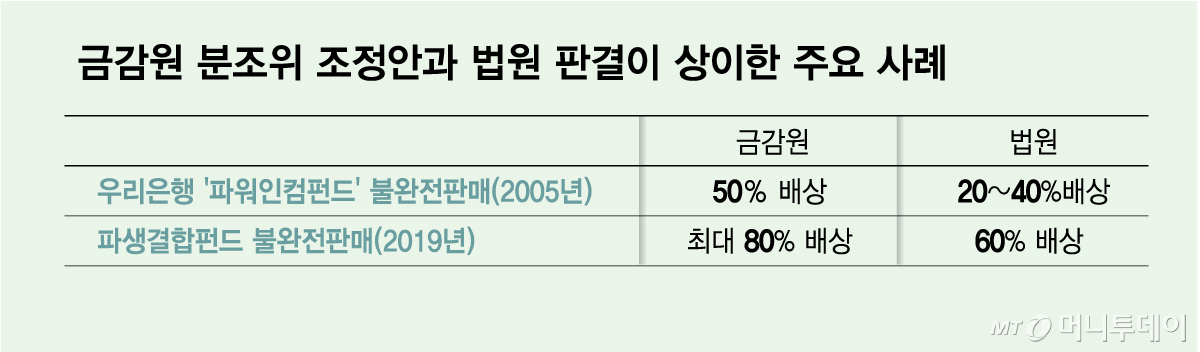
Ensuring the independence and credibility of the Dispute Resolution Committee is also an important challenge that needs to be addressed. This is because there have been numerous instances where, when financial companies filed lawsuits against the Financial Supervisory Service Dispute Resolution Committee’s dispute resolution proposals due to dissatisfaction, the final court rulings differed from those of the committee. For example, in the case of incomplete sales of Woori Bank’s ‘Power Income Fund’ in 2005, the Financial Supervisory Service recommended 50% compensation, but the court ruled for 20% to 40% compensation. During the 2019 overseas interest rate-linked derivative-linked fund (DLF) incident, the Financial Supervisory Service Dispute Resolution Committee made a decision of up to 80% compensation, while the court decided on 60% compensation. In the 2024 Hong Kong H-Index ELS (equity-linked securities) incident, the committee decided on basic compensation of 20% to 40%, but in lawsuits filed by investors, rulings of 0% liability for financial companies also emerged.
Plans are under consideration to increase the proportion of legal professionals such as judges, prosecutors, and lawyers among the 35th members of the Dispute Resolution Committee, and to replace the committee chair, currently held by a deputy head of the Financial Supervisory Service, with a full-time judge. This is to ensure independence and objectivity.
Some argue that granting the authority to conclude dispute resolutions to the Financial Supervisory Service, which holds inspection and sanctioning powers over financial companies, is excessive. The logic is that the authority to make unilateral binding force decisions should be given to a third-party body rather than the Financial Supervisory Service. On the other hand, opposing arguments state that for financial companies to accept the Financial Supervisory Service’s dispute resolution proposals, it must simultaneously hold both inspection and sanctioning powers.
A financial industry official said, “The Financial Supervisory Service conducts investigations and inspections, so if it concludes a specific dispute entirely, it is difficult for financial companies whose right to file lawsuits in court is blocked to accept this,” adding, “Even if unilateral binding force is implemented, the benchmark amount should be lowered further or exception provisions should be created.”

 in FINANCE


