

[For more diverse company information on the startups mentioned in this article, please visit Unicorn Factory’s big data platform 'Data Lab'.]
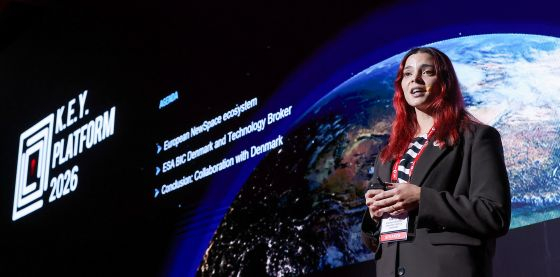
The space startup incubation model established by ESA BIC (European Space Agency Business Incubation Centre) is gaining attention as a new growth platform that organically connects space technology with terrestrial industries. Recently, the global space industry has been rapidly expanding beyond its traditional structure focused on rocket launches and satellite manufacturing, integrating with diverse sectors such as data, materials, communications, construction, and logistics.
Maddy Tizar Hansson, Head of ESA BIC Denmark’s Space Startup Ecosystem, emphasized during her keynote speech at the "2026 Key Platform" Special Session 4 titled "The 1st K-Space Forum: Opportunities and Challenges in the NewSpace Era," that "only when technologies verified in space are expanded to terrestrial industries, and conversely, technologies accumulated on Earth are connected to the space industry, can greater industrial achievements and new market opportunities be created."
Her presentation suggests that the essence of today’s space industry is no longer confined to specific technological fields but is evolving toward creating new markets and business opportunities through organic cross-connections with diverse industrial ecosystems.
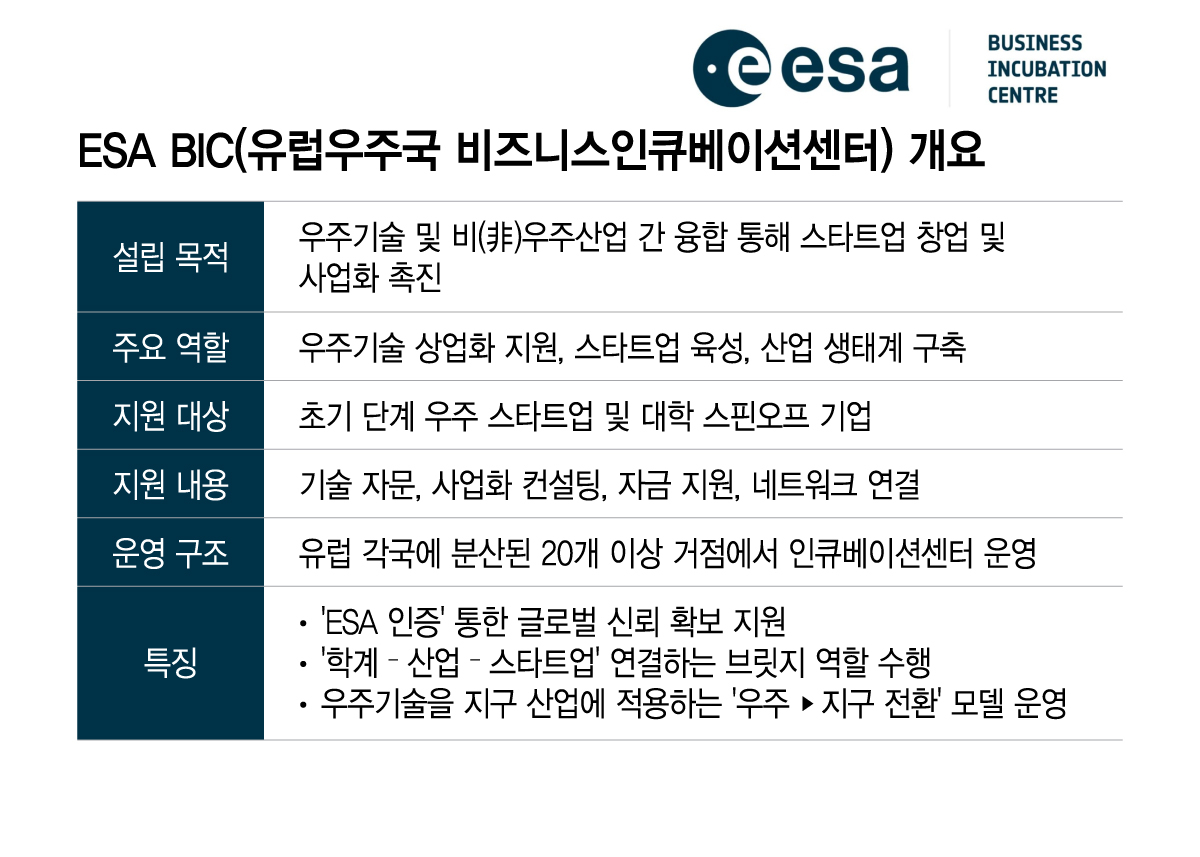
ESA BIC: A National Innovation Hub Uniting Industry, Academia, Research, and Government
Hansson explained that ESA BIC operates based on this philosophy. It is structured as a consortium involving major universities such as the Technical University of Denmark (DTU), Aarhus University, and Aalborg University, along with research institutions and private companies. Through nationwide incubation hubs, it identifies and nurtures startups. This model goes beyond startup support centered solely on institutional investors; it is a national innovation hub built on collaboration among industry, academia, research, and government. It forms a virtuous cycle where technologies developed in laboratories are rapidly commercialized, and demands from industrial sites are reflected back into R&D directions.
Startups selected as ESA BIC incubated companies receive not only initial commercialization funding of up to 60,000 euros (approximately 0.1 billion won) but also access to ESA’s technology validation, regulatory advisory services, connections to global investment networks, and programs for business model enhancement. Considering the high initial entry barriers and long commercialization cycles unique to the space industry, this goes beyond mere financial support, serving as a practical market entry platform.
Another strength of ESA BIC is that "ESA certification" itself acts as a trust asset for startups. It provides international credibility when early-stage startups seek to establish technological reliability with investors, clients, and government institutions. In industries like space, where regulation and technological trust are critical, this becomes a decisive competitive advantage. Currently, ESA BIC centers are installed and operated in over 20 locations across Europe, having nurtured approximately 700 startups to date.
Next-Generation Markets Opened by Low-Orbit Communications and Rocket Logistics
Above all, the differentiating factor of ESA BIC lies in its "Cross Innovation" strategy. This structure simultaneously promotes the transfer of space technology to terrestrial industries and the application of terrestrial technologies to the space industry. For example, satellite data, sensors, and extreme-environment response technologies can be expanded into agriculture, logistics, energy, and eco-friendly construction, while AI, new materials, and electrical/electronic technologies can be connected to space exploration and satellite manufacturing.
As a representative case, Hansson mentioned "Danish Graphene." This company originally operated as a terrestrial industry firm developing electrically conductive adhesives but expanded into the space business after confirming that its technology could be utilized in satellite manufacturing.
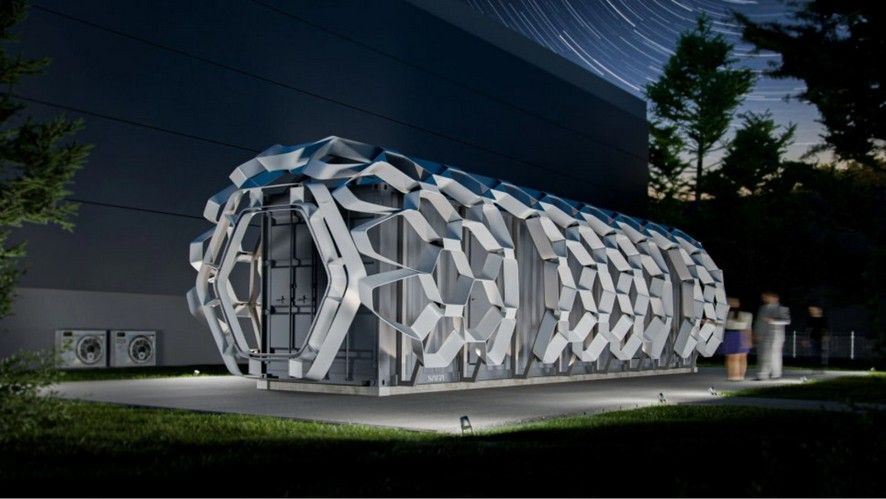
Conversely, an example of space technology expanding to Earth is "Saga Space Architects." This company developed the lunar base habitat module "FLEXHab," securing survival technologies for extreme environments, and is now expanding into eco-friendly construction, enclosed future housing, and resource-circular construction markets. This structure allows niche space architecture technology to drive innovation in the terrestrial construction market.
These cases indicate that the space industry is evolving not merely as a sector centered on launch vehicles or satellites but as a "platform industry" that promotes technological transformation across all industries.
Hansson identified "low-orbit communications" and "rocket logistics" as the fastest-growing space-based businesses in the future. Low-orbit communications are exemplified by satellite internet services like Starlink. This goes beyond simply providing internet access; it is expected to bring broad economic effects including the restructuring of global digital infrastructure, military and disaster response capabilities, and remote industry operations.
Another field is rocket-based ultra-high-speed logistics. If a structure that uses large reusable rockets to transport cargo to the opposite side of the Earth within hours becomes feasible, it could fundamentally transform existing air and sea logistics systems.
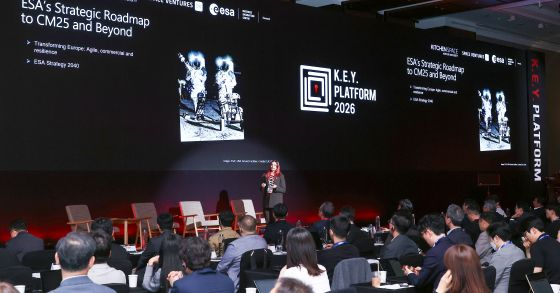
"Building a Korean Space Startup Platform Will Determine National Competitiveness"
South Korea has secured world-class competitiveness in various fields such as launch vehicles, satellites, semiconductors, AI, and materials, but the structure to organically connect these areas and expand them into a systematic space startup ecosystem remains in its early stages.
Hansson diagnosed that if South Korea adopts a region-based consortium-type space startup platform like ESA BIC, it could expand its industrial ecosystem much faster. He stated, "If we build a structure that organically connects universities, research institutions, large corporations, startups, and the government, we can create specialized space industry hubs in each region," emphasizing the importance of a collaborative innovation ecosystem.
He also foresaw that existing industries where South Korea holds strengths, such as K-beauty, textiles, materials, and communications, could create new market opportunities by combining with the space industry. He explained, "What is important in the space industry is discovering 'gaps' that no one has yet captured," highlighting the need to focus on the potential application of traditional industrial technologies to the space sector.
He further added, "The essence of the space industry lies not simply in going to space but in using space to redesign the industrial structure itself." He emphasized, "In the future, national competitiveness will likely be determined less by how advanced launch vehicles a country possesses and more by how effectively it can connect diverse industries with space technologies and convert them into a startup ecosystem."
[Money Today Startup Media Platform Unicorn Factory]

 in FUTURE


