

[For more diverse corporate information on startups, visit Unicorn Factory's Big Data Platform Data Lab.]
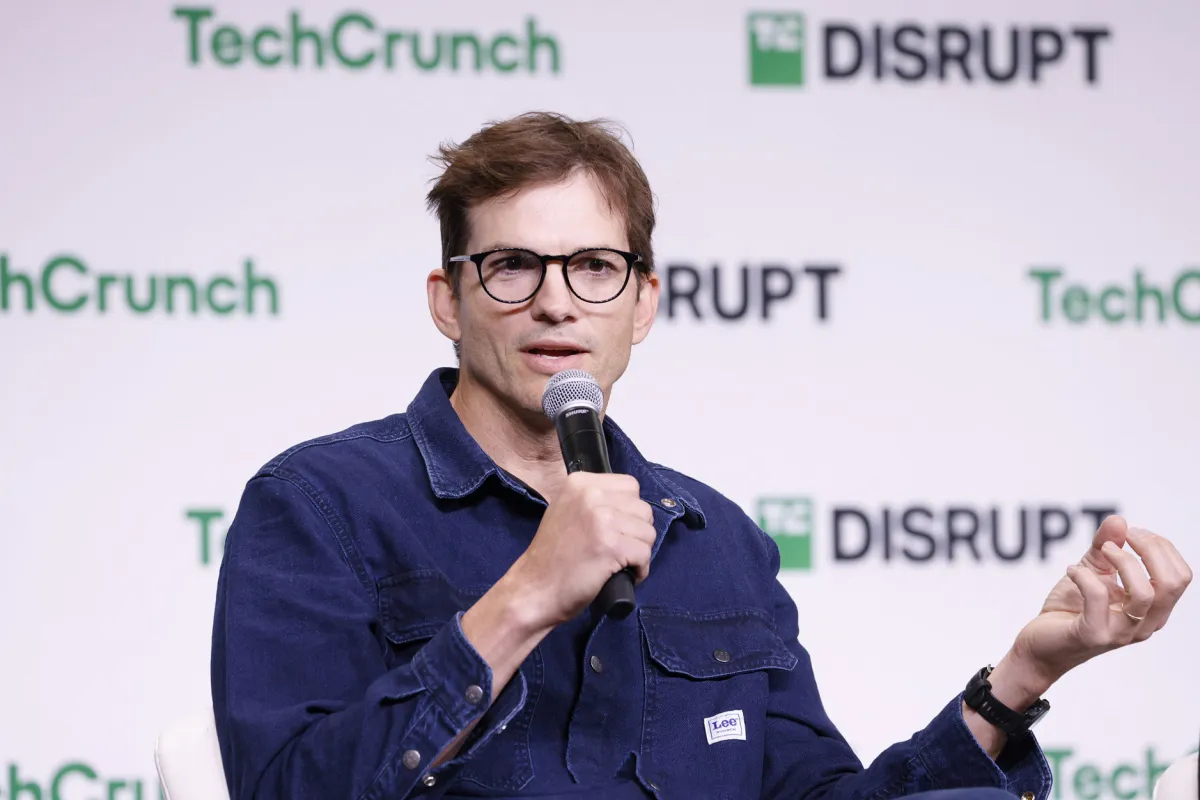
Actor and investor Ashton Kutcher is leaving Sound Ventures, the venture capital firm he co-founded, to establish a new VC.
Kutcher founded Sound Ventures in 2015 with music manager Guy Oseary and has operated it for 11 years. The new company will be co-founded by Kutcher and Morgan Beller, who previously served as General Partner at early-stage specialist VC NFX. The company name has not yet been disclosed.
"Betting on the Post-AGI World"... Shifting focus to early stage and infrastructure

Kutcher is a well-established early-stage investor. He achieved success by making early investments in Uber, Airbnb, Spotify, and others. He also formed a connection with Sam Altman back when Altman was founding the location-based social app Loopt, long before ChatGPT emerged.
Beller previously co-led Meta's (formerly Facebook) cryptocurrency project Libra. She worked as a partner at Andreessen Horowitz (a16z) for about three years before recently stepping down from her role as General Partner at NFX.
Kutcher and Beller plan to focus on early-stage investments in AI infrastructure, energy, and deep tech startups. According to The Wall Street Journal (WSJ), they are particularly expected to concentrate on the "post-AGI (Artificial General Intelligence) sector."
WSJ reported that Kutcher's departure from Sound Ventures stemmed from differing views on investment stages. While Sound Ventures had already placed significant weight on established leading AI companies, Kutcher intended to bet on startups at the very earliest stage.
Previously, Sound Ventures invested in fintech firms Brex and Gusto, and participated as an early investor in OpenAI, Anthropic, and World Labs by PayPay Lee. Last year, it raised an AI-specific fund worth approximately $240 million (about 367 billion won).
Kutcher plans to continue serving as a consultant for Sound Ventures after leaving. An industry source stated, "If Sound Ventures built its reputation by heavily betting on leading AI companies, Kutcher's new VC will target the layer beneath them—namely infrastructure and energy."
Another source added, "As competition for AI foundation models narrows to a few leading companies, investment focus is shifting toward physical infrastructure such as power, data centers, and semiconductors, along with deep tech. This aligns with recent trends of large capital flowing into so-called 'hard tech' sectors like space and defense."
Building an 'exchange' for the space economy... US Nebex raises $30 million in seed funding
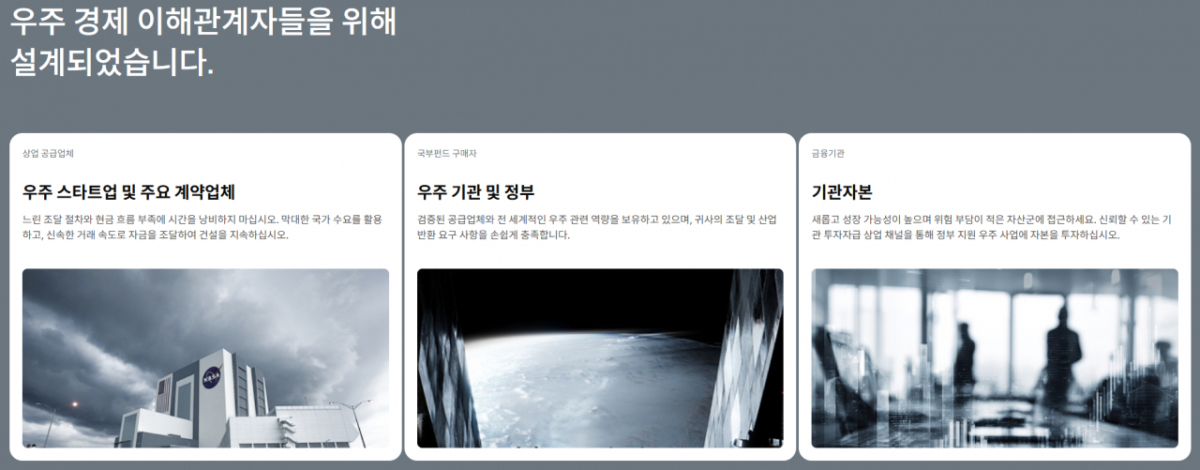
US space economy specialist startup Nebex has secured $30 million (approximately 46 billion won) in seed funding. This round was jointly led by Google Ventures (GV), Google's dedicated investment arm, and Eniac Ventures.
Other participants included 2048 Ventures, Better Tomorrow Ventures, Oceans Ventures, AIN Ventures, Amoris Square Ventures, and VSC Ventures. Despite being in the seed stage, the round is praised for its rapid pace and substantial size.
Nebex aims to be a specialized trading platform connecting space companies with government, public institutional investors, and private investors. Its goal is to facilitate contracts for various space projects such as satellites and launch vehicles, provide financial services including fundraising and payment based on those contracts, and streamline transactions and capital flows in the space sector.
Until now, the space industry has operated under a "closed structure" where a few defense giants produce hardware for a limited number of government contracts. However, Nebex argues that with rapidly expanding orbital accessibility and the emergence of dozens of private space companies, the market is beginning to take on real commercial characteristics.
The founders' backgrounds are also noteworthy. Tejpaul Bhatia, CEO of Nebex, previously served as CEO of private space company Axiom Space, where he led commercial space contracts exceeding $1 billion (about 1.5 trillion won) involving sovereign nations, SpaceX, and NASA (US National Aeronautics and Space Administration).
Nebex helps governments and space institutional investors find qualified private partners, while enabling supply companies to reach new demand beyond the traditional few players. Its revenue model is essentially that of an exchange: when supply companies generate profits, Nebex earns fees.
Nebex plans to release a beta version of its space economy trading platform this summer and launch the full version later this year. In the future, it aims to expand participation among buyers, supply companies, and capital providers while promoting cross-border transactions.
Bhatia stated, "The next leap in the space economy will come not from engineering but from business model innovation. If SpaceX laid the physical rails for the space economy, Nebex is building the commercial rails."
Canada's largest defense startup Series A deal breaks records
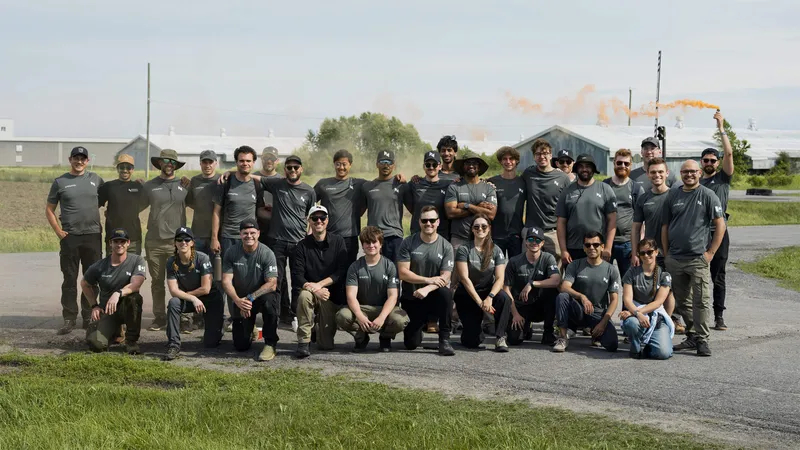
Canadian defense technology startup Dominion Dynamics has raised 1 billion won (approximately 150 billion won) in its Series A round. This marks the largest Series A funding amount ever for a Canadian defense company.
The round was led by existing investor Georgian, Canada's prominent VC firm. Post-money valuation is reported to be around $400 million (about 600 billion won).
In addition to Georgian, the investment included Balmore Equity Partners, Lakestar, OMERS Ventures, Canada Business Development Bank (BDC) Capital, Royal Bank of Canada, and Summer Venture Partners—major defense-focused investors from North America and Europe. Balmore is known for being an early investor in SpaceX.
Headquartered in Ottawa, the capital of Canada, Dominion develops defense technologies targeting extreme climate environments. Its goal is to detect and analyze threats in real time in Arctic conditions where communication networks are unavailable.
Its flagship product is the command-and-control (C2) platform "AuraNet." AuraNet is designed to operate in extreme environments like the Arctic by connecting land, sea, and air sensors in a mesh network. The company is also developing an extreme-weather drone called "Scout."
From February to April this year, Dominion deployed AuraNet during Canada's Arctic training exercise "Nunavut-Nunalivut." The system was used by the Canadian Rangers—a quasi-military organization within the Canadian Armed Forces composed of Indigenous peoples from the North—for mission tracking, planning, and real-time communication.
Dominion positions itself as a "Neoprime," modeled after US defense startup Anduril. Neoprimes are software-centric emerging defense companies that develop solutions with private capital before securing government contracts.
Dominion plans to use the funds for technology R&D, strengthening manufacturing capabilities, and deploying systems in military operations. It currently employs 50 people and plans to expand its workforce to over 100 by year-end while opening offices in the US and Europe.
Eliot Pence Do Mi-ni-eon (CEO) previously led global growth at Anduril for four years. Pence stated, "This round was completed within four weeks and saw a housing subscription exceeding 1.9 times. We aim to make Dominion a true NATO-wide defense Neoprime."
An industry source noted, "Dominion's rise coincides with Canada's trend toward defense self-reliance. Canada is significantly increasing its defense spending compared to allied nations and reducing dependence on the US by strengthening its domestic defense capabilities."
[MoneyToday Startup Media Platform 'Unicorn Factory']

 in FUTURE


