

[For more diverse corporate information on the startups mentioned in this article, visit the Unicorn Factory big data platform 'Data Lab'.]
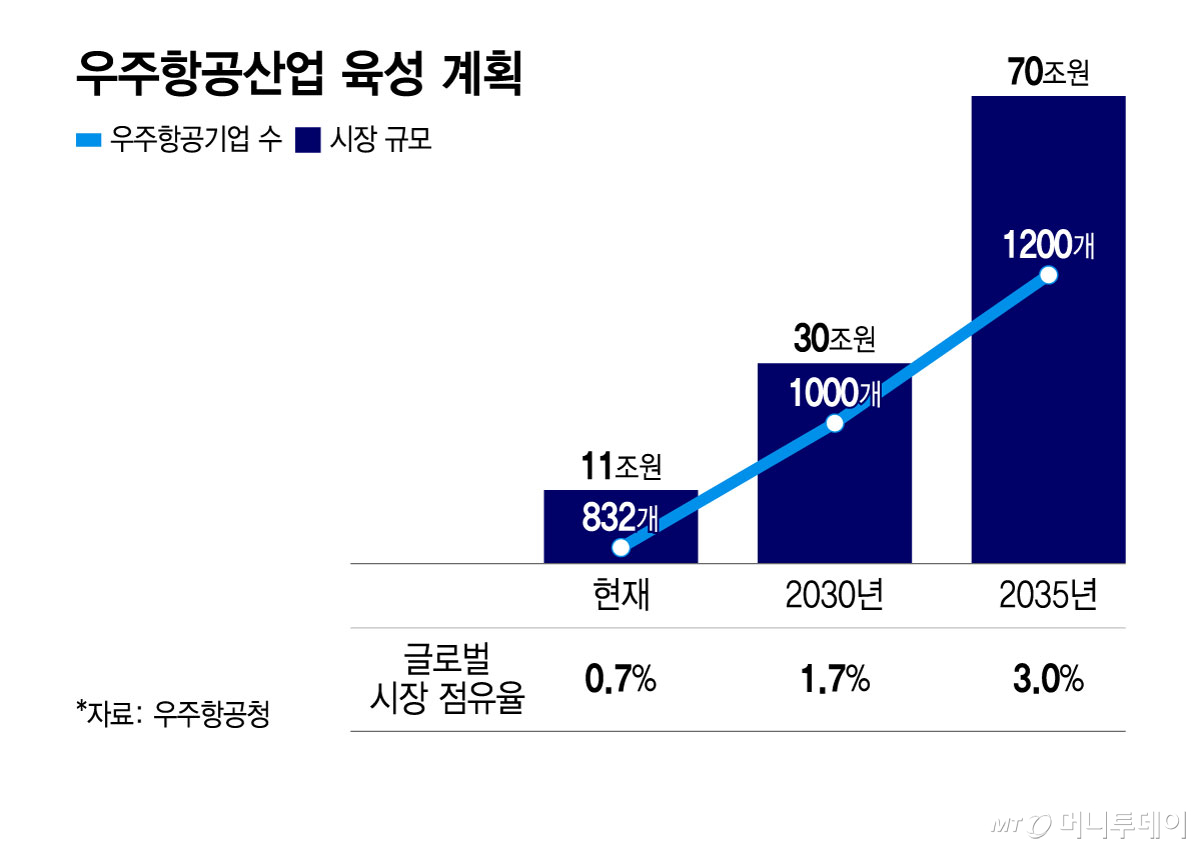
"The Space Administration will actively support growth so that the current approximately 800 domestic space and aerospace companies can increase to 1,000 by 2030 and 1,200 by 2035."
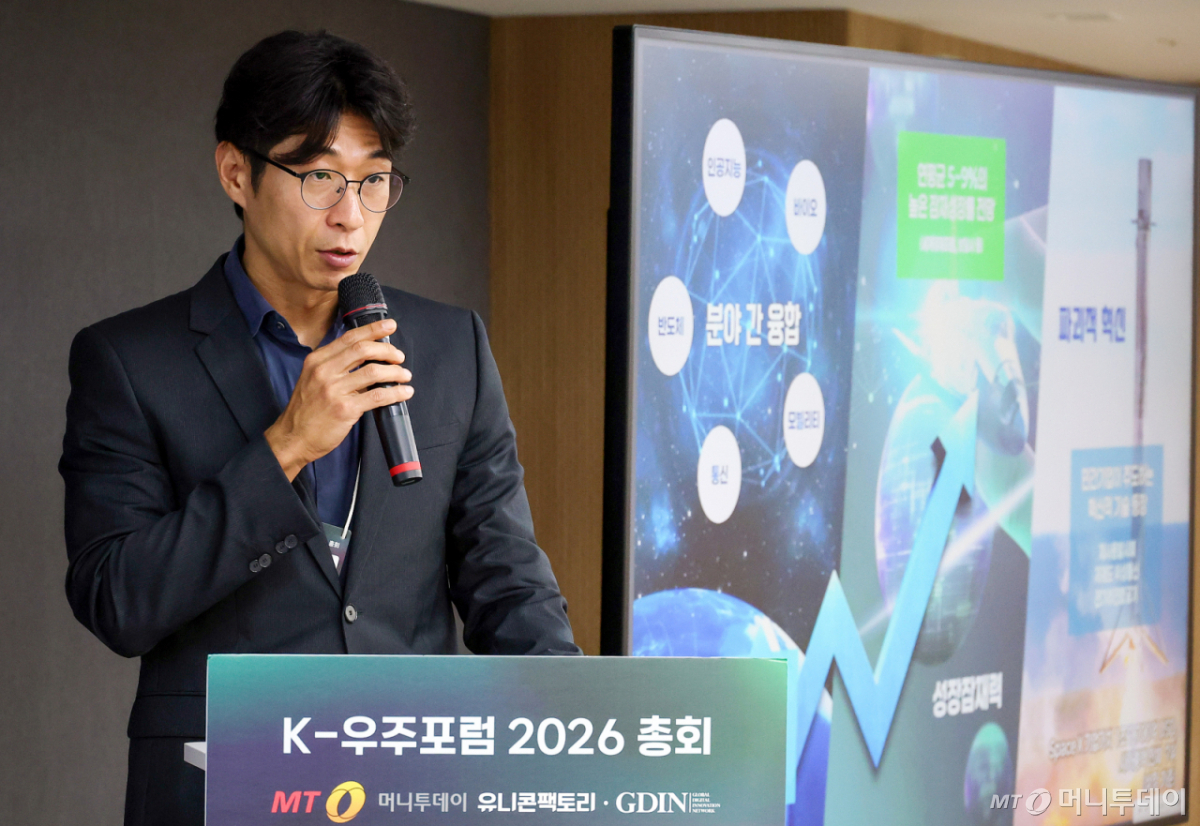
Jung Kwan-woo, section chief of the Space and Aerospace Industry Infrastructure Division at the Space Administration, announced this space and aerospace industry development strategy on the 7th at the 'K-Space Forum 2026 General Assembly'. He stated, "We will foster collaboration among government, private sector, and military in the satellite field to create large-scale satellite demand, and support materials, components and equipment companies in collaborating with satellite enterprises." He also emphasized establishing a foundation for businesses that can utilize space data by actively disclosing and distributing national satellite information.
Section Chief Jung said, "The Space Administration will support the growth of the satellite industry through related infrastructure such as the Space Environment Test Center, Satellite Development Innovation Center, and Data Platform." He added, "In the launch vehicle sector, we will expand support for small and medium-sized launch vehicles developed by private ventures and startups in addition to national flagship launchers like Nuri."
To this end, the Space Administration plans to fully open the Naro Space Center in Goheung, South Jeolla Province, to the private sector starting next year and improve its aging facilities. A 'Second Space Center' is also scheduled to be newly established from 2028 onward.
Legal and institutional frameworks and investment environments for private space and aerospace companies will also be upgraded. The administration explained that a foundation for industry support will be established through the enactment of the Basic Act on Space and Aerospace, and procurement and contracting in the space and aerospace sector will be activated. It is also planned to continue the NewSpace Fund, currently being formed with a scale of 200 billion won after selecting an operator.
Section Chief Jung stated, "South Korea possesses strong core foundational industries including semiconductors, machinery, electronics, materials, and IT, along with key technologies spanning the entire lifecycle of space and aerospace—from launch vehicles to satellites and space exploration aircraft." He added, "By integrating these strengths, we aim to raise the current domestic space industry market size, which stands at approximately 11.2 trillion won, to 70 trillion won by 2035."
[MoneyToday startup media platform Unicorn Factory]

 in FUTURE

