

[For more diverse corporate information on startups mentioned in this article, visit Unicorn Factory's big data platform 'Data Lab'.]
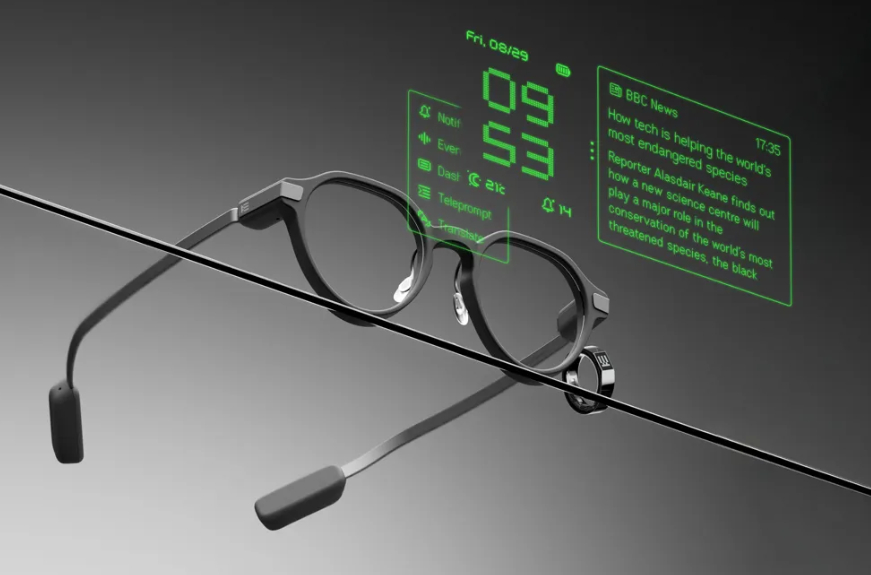
As China's startup sector joins the AI-powered smart glasses market led by Meta and followed by Samsung Electronics, competition for the next-generation personal computing platform is intensifying.
According to Crunchbase and CNBC among other major foreign media outlets on the 10th, Chinese AI smart glasses startup Even Realities achieved a corporate valuation of $1 billion (approximately 1.5 trillion won) just three years after its founding, joining the ranks of unicorns (private startups with valuations exceeding $1 billion).
The AI smart glasses market has drawn attention as a next-generation growth industry this year, with major domestic and international tech giants entering one after another. While Meta secured the market with Ray-Ban smart glasses, Samsung Electronics announced plans to launch its first AI smart glasses in the second half of this year in partnership with Google.
"Generative AI goes mainstream"… Chinese Even Realities becomes unicorn just three years after founding
Even Realities, headquartered in Shenzhen, China, raised $150 million (approximately 225.4 billion won) in a Pre-Series B investment round involving Meituan and Tencent among others. The company plans to deploy the funds toward developing next-generation smart glasses platforms, enhancing AI capabilities, and expanding its global business operations.
Even Realities was founded in 2023 by engineers who previously worked at Apple. CEO Will Wang, the founder, participated in Apple Watch and iPhone development at Apple, while co-founders include personnel from IT companies and premium eyewear brand Lindberg.
Last year, the company launched smart glasses 'Even G2' featuring a lighter frame and display compared to its previous product, along with a smart ring called 'Even R1' designed to control it.
Unlike Meta's Ray-Ban smart glasses, which are centered around camera and AI voice features, Even G2 eliminates the camera entirely. Instead, it leverages head-up displays (HUD) within the lenses to provide notifications, navigation guidance, real-time translation, and positions personal data protection as its core competitive advantage.
The rapidly expanding AI smart glasses market underpins this investment round. According to market research firm Omdia, global shipments of AI smart glasses reached 8.7 million units last year, a more than 300% increase from the previous year, and are projected to exceed 15 million units this year.
A domestic VC official stated, "The AI glasses market is highly likely to grow substantially in the future because it is the device that can most naturally implement generative AI." The official added, "While smartphones assume active user manipulation, AI glasses enable AI to understand what users see and hear in real time and immediately provide necessary information."
Currently, Meta holds the top position with approximately 70% market share using its Ray-Ban smart glasses, followed by Chinese augmented reality (AR) glasses company RayNeo Technology and Chinese electronics firm Xiaomi. Alibaba entered the market competition in February by unveiling 'Quark AI Glasses'.
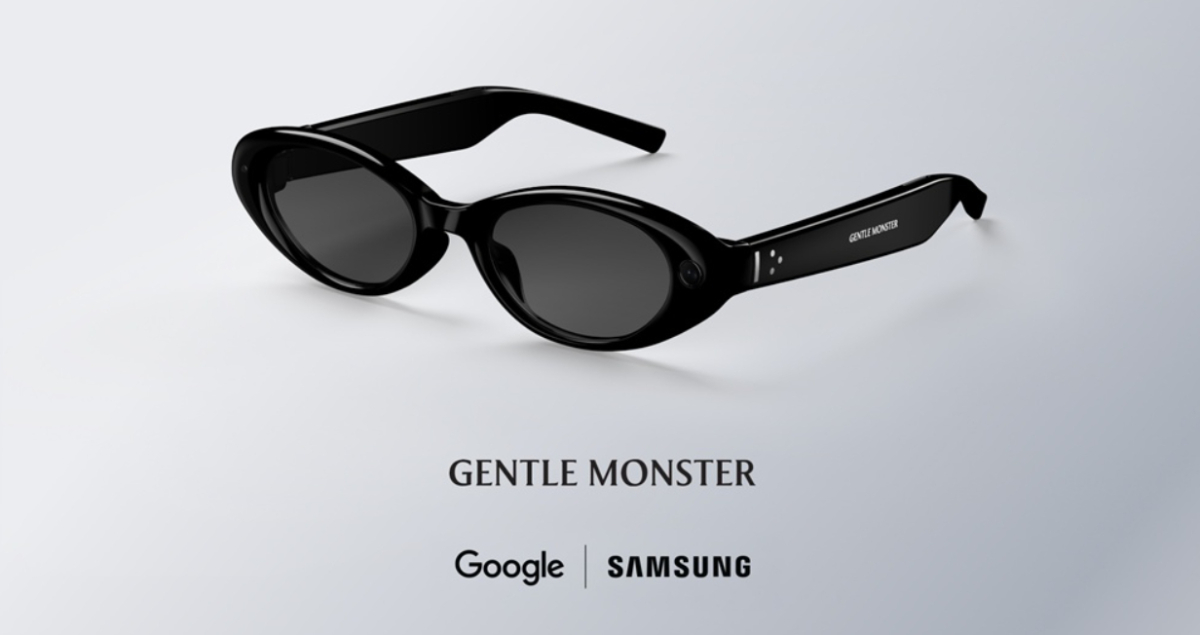
In Korea, Samsung Electronics announced plans to launch its first AI smart glasses in the second half of this year in partnership with Google. Samsung Electronics and Google collaborated on design development with global eyewear brands Gentle Monster and Warby Parker. This strategy mirrors Meta's approach of partnering with well-known eyewear brands such as Ray-Ban and Oakley to showcase smart glasses.
AI boom drives European VC investment to highest level in four years… "UK smiles"
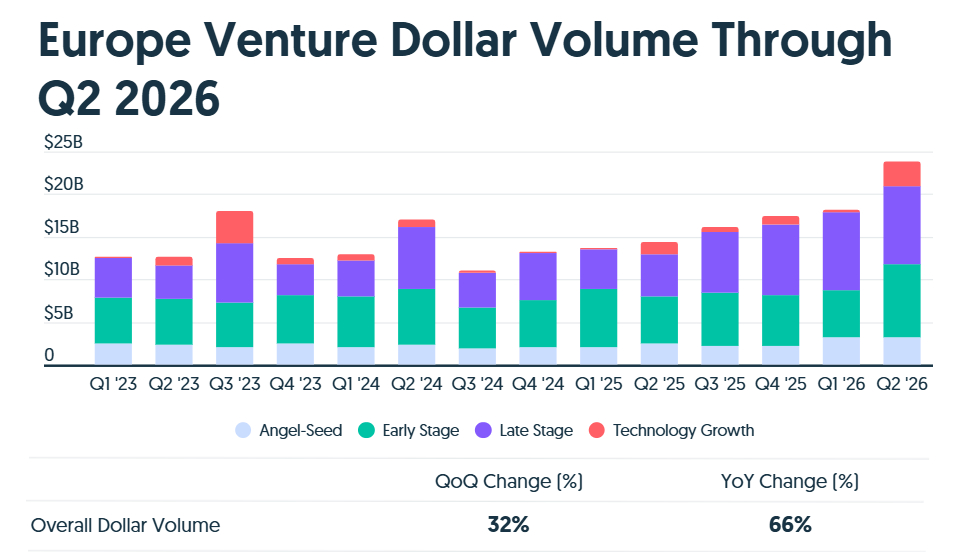
The European venture investment market is rapidly recovering, centered on AI and deep tech companies. Investment scale for European startups in Q2 this year recorded the highest level in the past four years. Analysis suggests that Europe's previously sluggish venture market has entered a recovery phase due to successive mega-round investments.
According to global corporate information platform Crunchbase, European startups raised a total of $24 billion (approximately 36.72 trillion won) in Q2 this year. This represents an increase of approximately 32% from the previous quarter and about 66% compared to the same period last year. On a quarterly basis, this is the best performance since 2022.
This investment recovery was driven by mega-rounds in AI and deep tech sectors. In Q2, four investment rounds with corporate valuations exceeding $1 billion (approximately 1.5 trillion won) were completed in Europe, accounting for 25% of total venture investments.
Notable examples include UK-based AI drug development company Isomorphic Labs, spun off from Google's DeepMind; Swedish eco-friendly steelmaker Stora Enso; German robotics firm Neurorobotics; and UK AI research institute Ineffable Intelligence, founded by former DeepMind researchers.
Investment rounds exceeding 1 billion won also led the market. Approximately 65% of total investment funds were concentrated in 42 companies that raised over 1 billion won each. Investment areas spanned deep tech sectors including AI, robotics, semiconductors, quantum computing, biotechnology, aerospace, and energy.
By country, the UK stood out most prominently. UK startups raised $10.4 billion, ranking first in Europe. This was followed by Germany ($3.2 billion), France ($2.4 billion), and Sweden ($2 billion).
Initial public offerings (IPOs) remained weak, but mergers and acquisitions (M&A) showed signs of recovery. In Q2, 154 European startups that received venture investment were acquired, with transaction values exceeding $11.5 billion.
Meanwhile, cumulative investment in European startups for the first half of this year (January-June) reached $42 billion, a 50% increase compared to the same period last year. However, it still falls short of the peak venture investment level during the COVID-19 pandemic in H1 2021 ($60 billion). In the same period, North America raised $392 billion (approximately 590 trillion won), achieving 158% growth compared to the previous year. While Europe also shows recovery signs, a significant gap remains in investment scale compared to the United States.
As AI startup valuations soar, funds double… Saverin's B Capital loads up with 750 billion won in ammunition
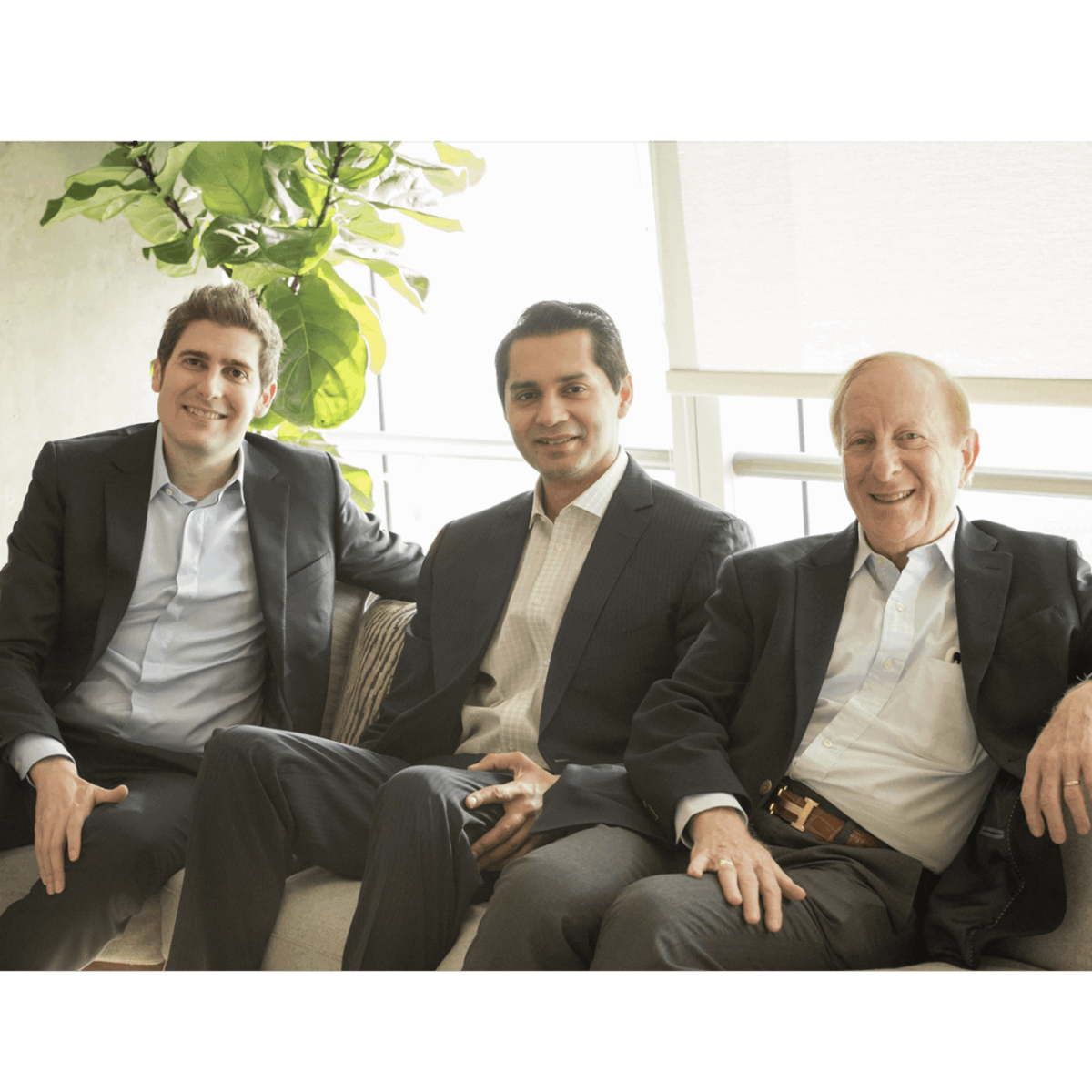
B Capital, co-founded by Facebook co-founder Eduardo Saverin, has established an initial investment fund of $500 million (approximately 752 billion won), fueled by the AI investment boom.
According to major foreign media including The Wall Street Journal (WSJ), B Capital recently formed its latest dedicated early-stage fund, 'Ascent Fund III', with a size of $500 million. This is approximately twice the size of its previous work, 'Ascent Fund II' established in 2022 ($254 million).
The company explained that it exceeded its target amount (oversubscribed) amid high interest from existing limited partners (LPs) and new investors.
The newly established fund plans to focus investments on seed and Series A stage startups in North America and Asia. This fund expansion is interpreted as reflecting the market environment where early-stage startup valuations have risen significantly, particularly around AI startups. More capital is now required to secure meaningful equity stakes compared to the past.
According to PitchBook, the median pre-investment valuation for US seed-stage startups in H1 this year was $19.5 million (approximately 29.4 billion won), reaching about four times the level of 2016. The median pre-investment valuation for Series A stage startups also reached $64 million (approximately 96.2 billion won) as of last month's 30th, five times higher than a decade ago.
As corporate valuations in San Francisco Bay Area have risen significantly due to intense investment competition, B Capital has recently expanded its investment scope to other US regions including Los Angeles, New York, Texas, and Florida.
Meanwhile, B Capital was co-founded in 2016 by Saverin, prominent US investor Howard Morgan, and Indian-origin Raj Ganguly from Bain Capital. The company is headquartered in Los Angeles and Singapore. It currently invests in startups at various growth stages from seed to late-stage, with total assets under management (AUM) exceeding $12 billion.
Representative invested companies include humanoid robot startup Apptronik, defense AI startup Havoc AI, and space power grid construction startup Star Catcher.
[MoneyToday Startup Media Platform Unicorn Factory]

 in FUTURE


