

[For more diverse company information on the startups mentioned in this article, please visit the Unicorn Factory big data platform 'Data Lab'.]
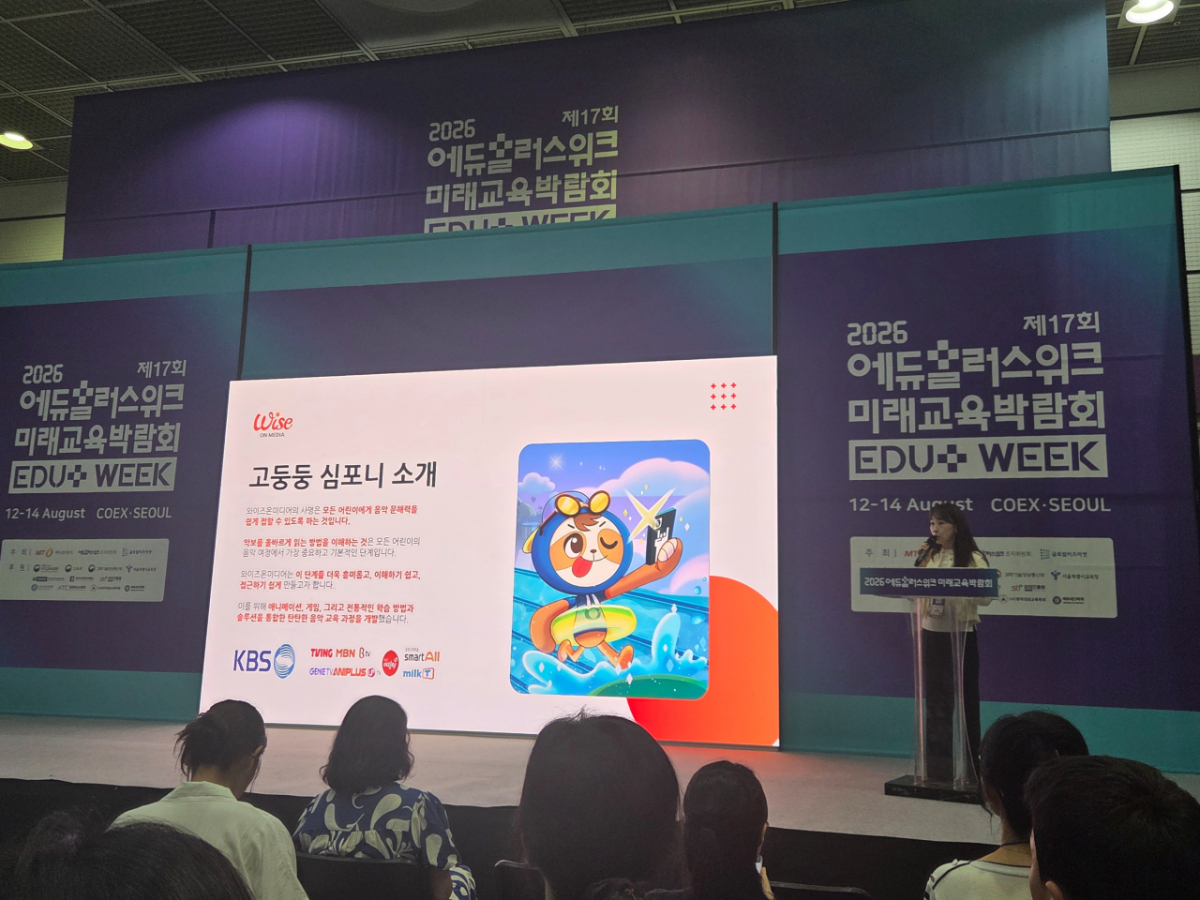
"Children can memorize even 100 difficult dinosaur names, so why is reading sheet music so hard for them? I have always wondered about this. Therefore, we replaced musical notes and rests with familiar animal characters so children can learn to read sheet music as if they were playing a game. Our goal is to ensure that every child can read sheet music, enjoy music, and live their lives accordingly."
On the 13th, at the finals of the "Edu-Plus Awards," a side event of the "2026 Edu-Plus Week Future Education Expo" held at Seoul COEX, Park Hyun-jeong of WiseOn Media introduced her company's music education solution, "Gdong-dong Symphony for EDU," and made these remarks.
The expo, which opened the previous day, is hosted by MoneyToday and the Edu-Plus Week Organizing Committee, with Global Biz Market and the Korea Smart EdTech Cooperative Association serving as organizers. The event, running until the 14th, features participation from over 170 educational companies, institutional investors, and organizations from 15 countries, including the United States and the United Kingdom, showcasing more than 200 educational solutions.
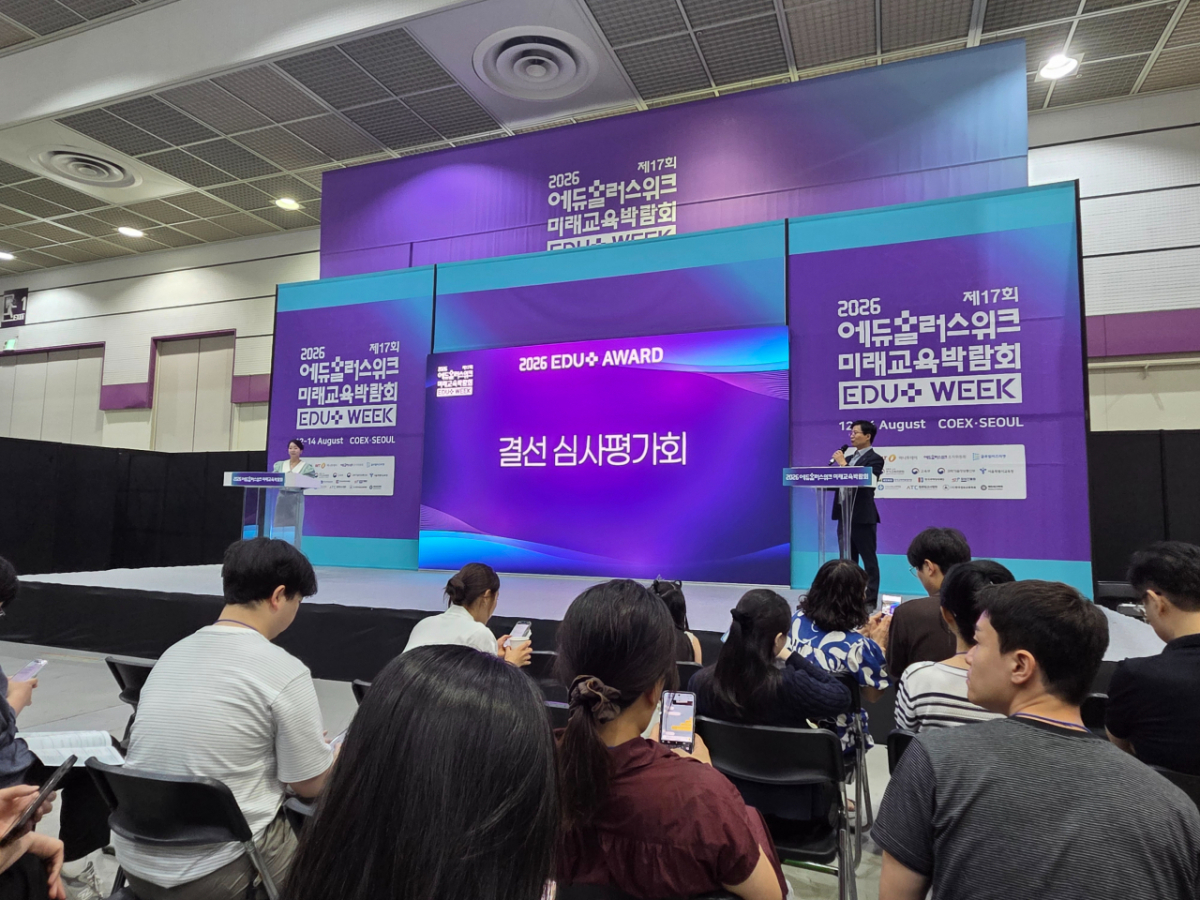
The Edu-Plus Awards is a ceremony designed to identify outstanding EdTech products and services among participating expo companies. Teams advancing to the finals were selected based on comprehensive evaluations of: △educational effectiveness △innovation and future orientation △teacher support and usability △usability and accessibility △safety, information protection, and trustworthiness △market viability and sustainability.
A total of 12 companies advanced to the finals this year. WiseOn Media took home the grand prize, while Visual Camp won the gold award. Silver awards went to Artificial Society and Enuma Korea, and bronze awards were awarded to three companies: Bigos, Malgwa Halnoliteo, and Reading On Systems. The remaining five companies—Kizling, Crevers, B&V Solutions, Mams Coach, and Log Brothers—received special awards.
This year's judging panel included four professional judges: Kim Hong-rae, professor at Chuncheon National University of Education; Jo Gi-seong, teacher at Seoul Gaesung Elementary School; Kim Cha-myung, CEO of Chamssam School; and Yoon Sung-hye, adjunct professor at Ewha Womans University. Additionally, an evaluation team of over 100 practicing teachers who visited the site participated. Since last year, the judging system has been restructured to increase the weight of evaluations from teachers who actually use products in real educational settings.
Kim Hong-rae (Prof.) stated, "We carefully examined all stakeholders in the classroom—students and teachers—as well as textbooks and the educational environment, focusing on which technologies could contribute to transforming our classrooms and education this year."
From Korean and English to Sheet Music... EdTech Gaining Attention for Supporting 'Literacy' in the AI Era
This year, companies equipped with technologies to enhance students' diverse "literacy"—not only in Korean and English but also in music—stood out during the finals.
WiseOn Media's grand prize-winning "Gdong-dong Symphony for EDU" represents musical notes and rests using animal characters, helping students learn to read sheet music as if playing a game. It also includes features that allow users to combine rhythms and melodies to create their own music. Since its launch this year, it has been adopted by approximately 420 schools.
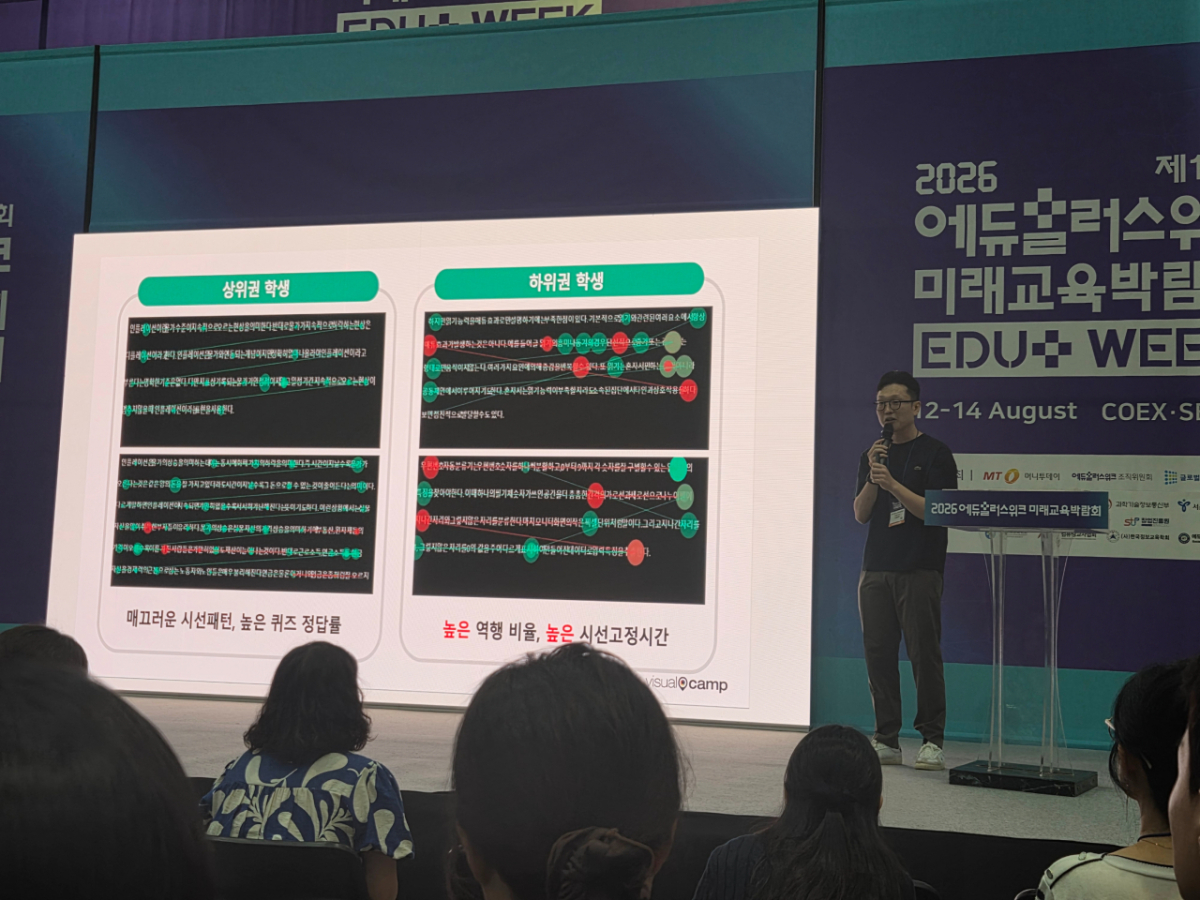
Visual Camp's gold award-winning "Read Force School" utilizes eye-tracking technology to analyze where students encounter difficulties while reading texts and diagnose their reading abilities. It is currently being used in over 1,000 schools cumulatively.
Seok Yoon-chan of Joo Eol-kaem-peu (CEO) explained, "Beyond simply determining whether children have read a text, we can identify exactly where and why they are stuck using eye-tracking technology and data."
Artificial Society's silver award-winning "Learney" is an AI-based literacy learning platform. It provides reading, writing, listening, and speaking content tailored to each student's level, while conversational AI tutors ask follow-up questions based on students' answers. Teachers can monitor each student's learning progress in real time. It is currently being used in 1,500 schools domestically and is also utilized for English education in the United States.
Enuma Korea, which shared the silver award, introduced its AI courseware "Toto Hangul," designed to help students with slower learning speeds or those facing difficulties learn Hangul at their own pace. Malgwa Halnoliteo's "Neuro Talk Edu" analyzes students' pronunciation using AI to provide customized listening and speaking training.
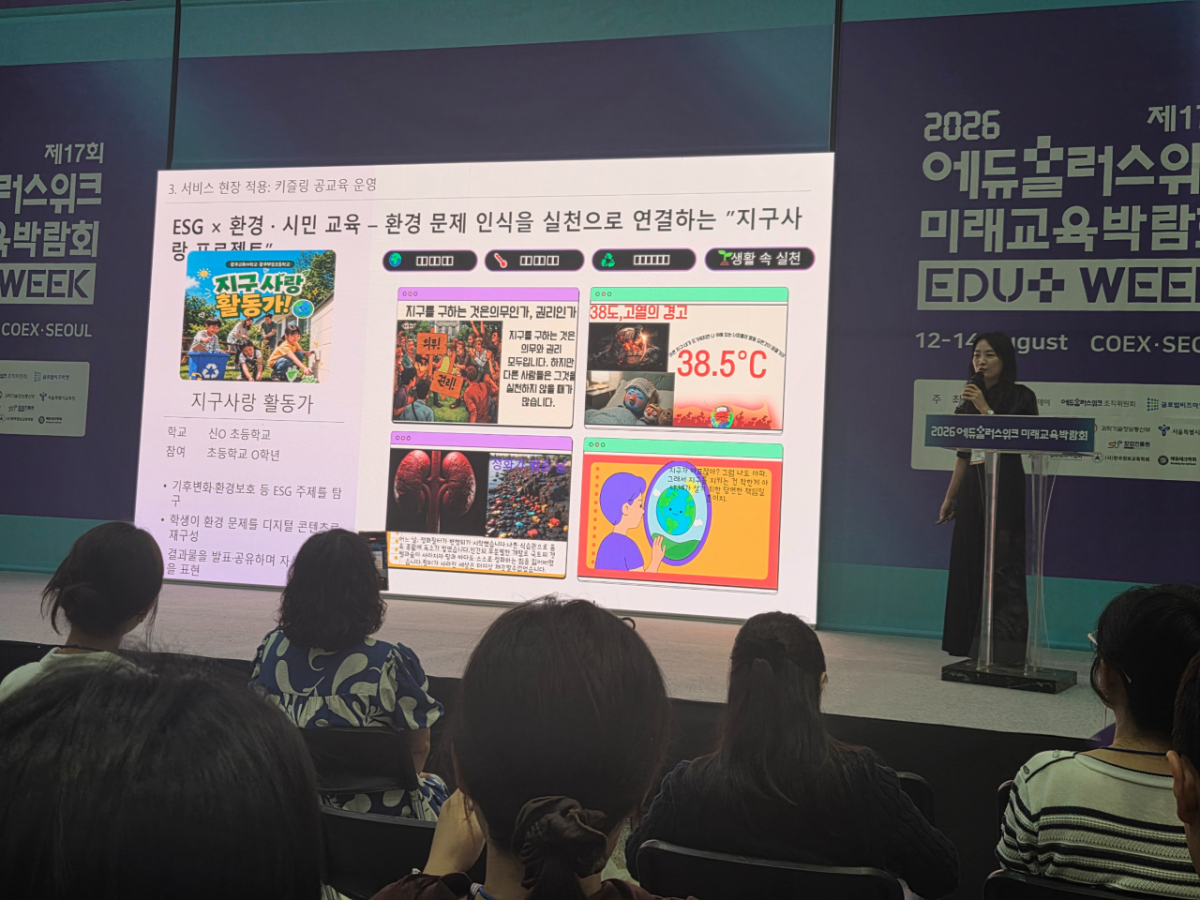
Kizling is a digital learning challenge platform where students share class results as content and provide feedback to one another. This year, it showcased a literacy challenge in which students create and share short-form videos introducing books they have read.
From Personalized Learning for Students to Reducing Teachers' Workloads
Technologies that analyze student learning data to provide personalized education or reduce teachers' repetitive tasks such as lesson preparation, record-keeping, and grading also drew attention.
B&V Solutions' "Duo Math" uses an AI agent to analyze students' mathematics learning data and provides level-based learning. Reading On Systems' "Brime Learning" diagnoses English reading levels, recommends appropriate original books, and supports reading learning and classroom management.
Bigos' "Ham Room" generates sentences needed for writing school records based on student activities, assisting with record-keeping tasks. Crevers' "Hummingo" uses AI to analyze students' responses to English descriptive questions and essays, providing feedback to students while reducing teachers' grading burdens.
Mams Coach's "Class Manager" supports teachers in understanding students, keeping records, and managing classes based on information about students' school and home lives from both parents and students. Log Brothers' "Code Moose AI" provides education ranging from coding to AI principles and ethics for elementary, middle, and high school students, while also offering a teacher-focused Learning Management System (LMS) and learning data analysis features.
In his opening remarks on this day, Lee Seung-hoon, CEO of Global Biz Market, said, "I believe that education is ultimately conducted by teachers, and the future of classrooms depends on them." He added, "We restructured the judging process to include direct participation by teachers out of a desire for Korea's excellent IT technology to be integrated into classrooms—not only transforming Korean education but also changing global education."
He further stated, "We will support these selected products and technologies not only to remain in Korea but also to expand their reach overseas," adding that they would collaborate with global networks to increase opportunities for domestic EdTech companies to enter international markets.
[MoneyToday Startup Media Platform Unicorn Factory]

 in FUTURE


