

The consumer base for incontinence products, once considered items for the elderly, is expanding to include women in their 30s and 40s. Sales of liners and pads used for mild symptoms, not just diapers for the physically frail elderly, are increasing. Yuhan Kimberly has launched a strategy targeting consumers through trial events promoting incontinence products as daily care items and by segmenting its product lineup.
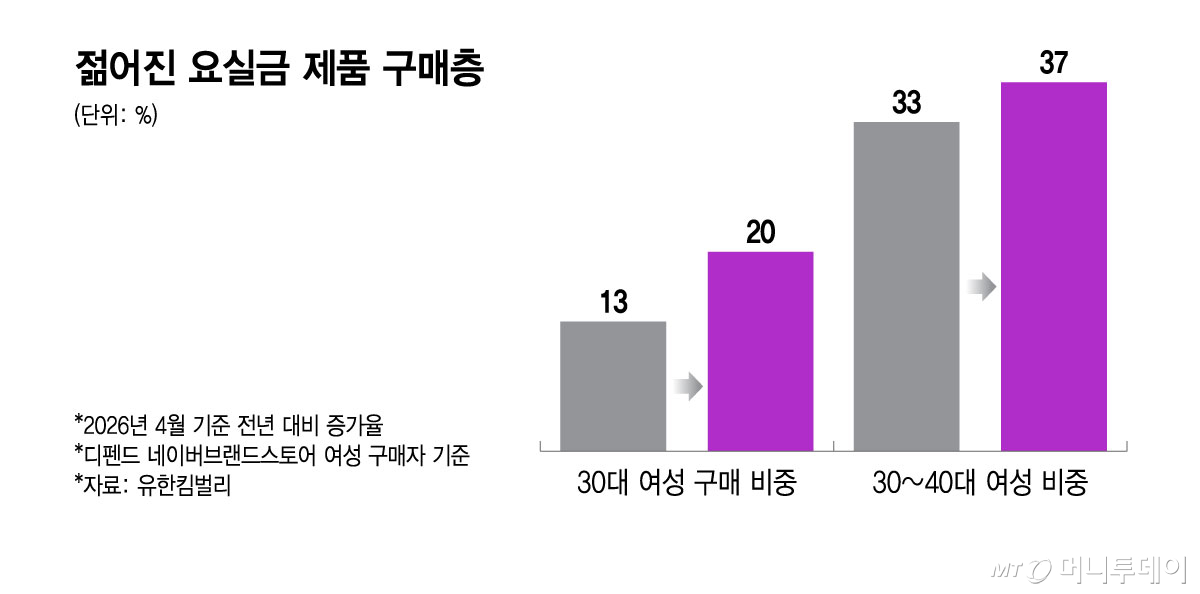
According to Yuhan Kimberly on the 28th, among female buyers of Depend at Naver Brand Store, the share of women in their 30s and 40s increased by 4 percentage points (P), from 33% last April to 37% this April. In particular, the share of women in their 30s rose by 7 percentage points during the same period, from 13% to 20%. Accordingly, Yuhan Kimberly is targeting women in their 30s and 40s who first experience incontinence during pregnancy and childbirth separately from active middle-aged individuals around menopause and elderly people requiring care.
Growth trends in sales by product also differ. Based on Yuhan Kimberly's own sales data, Depend grew at an average annual rate of 6.5% over the past five years, while the average annual growth rate for liners and pads for mild incontinence during the same period was 20%. Yuhan Kimberly attributes this growth not to population increases, as there has been little change in the target demographic aged 40–64 for Depend-style products, but rather to an expansion of the consumer base for incontinence products. This is also why the company is paying attention to consumer demand to manage mild incontinence symptoms experienced during activities such as going out or running marathons, in addition to care needs for the elderly.
The usage rate of dedicated products remains relatively low. This is because relatively young women in their 30s and 40s tend to hesitate to use them due to concerns about others' perceptions or psychological barriers. According to a survey conducted by Yuhan Kimberly in 2024 among 4,000 adults nationwide (3,000 women and 1,000 men) aged 30–69, only 27.4% of those who experienced mild incontinence had tried dedicated products. Many still cope with the issue using familiar sanitary pads or panty liners.
However, the company explains that once users try the product, they tend to continue seeking it out. In the same survey, 67.1% of trial users cited absorption performance as the biggest difference between dedicated products and sanitary pads. In-house tests showed that the absorption capacity of Depend-style liners and pads ranged from two to nine times that of general panty liners and sanitary pads, depending on the product.
To this end, Yuhan Kimberly is increasing opportunities for consumers to naturally encounter its products. Last July, it held a one-day class for Depend Style LINE dance with 228 participants and is also conducting sampling at local festivals, rest areas, and targeting pregnant women. It also operates a dedicated brand for male consumers called "Depend Man." The strategy involves segmenting products according to usage scenarios and gender while changing packaging and advertising to reduce purchase barriers. From January to July this year, men accounted for 28% of sales in the company's own underwear-type products.
Yuhan Kimberly expects the market to grow further in the future as awareness changes. The company stated, "Incontinence is still often perceived solely as an issue for the elderly, so there is a need for social awareness to expand toward viewing it as a more natural and everyday health management area." It added, "Depend plans to continue product innovation and expanding consumer experiences so that consumers do not have to give up their daily lives and activities due to incontinence."

 in FUTURE
