

As copper prices have soared to record highs, expectations for performance in South Korea's power cable industry are rising. This is due to increased demand for cables driven by expanded investments in AI (artificial intelligence) data centers, combined with a cost-pass-through structure that reflects copper price increases in product pricing. Copper prices are expected to remain at high levels for the foreseeable future.
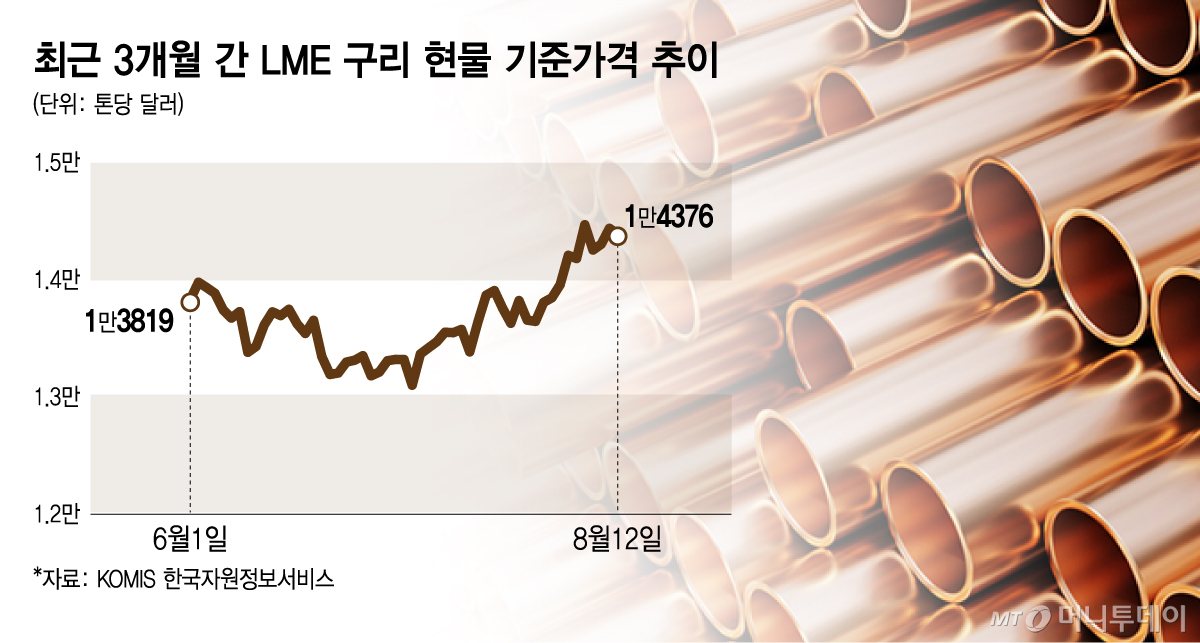
According to Korea Mineral Resources Information Service (KOMIS) on the 13th, the LME copper spot price closed yesterday at $14,376 per ton. This is close to the record high of $14,455 per ton recorded on the 6th. Copper prices were $13,945 per ton on the 3rd and have remained in the $14,000 range since then.
Increased copper demand from expanding power facilities for AI data centers has fueled price rises. Copper is a key material for power infrastructure such as transmission cables. In particular, ultra-high-voltage transmission equipment for AI data centers requires 5 to 7 times more copper than general power grids. On the supply side, however, room for expansion remains limited. The top 20 global mining companies have revised down their copper production forecasts for this year as well as last year due to aging mines and other factors. In June, the Democratic Republic of Congo, the world's second-largest copper producer, suspended exports of copper and cobalt concentrates, further disrupting supply from major producing countries.
For the power cable industry, which uses copper as a core raw material, price increases typically act as positive news. This is because they have adopted 'escalation (cost-pass-through)' clauses that allow them to reflect copper price fluctuations in product unit costs. When copper prices rise, selling prices also increase, leading to expanded revenue scale. The industry estimates that copper accounts for 60% to 70% of cable production costs.
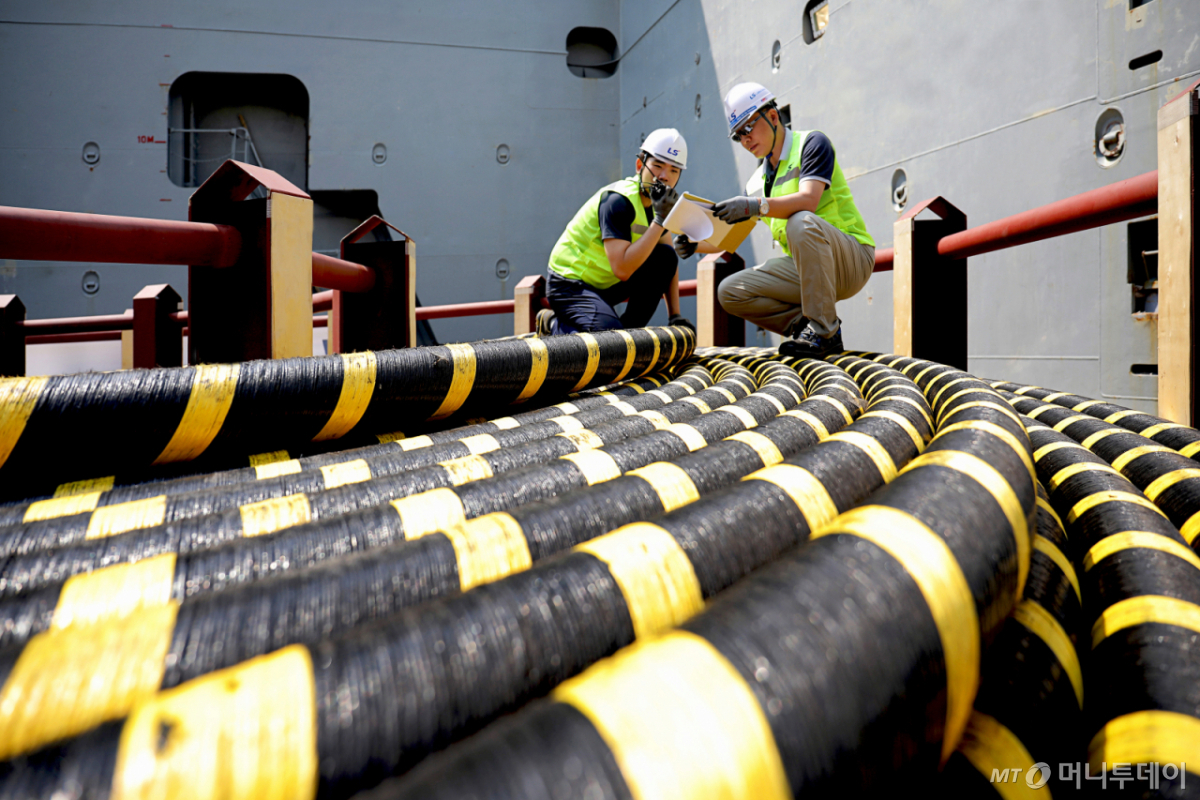
In fact, the Korea Electric Power Corporation project recorded consolidated revenue of 1.1987 trillion won and an operating profit of 60.8 billion won in the second quarter, setting a new record for the highest quarterly performance ever. This was supported by expanded demand for ultra-high-voltage and submarine cables, combined with price increases driven by rising copper prices. LS Cable & System is also expected to see its sales reflect the positive impact of higher selling prices due to strong copper prices. Jang Jae-hyuk, a researcher at Meritz Securities, stated, "Copper prices rose from 16.12 million won per ton in the fourth quarter of last year to 19.40 million won per ton in the second quarter of this year, contributing to revenue growth," and added, "Due to factors such as expanded sales of bus ducts for data centers, the company is expected to achieve record-high quarterly performance and profitability."
The power cable market has also shifted toward a seller's market, which is favorable for price increases. This is due to expanded investments in AI data centers driving power infrastructure demand beyond supply capacity, leading clients to prioritize delivery schedules and stable supply volumes over prices. According to BloombergNEF, electricity consumption by U.S. data centers is expected to reach approximately 194 gigawatts (GW) by 2035—about four times the current level. An industry official explained, "Currently, the market must be structured around suppliers," and added, "From the customer's perspective, they need to secure and install cables as quickly as possible, so they have to endure price increases."
The strong trend in copper prices is also expected to continue for the foreseeable future. Choi Jin-young, a researcher at Daishin Securities, said, "If liquidity factors are additionally factored in, breaking through $16,000 per ton within this year is entirely possible," and predicted, "Considering limited supply, rapidly expanding demand, and delayed liquidity effects, copper prices could continue to rise until the first quarter of next year."

 in INDUSTRY

