

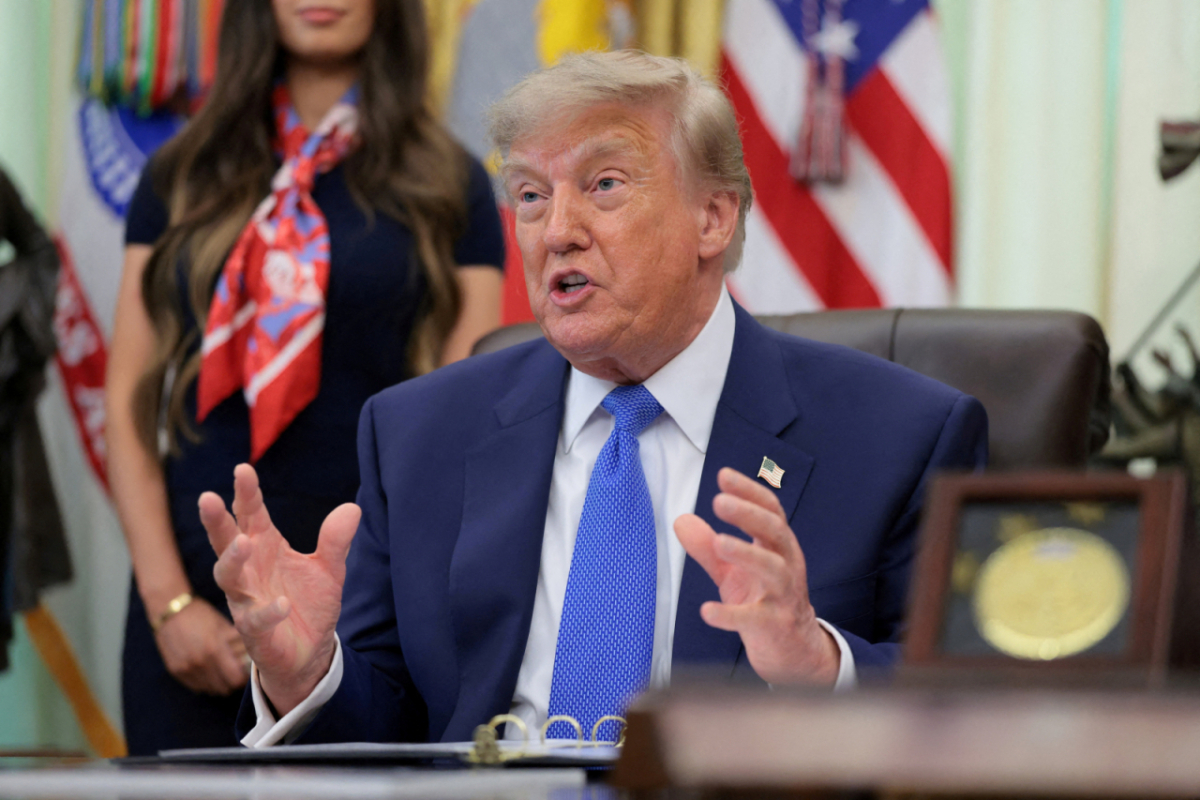
President Trump ordered that foreign shipbuilding companies investing in the United States be allowed to construct ships in their home countries. The move is widely seen as targeting Hanwha Group, raising expectations for the possibility of U.S. ship construction at domestic Korean shipyards. However, with opposition from the U.S. Congress, debates over whether the policy will be fully implemented are expected to continue.
On the 13th (local time), the White House finalized a National Security Presidential Memorandum (NSPM) allowing overseas shipbuilding companies investing in U.S. shipyards to build up to two vessels at their home shipyards and deliver them to the United States. Under this arrangement, foreign shipbuilders that directly invest in U.S. shipbuilding infrastructure and contribute to local employment and workforce development will produce initial batches at their home shipyards before continuing production at U.S. facilities.
Among major global shipbuilders, only Hanwha currently meets these conditions. Previously, Hanwha acquired the Philippines shipyard for $100 million in 2024 and announced plans last August to invest an additional $5 billion, expanding its annual production capacity to between 10 and 20 vessels. The company also recently succeeded in securing orders for two U.S. Maritime Ballistic Missile Test Range Ships (MBIV). If President Trump's directive is realized, Hanwha could establish a business model where it constructs U.S. ships at its Geoje shipyard in Korea before continuing follow-up production at the Philippines shipyard.
With President Trump directly addressing the allowance of U.S. ship construction at overseas shipyards, expectations are growing that cooperation between Korean and U.S. shipbuilding sectors will accelerate. While foreign construction of U.S. warships is restricted under the 'Burns-Tolleson Amendment,' a 'waiver' clause allows the president to grant exemptions. A representative example is the so-called 'Finland Model,' referring to Finland's construction of U.S. icebreakers.
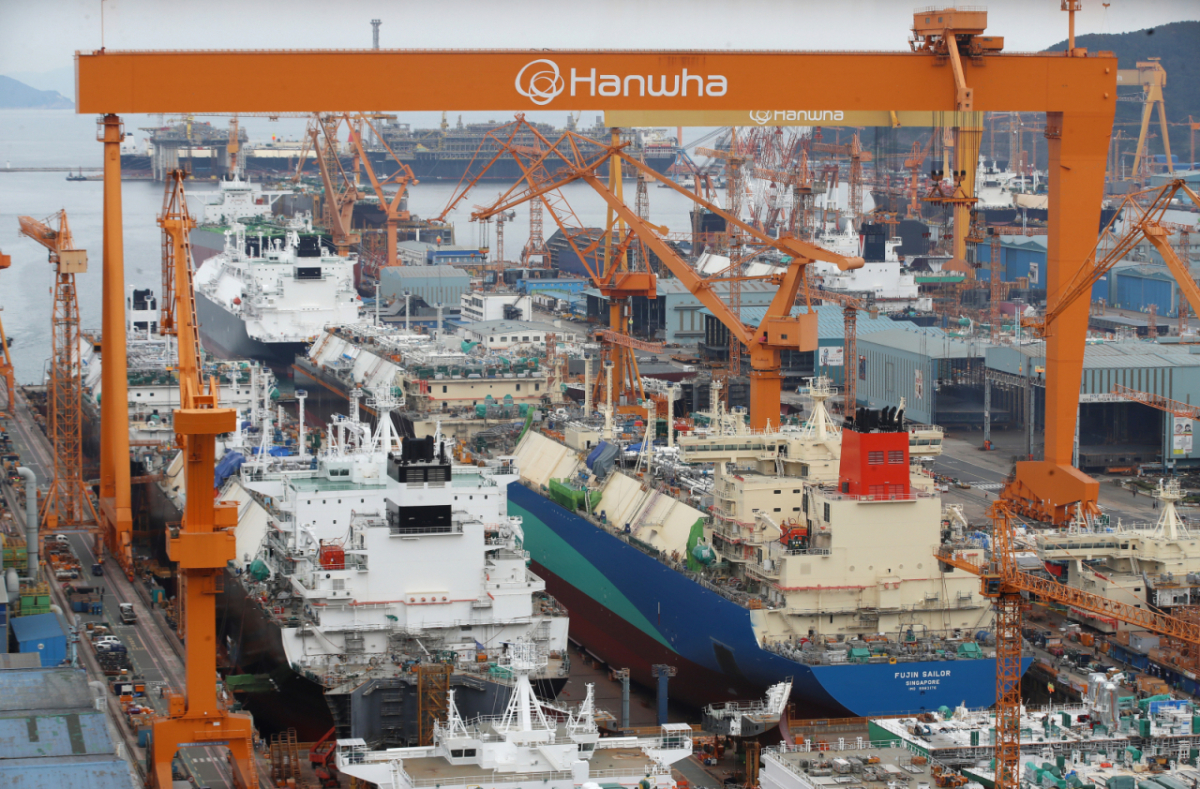
Recently, the Korean and U.S. governments held a groundbreaking ceremony for the Korea-U.S. Shipbuilding Cooperation Center (KUSPC) in Washington, D.C., officially launching the shipbuilding cooperation project 'MASGA.' An industry insider stated, "There is already a consensus in the United States that it is necessary to leverage the advanced technology and operational experience of Korean companies." The official added, "Once the $150 billion MASGA project begins, Korean shipbuilders will be able to penetrate the U.S. market even faster." In addition to Hanwha, HD Hyundai and Samsung Heavy Industries are also considering investments in and acquisitions of U.S. shipyards while expanding cooperation with local companies.
The issue lies in the fact that the U.S. Congress, which holds budgetary authority, views this development unfavorably. Recently, the Office of Management and Budget (OMB) under the White House requested congressional approval for the Navy to contract overseas shipyards to build two surface combatants and two non-combatant support vessels. The National Defense Authorization Act (NDAA), passed by the House last month, acknowledged the need to expand cooperation with Korea for enhancing shipbuilding capabilities and workforce development but included a clause prohibiting the foreign construction of warships.
Industry observers suggest that the president may pressure Congress again by leveraging the Senate, which has shown relatively more openness. The Senate Armed Services Committee included provisions in the NDAA allowing up to two bulk fuel carriers and strategic transport ships to be procured from overseas shipyards. An industry representative stated, "Since President Trump made relevant remarks only recently, we are closely monitoring what legal or budgetary measures may follow." The official added, "We will continue to strive hard to seize opportunities for entering the U.S. market."

 in INDUSTRY

