

Samsung Electronics' DX (Device Experience) division is launching an aggressive campaign to expand its market share despite the 'chipflation' (chip + inflation) situation. The strategy involves capitalizing on competitors raising prices and cutting production volumes due to cost pressures, thereby expanding sales and strengthening market leadership. However, regarding bonuses, it adheres strictly to the principle of performance-based compensation: "Reward where there is performance."
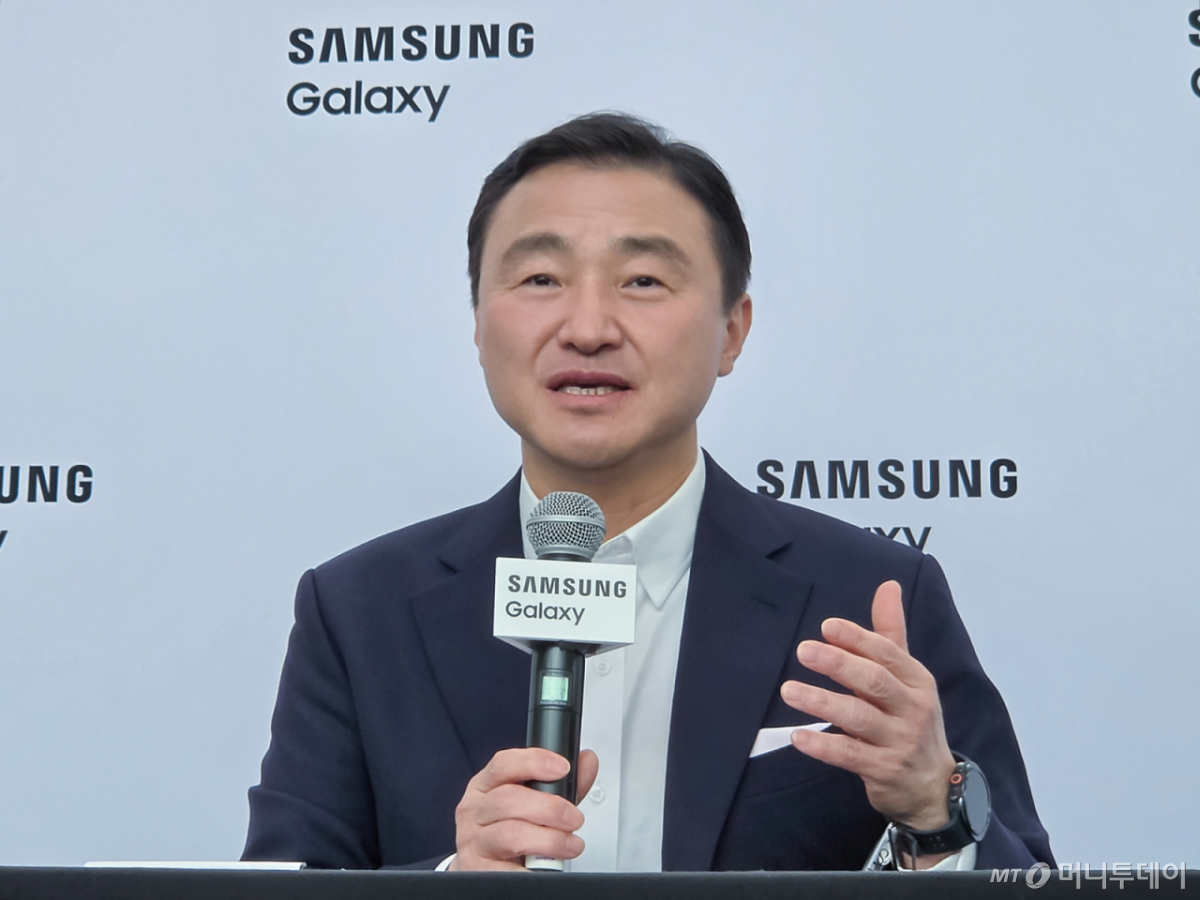
According to industry sources on the 19th, Samsung Electronics held a management status briefing for employees at the R5 Research Institute in Suwon, Gyeonggi Province, chaired by Noh Tae-mun (President), head of the DX division. It was reported that the company presented key strategies for the second half of this year, including expanding market share, improving business structure, and preparing innovative products for next year.
The core factor behind the worsening profitability of the DX division has been identified as a sharp surge in memory semiconductor (hereinafter referred to as memory) prices. While DX division sales increased by approximately 2% compared to the same period last year during the first half of this year, they failed to keep pace with market growth rates. Operating profit for the same period stood at 2.2 trillion won, a sharp decline to just one-quarter of the 8th trillion won recorded in the same period last year. Analysts note that even with cost reductions and efficiency improvements, these measures were insufficient to offset the impact of memory prices rising more than fourfold compared to last year.
Samsung Electronics has focused on the fact that this high-cost structure applies equally to competitors. With competitors raising product prices or reducing production and order volumes for entry-level models due to rising memory costs, Samsung plans to instead expand sales of flagship products such as 'Galaxy S26' and 'Galaxy Z Fold8' to boost market share.
The reason why the semiconductor boom has become a cost burden for Samsung Electronics' DX division lies in Samsung's unique 'internal accounting structure.' The DX division, responsible for finished product operations, and the DS (Device Solutions) division, responsible for semiconductor production, operate as virtually separate companies, with personnel, finance, accounting, profit and loss, and even bonus funding fully separated. Most importantly, while rising memory prices lead to profitability improvements for the DS division, they are passed on as cost burdens to the DX division.
In this process, internal dissatisfaction within the DX division has also grown. The Donghaeng Union, led by DX division employees, is demanding a nullification of the wage agreement and compensation equivalent to approximately 1,000 shares of company stock per employee. On the 21st, the union plans to hold a rally in front of Samsung Electronics' Seocho office building in Seoul, calling for improvements to the compensation system. The union maintains that during this year's wage negotiations, the DX division was excluded from receiving bonuses.
Based on Samsung Electronics' closing price of 247,500 won on the day, distributing 1,000 shares of company stock per employee in the DX division would require approximately 12.4 trillion won. For the DX division, which must simultaneously pursue market share expansion and profitability recovery amid a prolonged 'chipflation,' adding such large-scale additional compensation will inevitably increase its burden even further.
Samsung Electronics maintains its stance of upholding the existing performance-based principle. An industry source stated, "Separating the compensation systems between the DS division and the DX division has served as a driving force in enhancing the global competitiveness of each business." The source added, "Providing rewards unrelated to performance could lead to moral hazard within the organization and even undermine morale and motivation among teams that have delivered results."

 in INDUSTRY
