

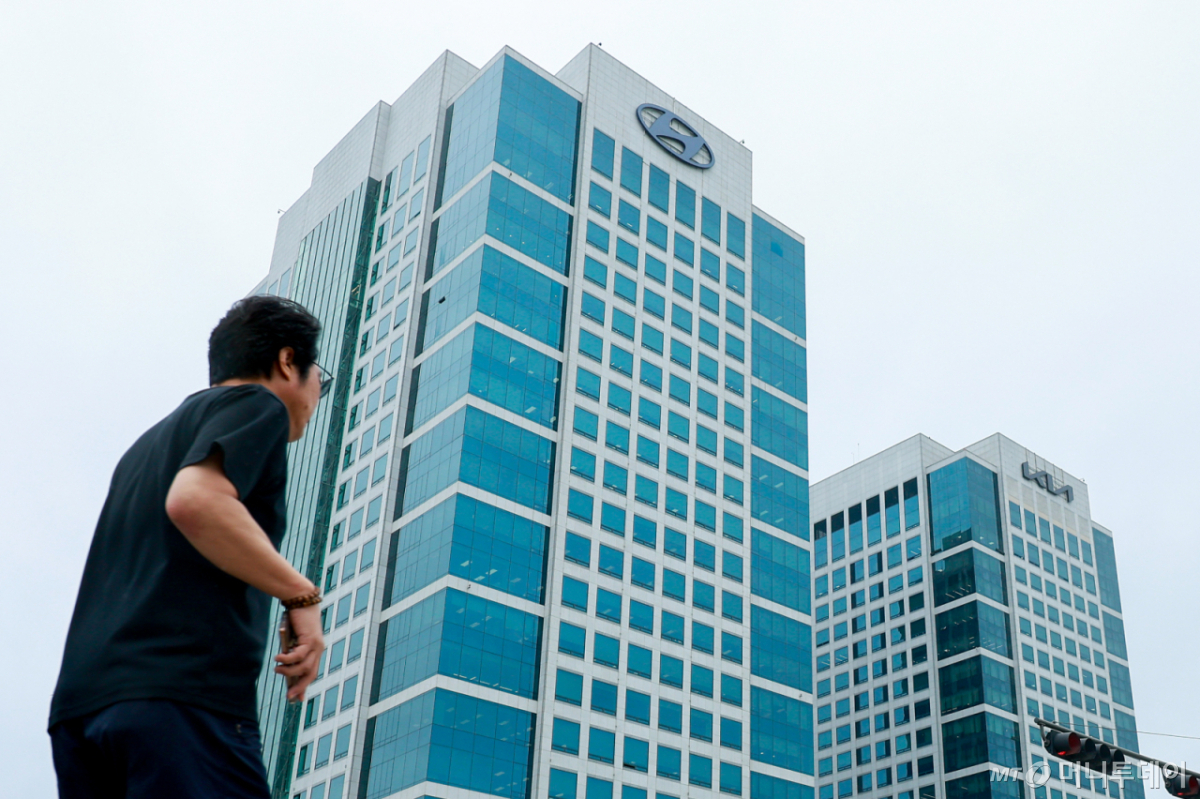
Concerns are growing both inside and outside the Hyundai Motor Group over the labor union's excessive demands.
While this year's strike caused production disruptions affecting more than 50,000 vehicles, the union has stepped up its demands to include expanded new hiring in addition to extending the retirement age and converting workers to regular employment.
Critics warn that expanding employment without plans to secure funding or improve productivity could weaken the competitiveness of domestic plants at a time when restoring production and cutting costs are urgent priorities.
According to the automotive industry and labor circles on Tuesday, unions from Hyundai Motor and Kia, five branches of Hyundai Steel, and Hyundai Rotem and Hyundai Kepico held a press conference at the National Assembly that day to urge legislation extending the retirement age.
By setting the extension of the retirement age, maintaining and expanding domestic employment, and hiring new personnel as joint agenda items, they intensified pressure on the government, the National Assembly, and group management.
The union urged the National Assembly that day to raise the statutory retirement age to 65 and called on management to implement it preemptively before legislation is passed.
In this year's wage negotiations, Hyundai Motor's labor and management agreed to extend the retirement age without expanding the wage peak system if related laws are amended; in other words, they are demanding that the company increase the retirement age first.
The union also raised its voice, characterizing the post-retirement re-employment system—specifically the contract-based and Veteran programs—as contractual employment with reduced wages and benefits, and argued that existing employment forms should be maintained.
This approach places greater emphasis on guaranteeing current treatment rather than adjusting job duties and wages while utilizing skilled older workers.
They also demanded the conversion of contract-based and industry-academia interns to regular employees and the recruitment of new hires.
They claimed that although approximately 30,000 group company employees reached retirement age over the past five years, hiring has not been sufficient.
While the intent is to resolve both income gaps in old age and youth unemployment, they failed to present a plan for production volume or labor costs to accommodate both extending the tenure of existing personnel and filling new positions.
While urging expanded investment to protect domestic jobs, the union requested the government to lower industrial electricity rates and support the transition to eco-friendly equipment for the steel industry.
This amounts to demanding that companies increase investment and hiring while the government bears the costs. The union did not mention what role it could play through wage system reform or improving work efficiency.
However, Hyundai Motor's management environment is expected to remain challenging. The company has already cut its annual sales target from 4,158,300 units to 4 million and reduced its investment plan for the automotive division by approximately 1.8 trillion won. Unlike the union, the company is adjusting expenditures in line with demand and production conditions to prepare for a crisis.
Meanwhile, following the press conference that day, the union will hold a meeting of group company representatives to discuss the direction of joint struggle. On the 10th and 11th of next month, responsible executives and staff are scheduled to gather to consult on detailed plans.

 in INDUSTRY
