

In the electric vehicle (EV) battery market, where Korean batteries are under pressure, they have yet to find a breakthrough for a turnaround. As the rise of "Made in China" batteries continues, voices are growing that a counteroffensive must be launched centered on new product lineups such as mid-nickel, lithium manganese-rich (LMR), and all-solid-state batteries.
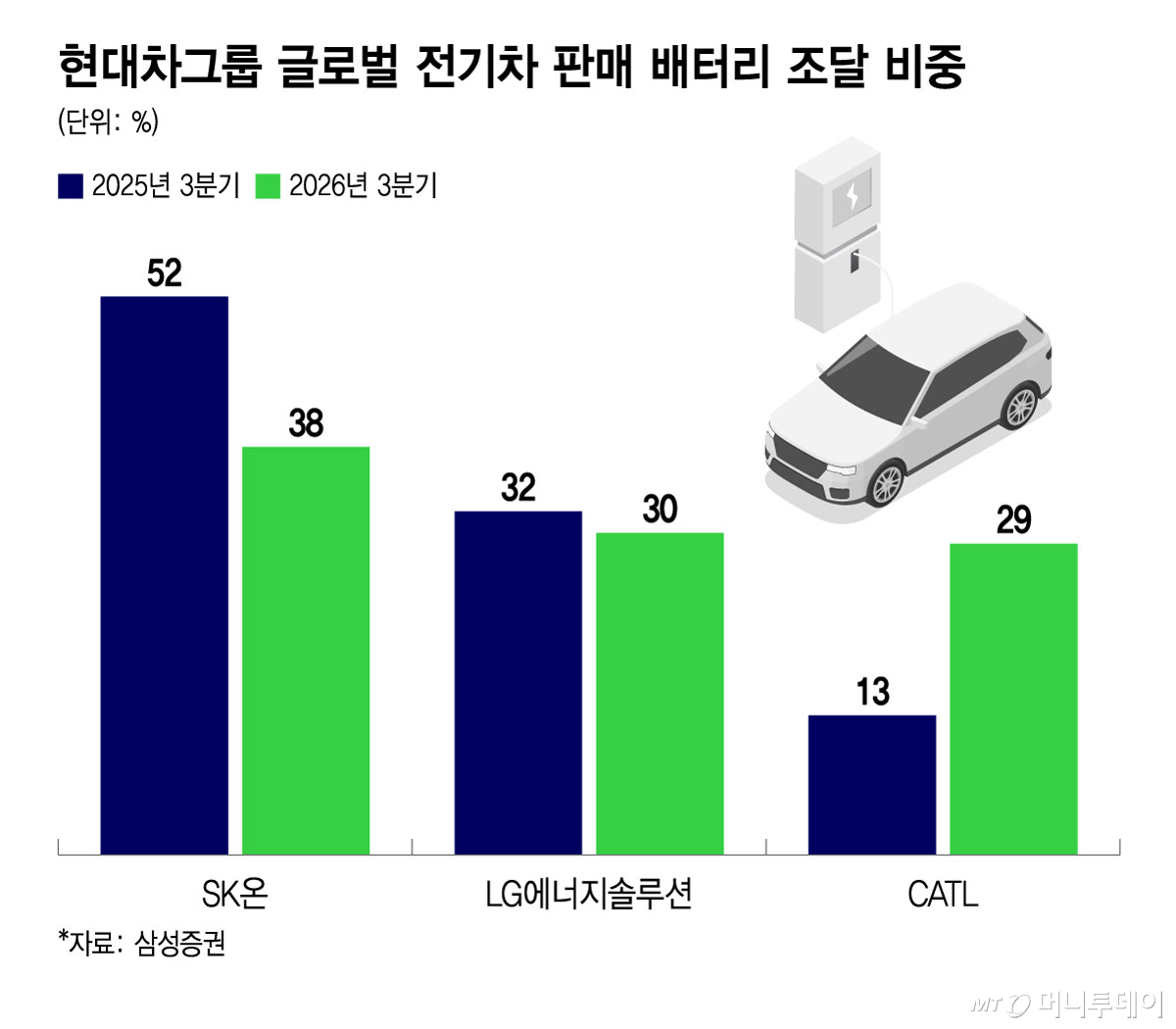
According to battery industry sources and Samsung Securities on Tuesday, CATL's share of Hyundai Motor Group's EV sales was 29% as of September last year.
This figure represents a 16 percentage point (p) increase compared to the same period last year. In contrast, during the same period, SK On's share decreased from 52% to 38%, and LG Energy Solution's share fell from 32% to 30%.
A similar trend is observed among other automakers. Currently, within the Volkswagen Group, Korean battery makers hold a 53% market share, while Chinese firms account for approximately 45%, according to analysis.
The Volkswagen Group, which had used almost 100% Korean batteries, newly adopted CATL batteries in the first half of 2024. In less than three years since then, the market share of Chinese batteries has closed in on that of K-batteries.
Jo Hyeon-ryeol, a researcher at Samsung Securities, explained, "With China's Gotion also entering the Volkswagen Group's supply chain this year, it is expected that K-batteries will cede the lead to Chinese firms by 2027."
He added, "Similarly, as Hyundai Motor Group has fully launched new vehicles equipped with lithium iron phosphate (LFP) batteries—an area where China holds an advantage—the market share of Chinese companies is likely to expand further."
K-batteries are aiming to increase sales of EV batteries in the United States, where a "No China Zone" has been established, but this too is proving difficult. This is due to the shrinking front-end market resulting from the second Trump administration's abolition of EV purchase subsidies.
Through the third quarter last year, GM's EV sales were approximately 214,000 units, and Ford's were about 221,000 units, representing year-on-year declines of 15.6% and 4.4%, respectively. Both companies are experiencing their first negative growth trend since 2020.
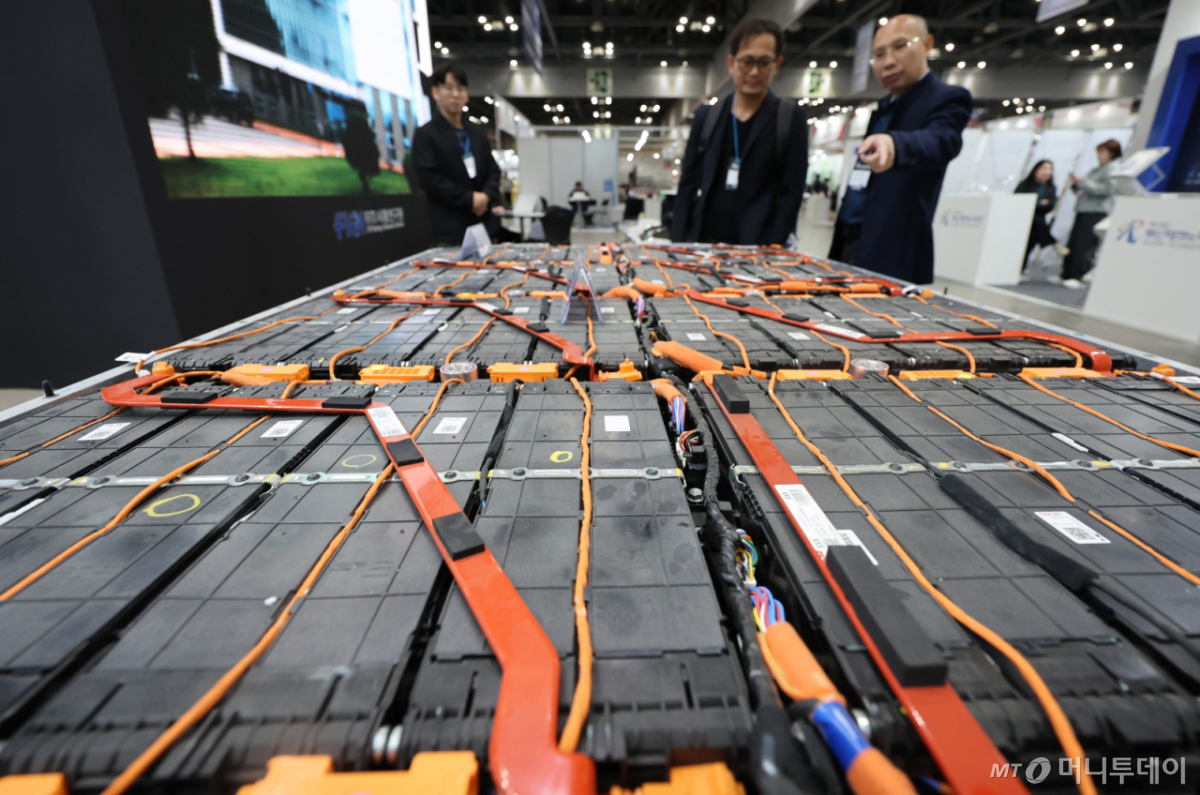
Domestic battery majors such as LG Energy Solution, Samsung SDI, and SK On have adopted a strategy of weathering the EV market downturn by expanding sales of batteries for energy storage systems (ESS).
However, as the strength of Chinese firms led by LFP becomes more pronounced year by year, there are concerns that K-batteries may lose their lead in the EV battery market, which is considered the industry's "main battlefield." CATL and others are leveraging cost competitiveness to target not only the LFP segment, where they have shown superiority, but also the ternary cathode market, which has been a stronghold for K-batteries.
For K-batteries, it is urgent to regroup and secure market share in the EV battery sector. LG Energy Solution is increasing sales of high-voltage mid-nickel batteries, a mid-to-low-priced product that can serve as a check against Chinese-made LFP, centered on its Poland plant.
LMR, which offers higher energy density at a price similar to LFP, is also considered a promising candidate. LG Energy Solution is pushing for the production of next-generation LMR prismatic batteries through Ultium Cells, its joint venture with GM.
Whether all-solid-state batteries can emerge as a "game changer" is also a key issue. In the development of all-solid-state batteries, known as the "dream battery" for maximizing performance and safety through solid electrolytes, Samsung SDI is assessed to be in the lead. The company's goal is to mass-produce all-solid-state batteries within next year and apply them to EVs following their use in humanoid robots.
A battery industry official said, "Even if we perform well in the ESS market, ceding the EV market to China would inevitably result in a significant blow." He added, "We must be able to create a turning point in the EV battery market next year."

 in INDUSTRY

