

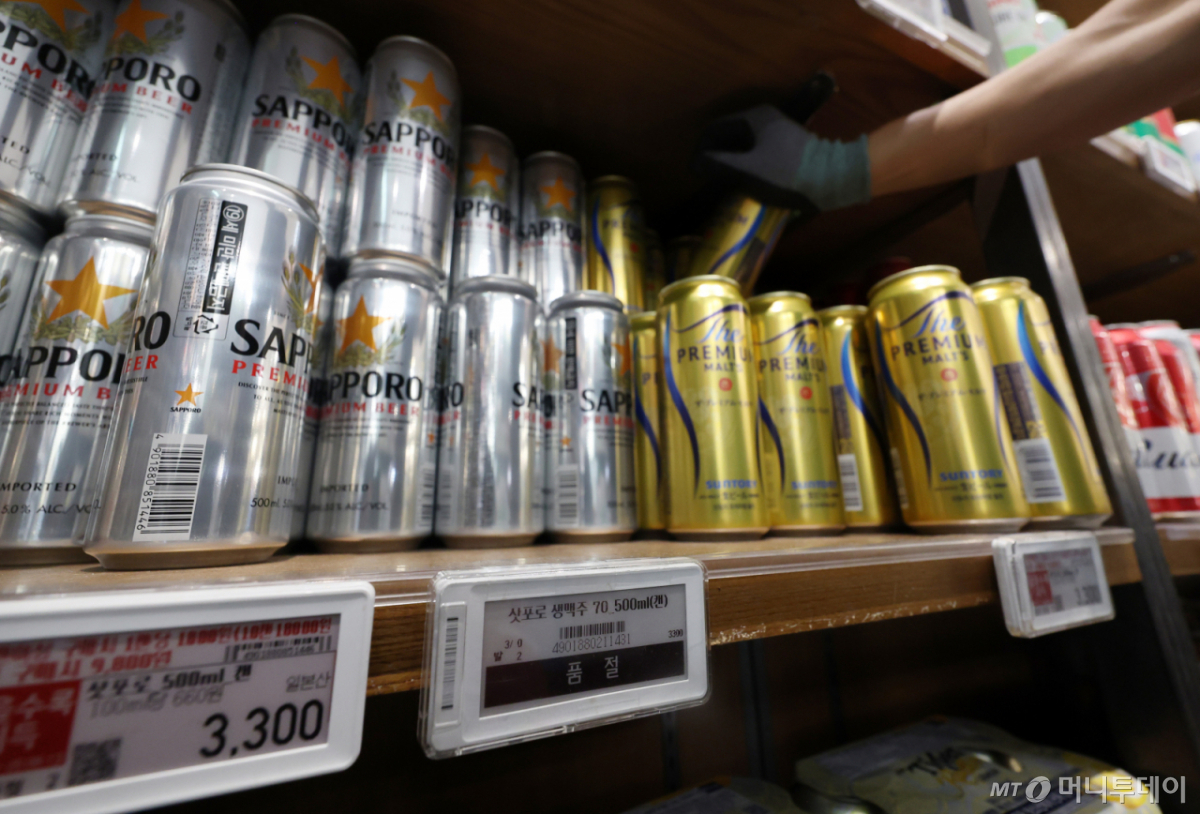
More than half of the imported beer entering South Korea this year is Japanese-made, according to recent findings. This trend is attributed to high consumer familiarity with Japanese beer domestically, combined with aggressive market penetration through low prices and large-volume shipments.
According to export-import trade statistics from the Korea Customs Service released on the 30th, beer imports from January to June totaled 124,200 tons, an 8.1% increase compared to the same period last year (114,863 tons). The surge in Japanese beer shipments was particularly notable. Beer imports from Japan reached 58,305 tons in the first half of this year, accounting for 46.9% of the total—a 33.5% rise from the same period last year (43,676 tons).
Furthermore, the share of Japanese beer in total beer imports rose by 8.9 percentage points (P) within a single year, climbing from 38.0% to 46.9%. While overall beer imports increased by 9,337 tons compared to last year, the increase attributable solely to Japanese beer amounted to 14,629 tons. In contrast, shipments from the remaining 41 countries excluding Japan dropped from 71,187 tons to 65,894 tons, a decline of 7.4%. This indicates that the growth in Japanese beer not only offset the losses from other countries but also exceeded them.
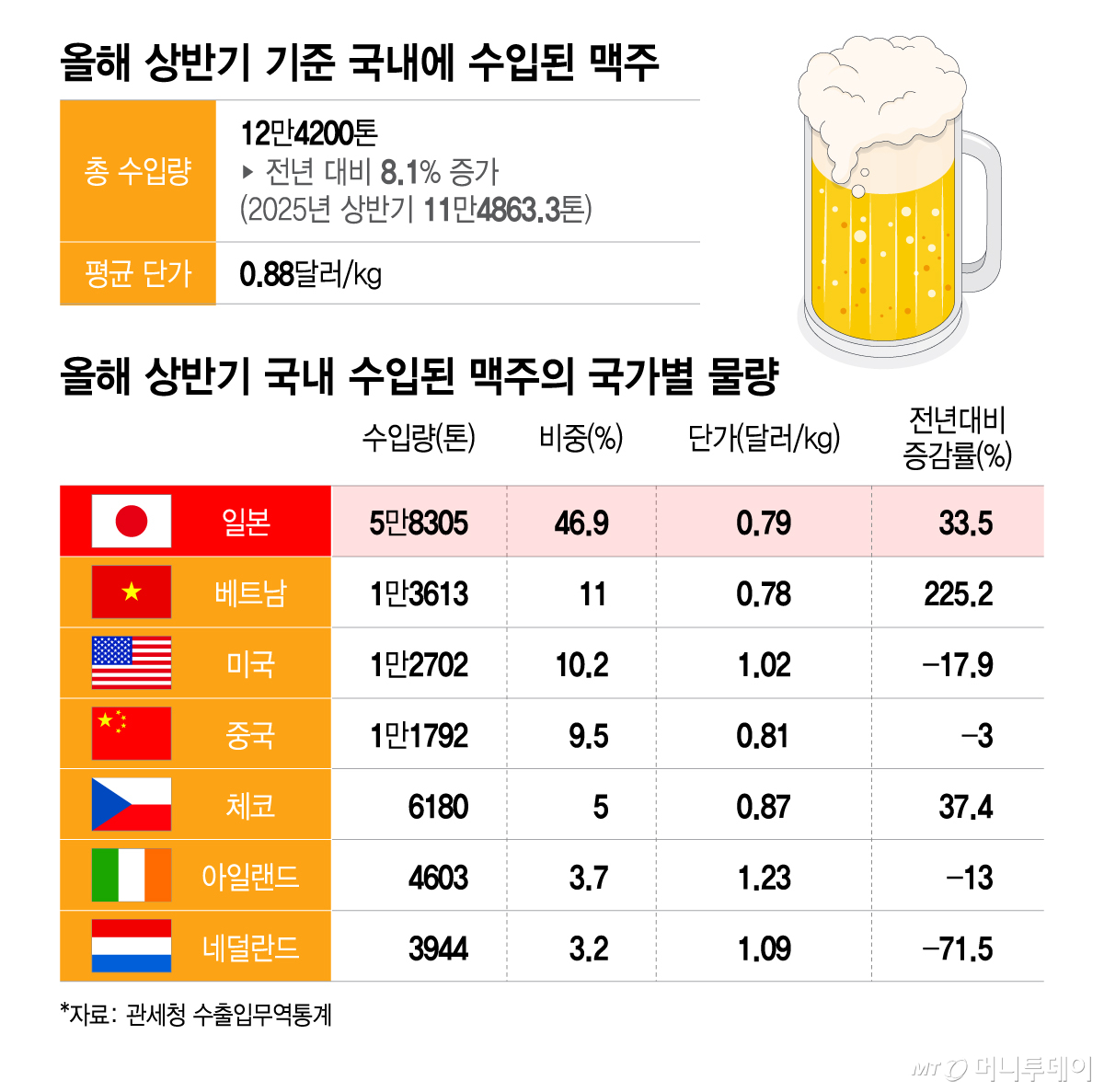
Japanese beer falls on the lower end of unit prices among all importing nations. The average import price for Japanese beer in the first half was $0.79 per kg, below the overall average of 42 importing countries ($0.88). This represents a 2.6% decrease from one year ago ($0.81), placing it on par with other low-cost importing nations such as Vietnam ($0.78) and China ($0.81).
Conversely, imports from higher-priced countries saw sharp declines in volume. Dutch beer, priced at $1.09 per kg, dropped to 3,944 tons—a 71.5% decrease year-on-year. U.S. beer (priced at $1.02) fell by 17.9%, while Irish beer (priced at $1.23) declined by 13%.
Actual sales of Japanese beer are also on the rise. According to Sapporo, domestic sales in South Korea increased by 52% in the first half of this year compared to the same period last year. Even when comparing against the previous year's first-half figures, the growth rate reached 59%.
An industry insider stated, "The recent trend of a weak yen has led to an increase in Japanese tourists, and more people are seeking out Japanese beer they tasted while abroad after returning to Korea." The insider added, "It appears that factors such as relatively high familiarity with Japanese beer brands, premium image, and consumer preference have collectively contributed to this growth."
While South Korea's drinking rates continue to decline annually, the country remains among the highest globally in terms of alcohol consumption. According to the OECD's "Health at a Glance 2025," as of 2023, South Korea ranked fifth among 27 comparable OECD nations for monthly binge-drinking rates. Additionally, an analysis by the KDCA (Korea Disease Control and Prevention Agency) based on last year's community health survey data revealed that 6 out of every 10 adults (57.1%) consumed alcohol at least once a month last year.
Meanwhile, whiskey imports in the first half totaled 8,860 tons, down 30.0% from 12,663 tons in the same period of 2024, though the unit price surged from $9.30 to $11.34 per kg. Other fermented beverages, including sake, saw a volume decrease from 11,003 tons to 9,299 tons (a 15.5% drop), but their unit price rose from $2.34 to $3.07 per kg, marking a 31.2% increase. This suggests that while beer remains a relatively affordable product, demand for whiskey and sake—though consumed in smaller quantities—is concentrated on higher-priced items.

 in LIVING

