

The K-food boom, represented by ramen and kimchi, is now spreading to 'K-sauce'. By continuously launching hot sauces, dipping sauces, and seasonings tailored to local food cultures, the traditional Korean taste is seeping into the daily tables of overseas consumers.
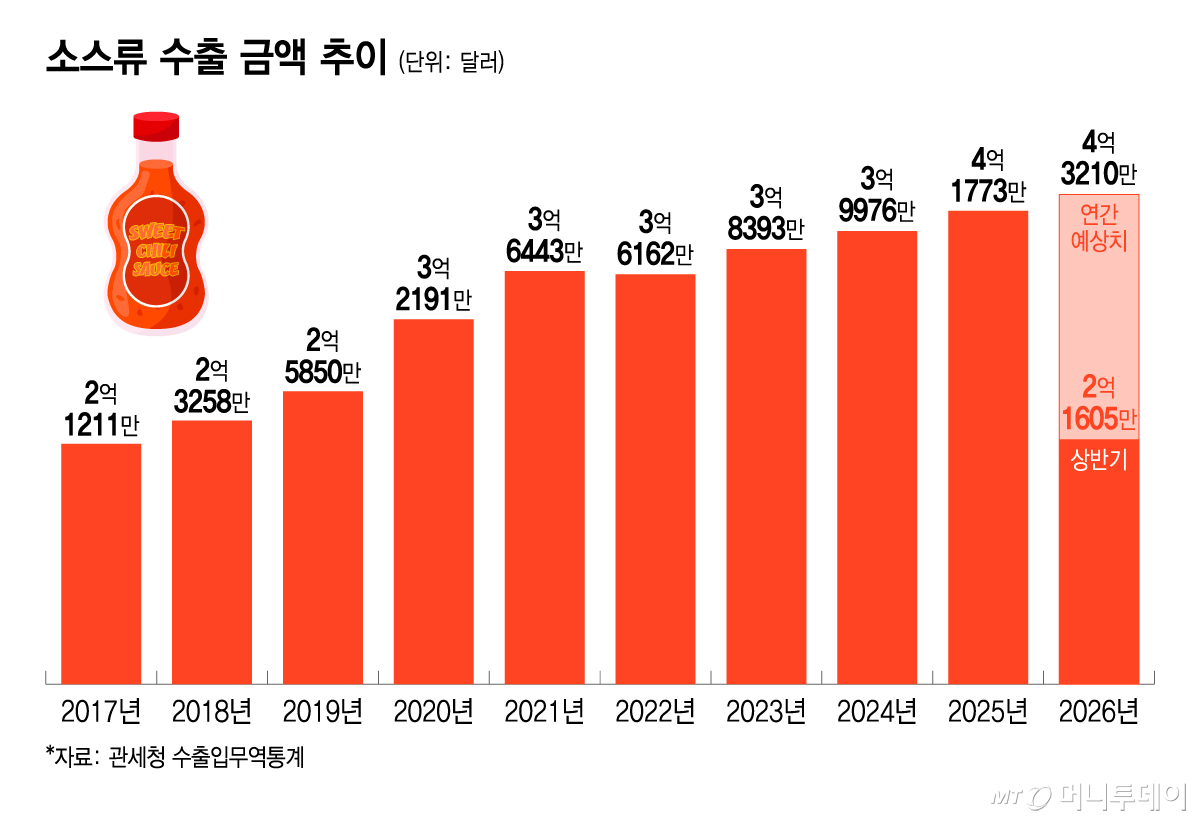
According to Korea Customs Service import-export trade statistics released on the 5th, domestic sauce exports last year reached $417.73 million, surpassing the $400 million mark for the first time. Compared to $212.11 million in 2017, this represents nearly a doubling over eight years. Considering the first-half export figure of $216.05 million this year, total exports are projected to reach $432.09 million, setting a new all-time record.
Sesame oil is also continuing its growth trend. Sesame oil exports rose from $4.1 million in 2017 to $16.65 million last year, more than quadrupling. This year, exports are expected to reach $16.85 million, marking a record high.
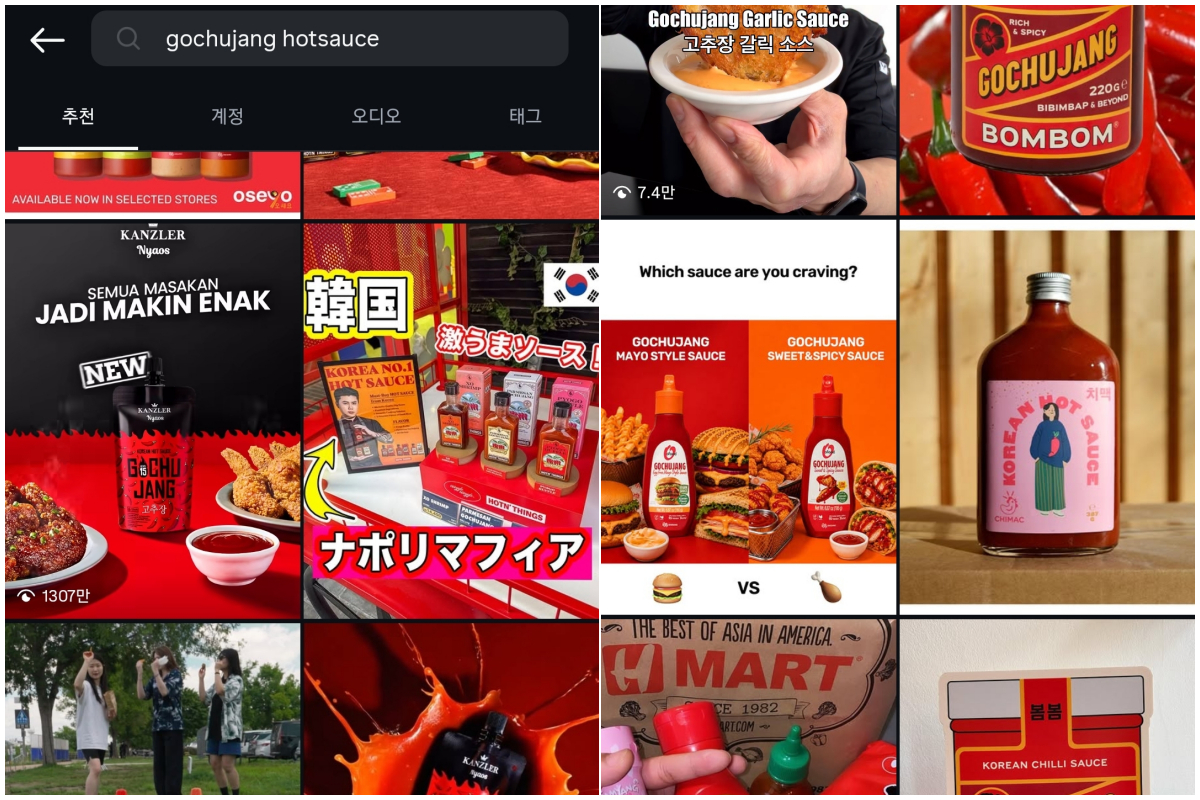
This change is analyzed as a result of interest in K-food expanding into the cooking process itself. Consumption is shifting beyond ready-made products, with consumers adding K-sauce to their own dishes. Gochujang is being used as a sauce for dipping or sprinkling on food like Sriracha, while sesame oil is utilized as 'finishing oil' paired with salads or roasted vegetables.
Changes are also confirmed in overseas markets. British retailer Waitrose introduced gochujang as a representative global food ingredient trend in its 'Food and Drink Report 2025-26', stating that gochujang sales in the UK increased by 71% within one year. In the United States, with 'Swicy' (Sweet+Spicy) emerging as a food trend, gochujang-based hot sauces are also gaining attention.
Domestic food companies are also reinterpreting traditional fermented pastes into forms that local consumers can easily use, such as tubes and squeezable bottles. Considering the 'tabletop' culture of keeping sauces permanently on the table, they have developed products suitable for pairing with salads, tacos, chicken, and pizza, entering global distribution networks including Walmart and Target.
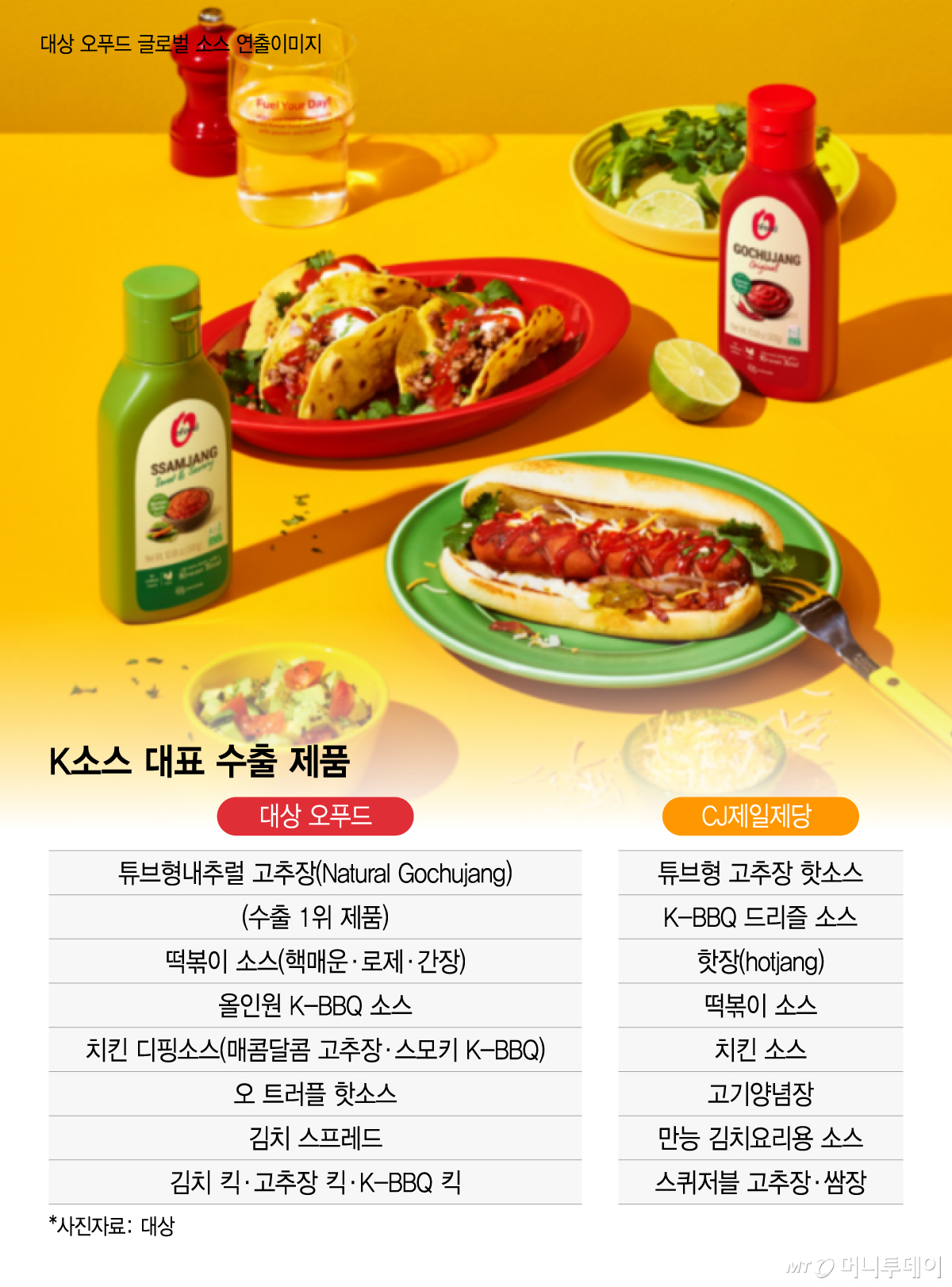
Daesang is promoting sauces as one of its four major global strategic items alongside kimchi, seaweed, and convenience foods under the global food brand 'O'food'. It exports over 480 types of sauces to more than 60 countries. Global sauce sales have grown more than twofold, from approximately 32 billion won in 2018 to 65.5 billion won last year.
The tube-type 'Natural Gochujang', the top export product for KWi (CEO), is a hot sauce developed by thinning the consistency of gochujang and reducing its unique aroma so it can be sprinkled on food. Seasoning products in powder form designed to be sprinkled during cooking, such as 'Kimchi Kick', 'Gochujang Kick', and 'K-BBQ Kick', are also gaining popularity. Considering diverse food cultures, the company has also expanded vegan and halal-certified products.
CJ CheilJedang is also targeting over 60 countries including the U.S., Europe, and China with tube-type gochujang hot sauces and K-BBQ sauces. Overseas sales of K-sauce have grown at an annual average rate of 12% from 2021 to 2025. Strategies tailored to each country's food culture have also hit the mark: drizzle sauces in the U.S., stir-fry seasonings in China, and yakiniku sauces in Japan.
A food industry official stated, "While maintaining the identity of Korean cuisine, K-sauce has gained influence through products tailored to local tastes and food cultures," adding, "Competition among domestic food companies to secure strategic channels is also continuing actively."

 in LIVING


