

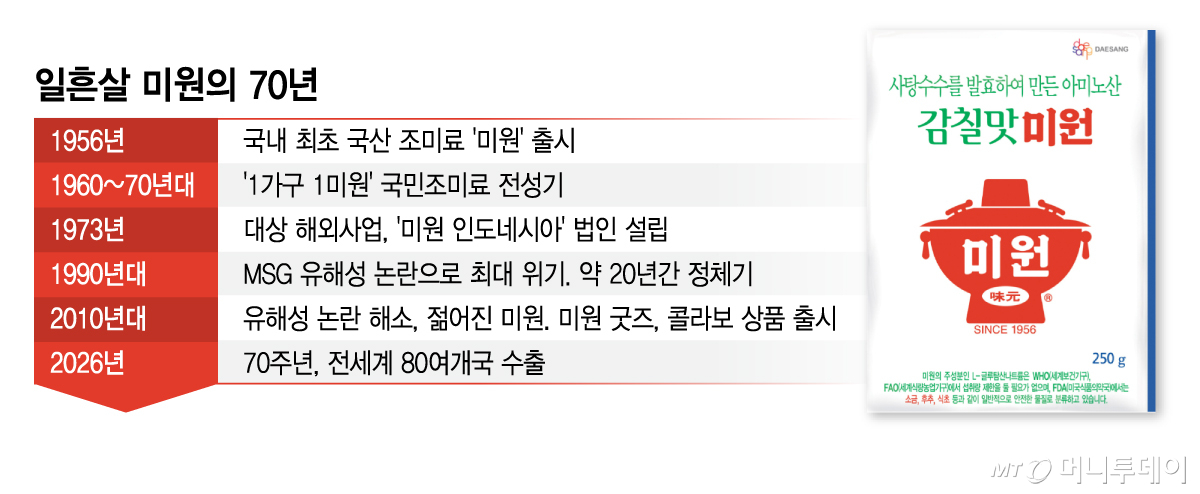
Born in 1956, the national seasoning 'Miwon,' now 70 years old, has no intention of retiring. Having overcome a long period of stagnation caused by controversies over the harmfulness of MSG (monosodium glutamate), Miwon has become even younger and has now captured overseas consumers as well. With annual sales reaching the 300 billion won range every year, it continues to hold its place in kitchen cupboards as 'the first generation of K-Foods.'
According to the food industry on the 11th, Daesung's Miwon is celebrating its 70th anniversary this year. Launched on January 31, 1956, Miwon was Korea's first domestically produced seasoning made with purely domestic capital and technology.
Miwon's launch had a goal of 'culinary independence.' During the Japanese colonial period, the domestic seasoning market was dominated by Japan's Ajinomoto, and even after imports were banned following liberation, demand remained so high that smuggling occurred. Go Im-dae-hong, founder of Daesung Group, felt the need for a Korean-made seasoning, traveled to Japan in 1955, and learned its manufacturing technology.
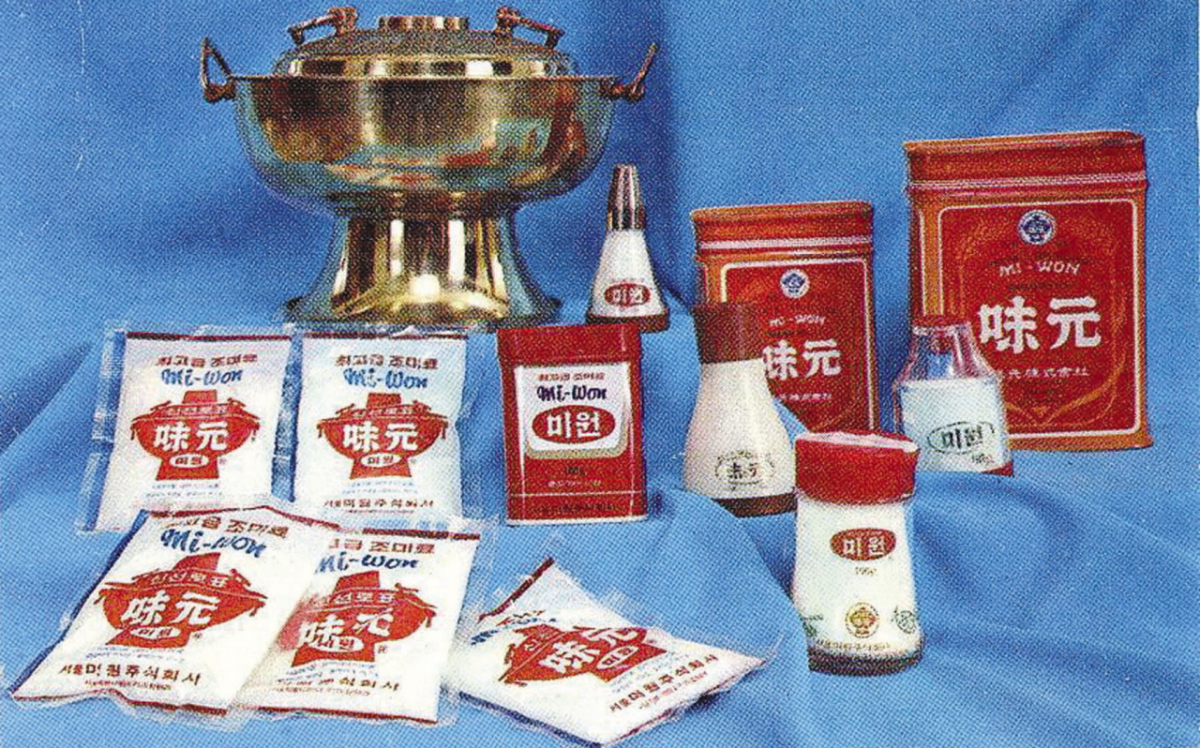
Upon returning home, Founder Im dedicated himself to developing proprietary manufacturing methods. The following year, he established Dong-A Hwasung Industrial in Dongdaeshin-dong, Busan, and began producing Miwon. Initially, raw materials were placed in cauldrons and heated directly over fire, resulting in a monthly production of only 5 tons (t). Later, with the introduction of mass-production equipment, output increased to 150 tons per month.
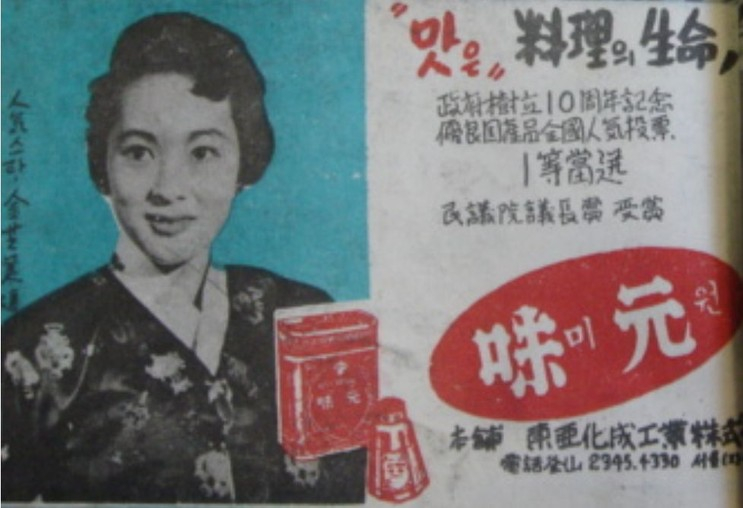
Miwon's unique savory flavor quickly penetrated Korean tables during the 1960s and 1970s. The phrase 'one Miwon per household' emerged, and Miwon gift sets became popular holiday items. It enjoyed its golden age by featuring famous actors of the time, such as Kim Ji-mi, as advertising models.
The seasoning competition at that time was fierce to an extent unfamiliar today. When CJ CheilJedang launched a competing product called 'Mipung' and offered high-quality sweaters as premiums, Miwon countered with a campaign offering to exchange five empty bags for solid gold rings. The intensifying competition over freebies became a social issue, leading the Ministry of Commerce, Industry and Energy (now Ministry of Trade, Industry and Energy) to impose sanctions.
However, a long dark period soon befell Miwon, which seemed destined for perpetual success. In the 1990s, the perception that 'MSG is harmful to health' spread, and the food industry promoted 'MSG-free' products, causing Miwon to endure a stagnation period lasting about 20 years. It became trapped in an image of being outdated and unhealthy.
The foundation for this turnaround was laid as misunderstandings surrounding MSG gradually dissipated. The Ministry of Food and Drug Safety (MFDS) issued statements confirming that MSG poses no safety concerns, leading to reevaluations both domestically and internationally. Daesung also worked to change consumer perceptions by highlighting that Miwon is a seasoning made through the fermentation of sugarcane.
A comprehensive brand revitalization accompanied this shift. In 2014, Daesung launched a major relaunch product named 'Fermented Miwon,' emphasizing sugarcane—the primary ingredient—on its packaging. Recently, it has also stimulated retro sensibilities by collaborating with fashion brand Musinsa to produce T-shirts and socks, and by creating Miwon-flavored salt popcorn in partnership with GS25.
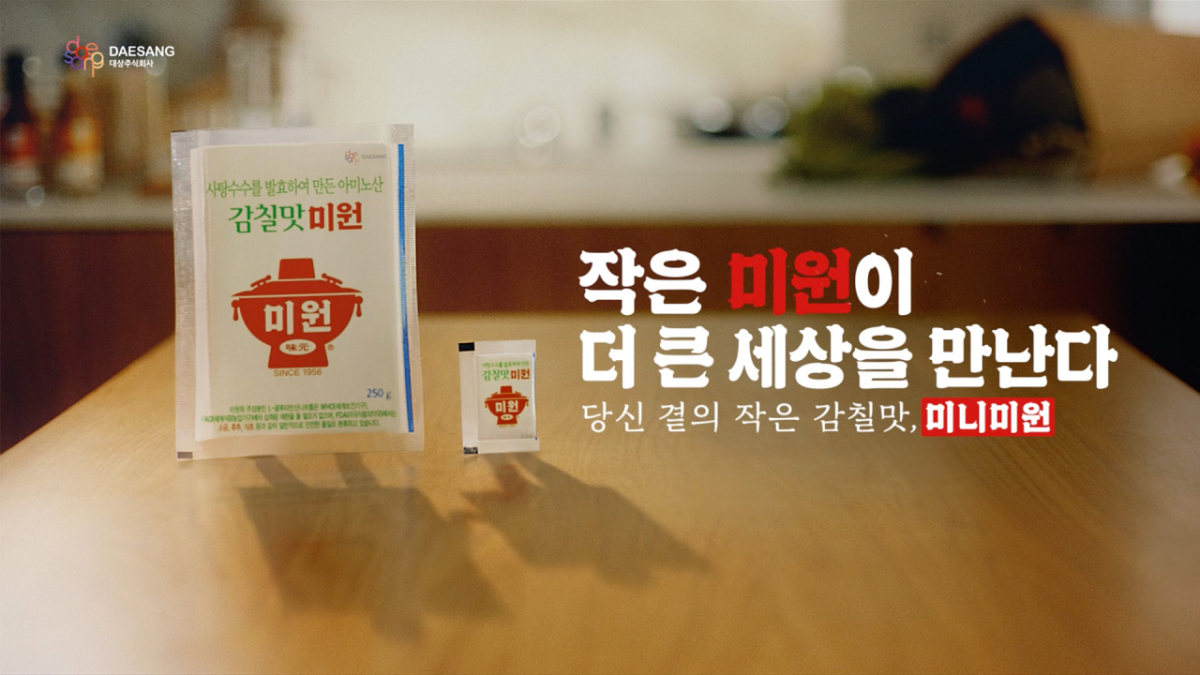
Miwon products have also evolved to match changing lifestyles. In 2023, it launched 'Mini Miwon,' a single-serving packet containing just 0.3g—the standard one-time usage amount—of Miwon. This so-called 'one pinch' portion maximizes convenience and portability.
After navigating a 70-year journey, Miwon's stage to become the 'seasoning of the century (100 years)' lies overseas. Daesung established its Indonesian subsidiary in 1973, entering international markets early on, and subsequently expanded its reach to Vietnam, China, the United States, and Europe. Currently, Miwon targets demand aligned with local food cultures in over 80 countries worldwide.
The recent expansion of K-foods beyond finished products like kimchi and instant noodles into cooking ingredients such as sauces and seasonings also presents another opportunity for Miwon's leap forward. At 70 years old, having long before the term 'K-Food' existed, already penetrated overseas markets, Miwon now stands on the threshold of a new 30-year chapter toward becoming a century-old brand.

 in LIVING


