

The franchise industry is opposing the Fair Trade Commission's proposed amendments to the Enforcement Decree of the Franchise Business Act, which aims to strengthen the bargaining power of franchise owners. Under the proposal, even if only 10% of all franchise owners gather, they can register a franchise owner group and legally demand negotiations with the headquarters. Concerns are also raised that in large-scale brands, more than ten such groups could emerge simultaneously.
According to relevant industry sources on the 25th, the Korea Fair Trade Commission announced a draft amendment to the Enforcement Decree of the Act on Fair Transactions in Franchise Business on the 3rd. The core of the proposal is a mandatory negotiation system: if a registered franchise owner group requests negotiations on changes to transaction terms, the franchise headquarters must comply. Headquarters are required to begin negotiations within 14 days from the date of request and must hold at least two rounds of negotiations per agenda item unless there are special circumstances. Public comments on the enforcement decree will be accepted until the 14th of next month.
The core of the controversy lies in the registration criteria for franchise owner groups. According to the draft, an official franchise owner group (Franchise Business Operator Association) can be established if it represents either 10% of all franchise owners or 1,000 members, whichever is smaller (with a minimum of 30 members). However, for headquarters with between 30 and 300 franchise outlets, 10% of all owners may fall below 30, so the floor of 30 members applies. In contrast, for brands with approximately 18,000 franchise outlets, only 1,000 members are needed, meaning mathematically up to 18 groups could be registered.
The industry also raises concerns about the negotiation cycle and criteria. Discussions should proceed only after a representative group consolidates opinions and makes a request; however, if multiple groups present differing demands, headquarters may find it impossible to reach substantive agreements. Under the draft, an agreement reached with one specific group does not automatically apply to other franchise owners. If requested, negotiations must be conducted separately for each group. Restrictions on re-negotiation are also limited: 180 days for the same topic and 60 days for distinct topics. If groups continue to split issues and request negotiations, talks could extend throughout the entire year. Kim Sang-hoon, Secretary General of the Korea Franchise Industry Association, stated, "This law will block substantive negotiations and prevent any agreement from being reached."
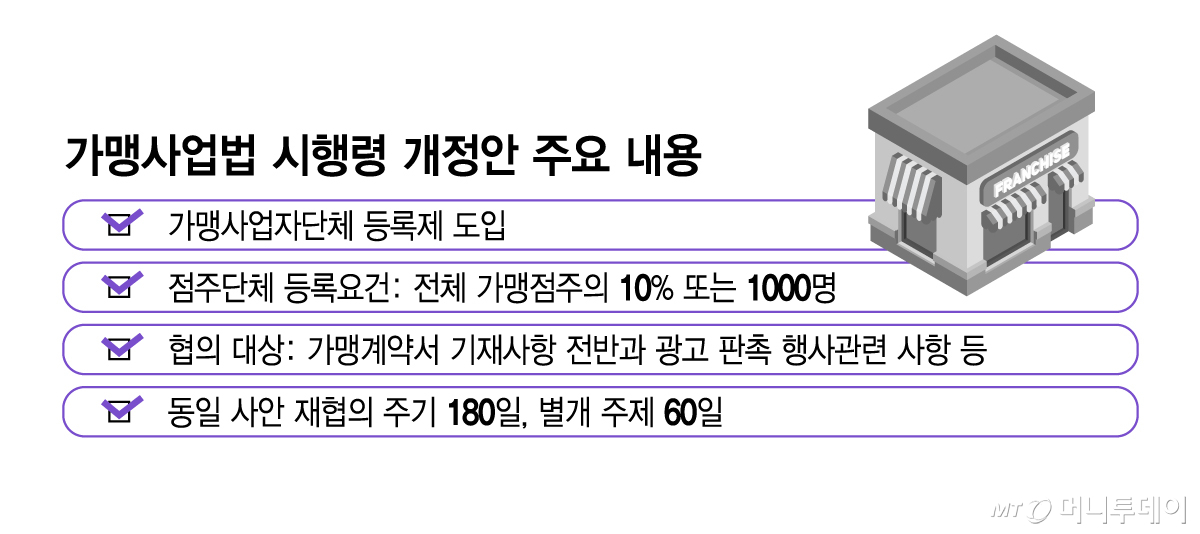
The industry also opposes the overly broad scope of negotiation targets. The scope includes most items listed in franchise contracts, such as franchise fees and business territories, as well as matters related to advertising and promotional events. Although there is a proviso prohibiting demands that undermine brand unity or contradict essential terms, the criteria for judgment are unclear. Industry sources explain that this ambiguity will ultimately force headquarters to accept repeated negotiation requests. The association fears that even management decisions such as the timing of new product launches or the selection of manufacturing partners could become subjects of negotiation.
Additionally, the scope of participants in negotiations is another contentious issue. The draft limits participants to affiliated employees and group members, while also including duly authorized representatives. The industry argues that the definition of "representatives" is vague, creating room for external groups to intervene, and insists that all third-party involvement, representation, and support should be prohibited.
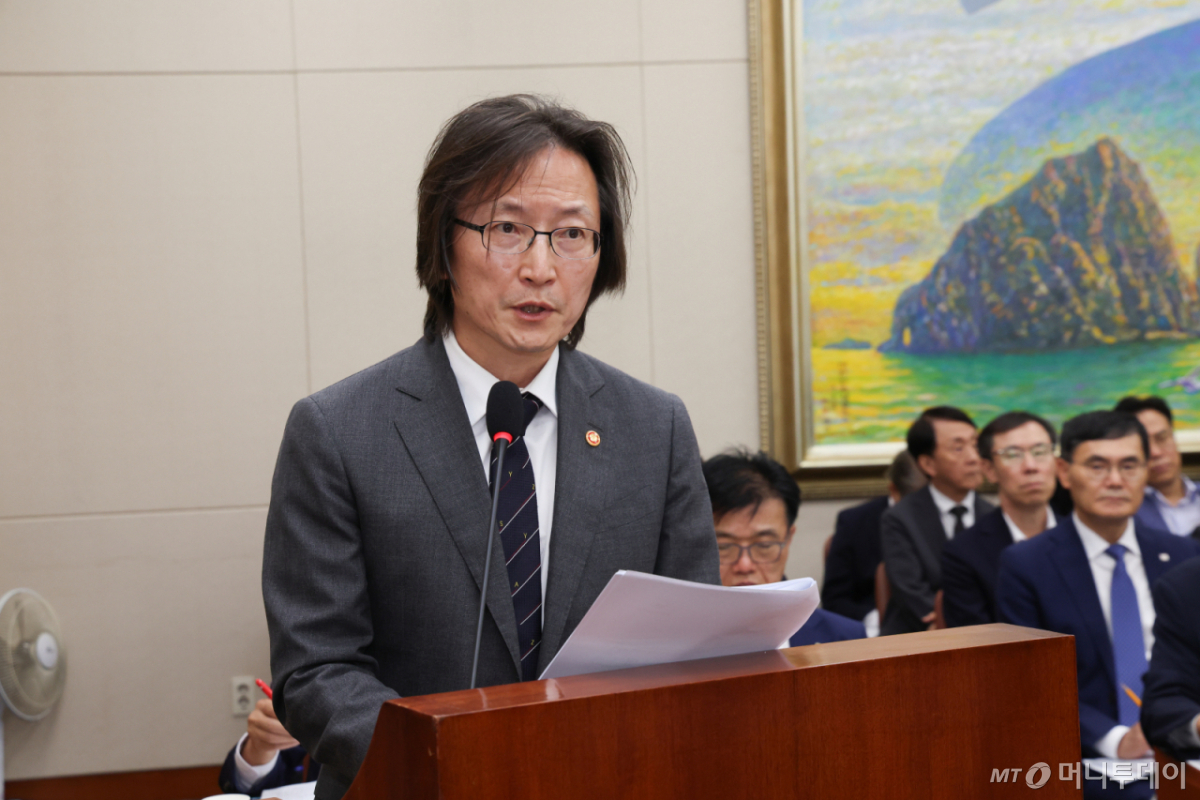
Meanwhile, Joo Byeong-gi Gong Jeong-geo-rae (Chairman) stated on the 24th at the National Assembly's Political Affairs Committee, "I agree that the proportion of franchise outlets between 30 and 300 has become excessive," and added, "This is not a finalized proposal; we intend to listen to opinions thoroughly and make revisions." This remark is interpreted as an intention to lower the registration requirements for franchise owner groups in response to concerns from group representatives that the 30th-member floor has made it difficult for small- and medium-sized brands to form organizations. As long as the gap surrounding the registration criteria remains unresolved, industry opposition and debate are expected to continue until the deadline for public comments next month.

 in LIVING

