

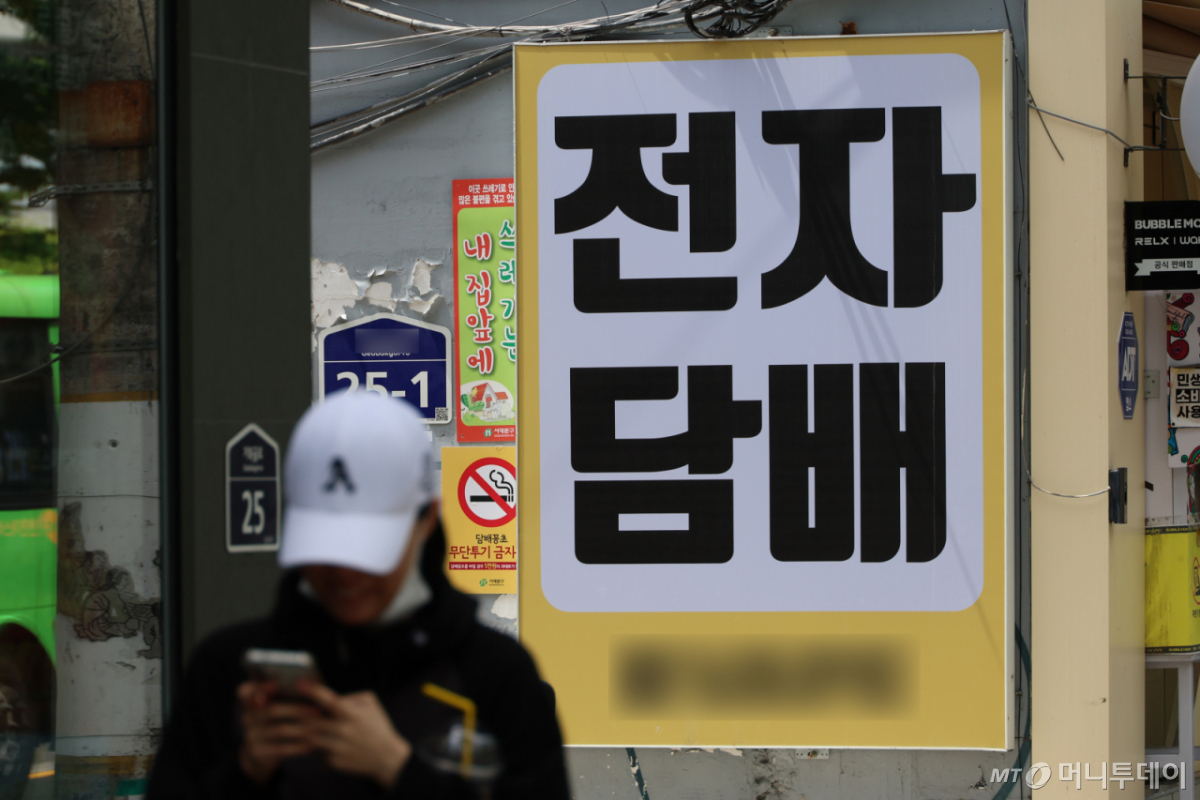
Regulating synthetic nicotine, a type of liquid-type electronic cigarette, as tobacco has brought similar nicotine into a new regulatory blind spot. Although chemically similar to nicotine, it is a distinct substance and thus can evade tobacco regulations. Industry sources also argue that the newly imposed taxes and high manufacturing licensing thresholds for synthetic nicotine are driving market shifts toward alternative substances like similar nicotine.
According to industry reports on the 17th, the amended Tobacco Business Act implemented on April 24 expanded the scope of tobacco raw materials from "tobacco leaves" to "tobacco or nicotine."
This measure was taken amid growing concerns over the spread of unmanned electronic cigarette vending machines and increased youth access to synthetic nicotine products. Prior to the amendment, synthetic nicotine produced chemically rather than extracted from tobacco leaves was excluded from the definition of tobacco.
The law revision now subjects these products to online sales bans, advertising restrictions, health warning labels, and limitations on automatic vending machine installations. Beyond taxation, the regulatory framework now covers manufacturing, distribution, and harm management.
However, products that do not use tobacco or nicotine as raw materials remain outside tobacco regulations. The government plans to complete a harmfulness assessment of 6-methylnicotine, a representative similar nicotine substance, by the end of this year and review regulatory measures.
However, industry critics point out that even if specific ingredients are regulated, other substances with altered molecular structures could emerge. This has led to proposals for an integrated management system that evaluates the harmfulness of inhaled similar products beyond mere nicotine content and requires ingredient disclosure.
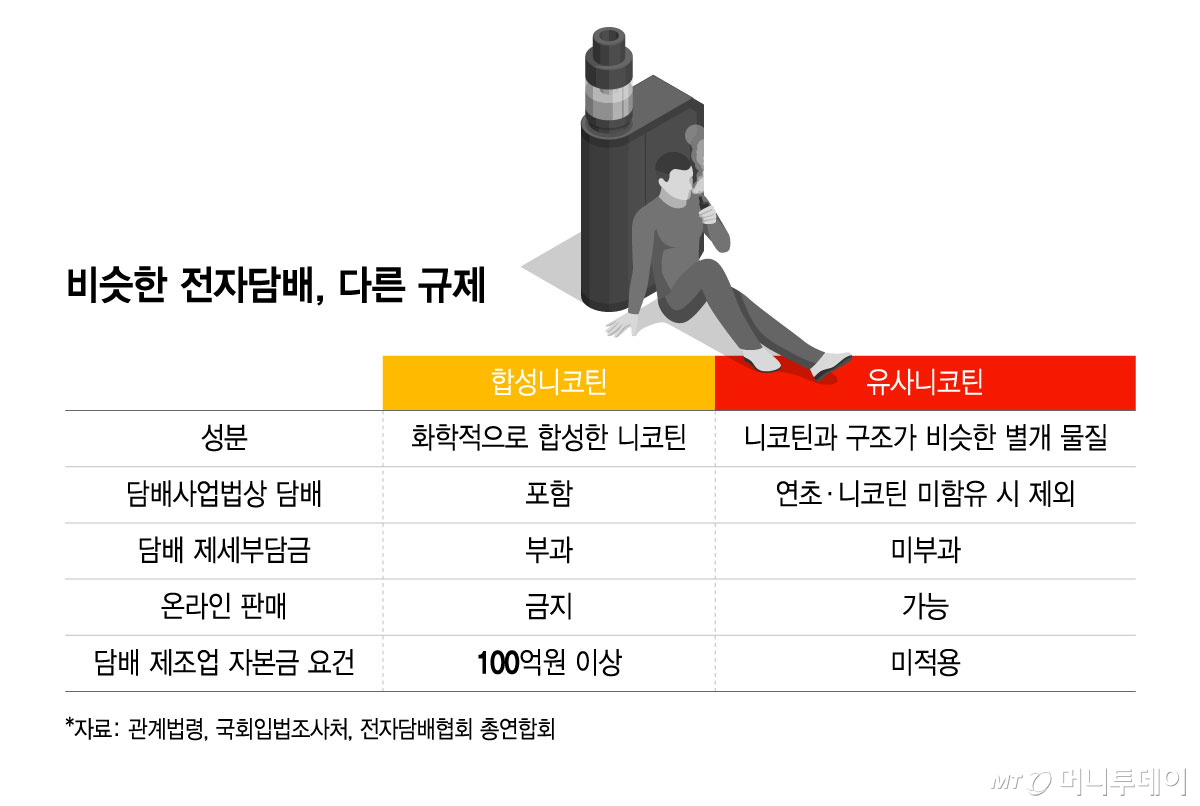
Industry observers believe that newly imposed taxes on synthetic nicotine are triggering a balloon effect, shifting demand toward the similar nicotine market. In the actual market, 30㎖ liquid products priced around 20,000 won before taxation have already more than doubled in price.
Projections suggest that once the current temporary tax relief measures end, selling prices could reach 70,000–80,000 won. In contrast, similar nicotine products not classified as tobacco are exempt from taxes, leading consumers to choose cheaper alternatives. A tobacco industry official explained, "If prices rise two to three times higher than before, it is natural for market demand to shift."
Critics also argue that the current system exacerbates regulatory blind spots. The Enforcement Decree of the Tobacco Business Act currently requires a capital of at least 10 billion won for manufacturers of liquid-type tobacco products. While lower than the 30 billion won threshold for non-liquid tobacco, it remains burdensome for small-scale manufacturers.
The liquid-type electronic cigarette market is only one-tenth the size of the cigarette-type electronic cigarette market (1.4 trillion won as of 2019), and most companies employ around 20 people in total. Those synthetic nicotine operators who failed to meet these standards are reportedly closing down or shifting focus to the similar nicotine market to avoid tax burdens.
Some argue that reducing regulatory gaps for similar nicotine while adjusting taxation methods and manufacturing licensing requirements for the synthetic nicotine market to better reflect reality can minimize side effects.
Kim Do-hwan, vice president of the Electronic Cigarette Association Federation, said, "Regulations alone cannot normalize the market without a proper understanding of it," adding, "Policies must align with reality, including tax rates and capital requirements."

 in LIVING

