

From convenience stores to fashion platforms and e-commerce sites, the retail industry is expanding its private brand (PB) beauty products. The move aims to leverage consumer data secured by platforms for product planning while retaining customers with differentiated products and securing new revenue streams.
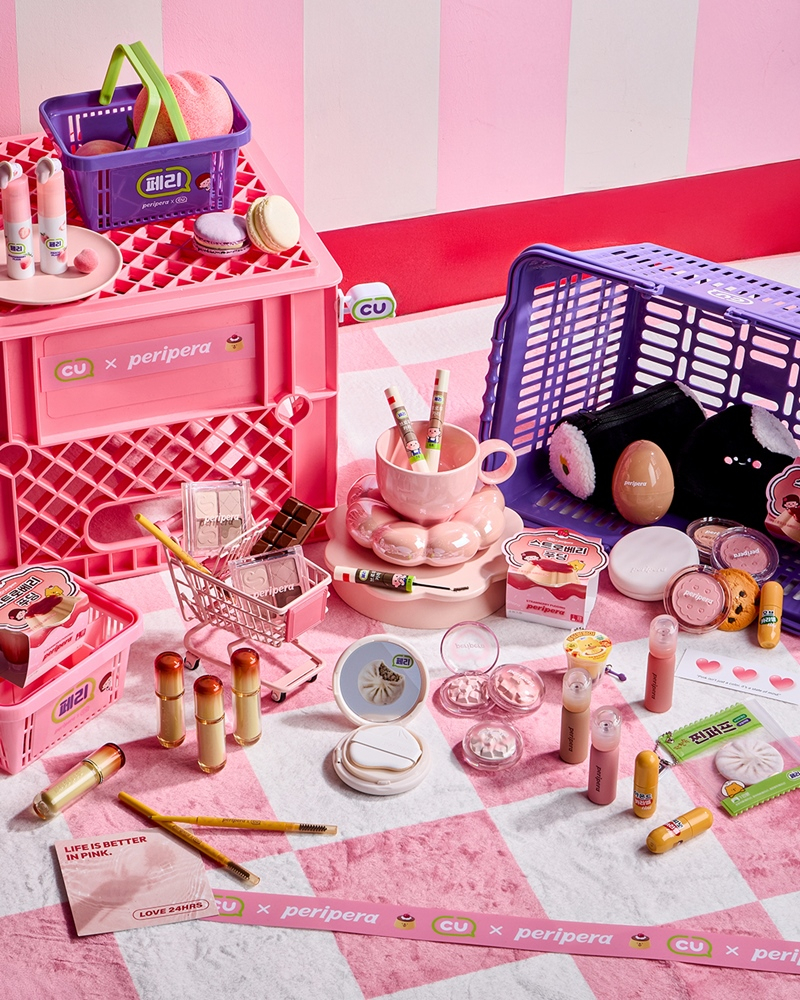
According to the retail industry on the 28th, CU will unveil beauty products utilizing the CU Friends IP in collaboration with Peripera. In this arrangement, CU provides IPs such as CI·BI and characters, while Peripera handles product planning and launch. Beauty products including Mood Glow Tint, Ink Glazing Lip Gloss, Cheek, and Cushion will be released and sold at Olive Young, Club Clio Mall, Aerie, Zigzag, Musinsa, and Kakao Gift. The companies are also pushing to expand into 13 overseas countries, including Japan, Thailand, Canada, the Philippines, Australia, and China.
A key feature is incorporating snacks and desserts sold at CU into beauty products. Pudding, yogurt, potato sticks, sausages, cookies, chocolate, and steamed dumplings are used as motifs for tints, lip glosses, brows, cheeks, and cushions. Goods such as triangular rice ball-shaped pouches and puffs are also being unveiled. The initiative aims to expand the CU Friends brand beyond convenience stores into the beauty sector, broadening brand touchpoints.
Fashion platforms are also expanding their own beauty brands. Aerie launched its first beauty PB, "Vibely," in April, followed by cushions and mascara. This month, it unveiled the color line "Be Collection," linked to fashion styles. Using product exploration and purchase data of consumers aged 10-20 accumulated on the platform, products were planned according to styles preferred by consumers, including pure, lovely, modern, bold, and hip.
Musinsa is expanding its beauty PBs by operating "Odd Type," "Weechee," "Musinsa Standard Beauty," and "No Dumb." Last year, Musinsa's beauty PB transaction volume increased by 120% compared to the previous year, and it is broadening sales touchpoints through domestic standalone stores and overseas distribution networks.
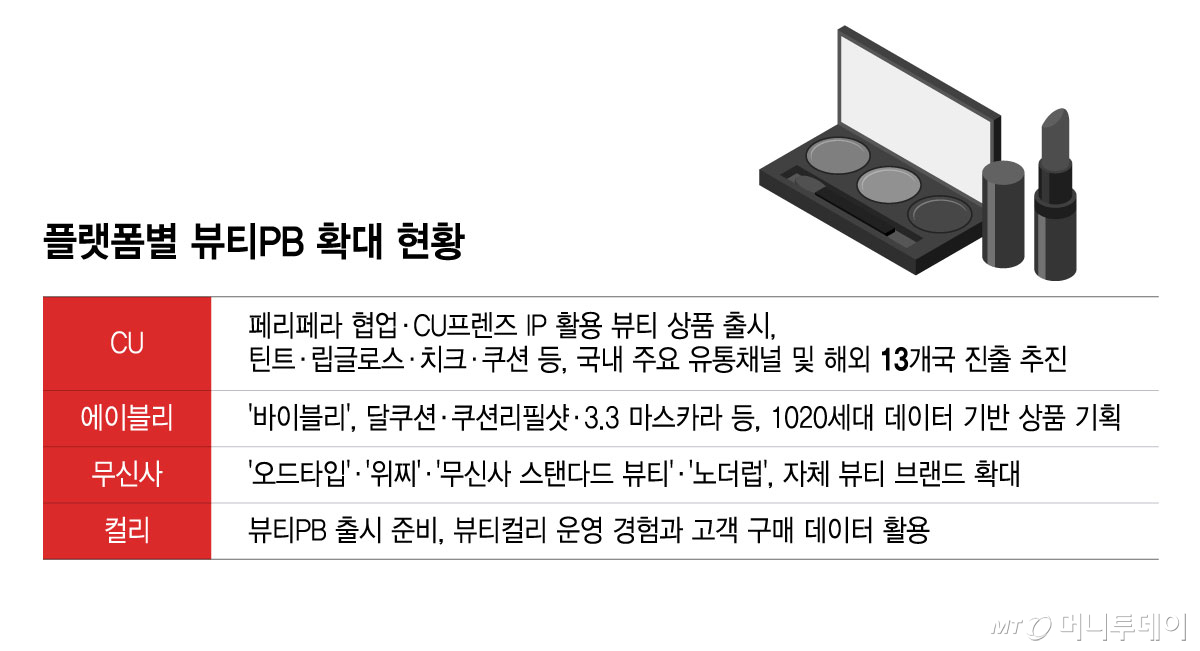
Cully is also preparing its beauty PB business. After hiring personnel for beauty product planning starting last year, the company filed a trademark application related to this field this year. The plan is to utilize sales experience and customer data accumulated through operating Beauty Cully for in-house product development. Beauty Cully continues its growth trend, with transaction volume increasing by 13.5% in the second quarter of this year compared to the same period last year.
The high repurchase rate of beauty products influences platforms' expansion of beauty PBs. While fashion items have long purchase cycles per product, cosmetics generate repeat purchases after consumption, making it easier to encourage platform re-visits. Additionally, unlike in-store brand products, PBs allow platforms to directly design pricing, product composition, and sales methods, enabling differentiation. Another advantage is the ability to diversify revenue streams by adding sales from own-brand products.
Especially, the core lies in the fact that customer data held by platforms can be utilized for PB planning. Aerie planned Vibely based on an average of 400 million pieces of daily customer behavior data, analyzing the tastes and purchasing patterns of consumers aged 10-20. Fashion platforms can identify not only what clothes customers search for and purchase but also what color cosmetics or beauty products they seek, enabling product development that connects fashion and beauty.
An industry official stated, "From a platform's perspective, PBs are significant as they secure exclusive products different from in-store items, encouraging repeat purchases by customers." They added, "Especially since beauty products have short purchase cycles and many items lead to repeated repurchases, platforms can expect a lock-in effect that keeps existing customers within the platform."

 in LIVING

