

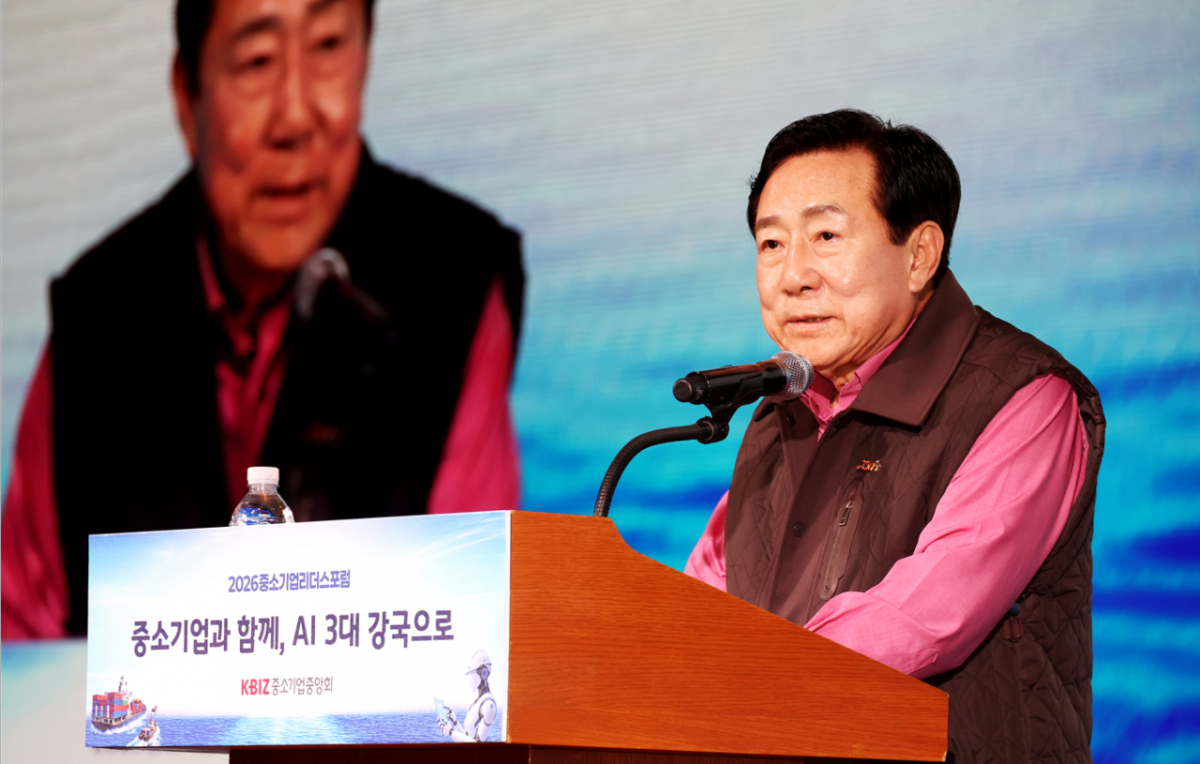
Kim Ki-moon, Chairman of the SME (small and medium-sized enterprise) Central Association, warned that as polarization between large corporations and SMEs (small and medium-sized enterprises) deepens, the artificial intelligence (AI) gap is emerging as a new threat. He called for joint response and innovation by the government and businesses to ensure SMEs do not fall behind in the AI transition.
At the opening remarks of the "2026 SME (small and medium-sized enterprise) Leaders Forum" held at the Jeju Lotte Hotel on the 20th, Kim (Chairman) emphasized, "We are now in a very critical period where we will inevitably fall behind if we fail to enter the top three AI powers," adding, "We must all join forces and prepare well."
Kim (Chairman) diagnosed, "While our economy has recently continued to enjoy a boom centered on key industries, SMEs (small and medium-sized enterprises) are recording record-high corporate bankruptcy rates and bank delinquency rates, with wage arrears exceeding 2 trillion won, indicating deepening K-shaped polarization." He added, "In particular, many voices express concern that the AI gap between large corporations and SMEs will further accelerate this polarization."
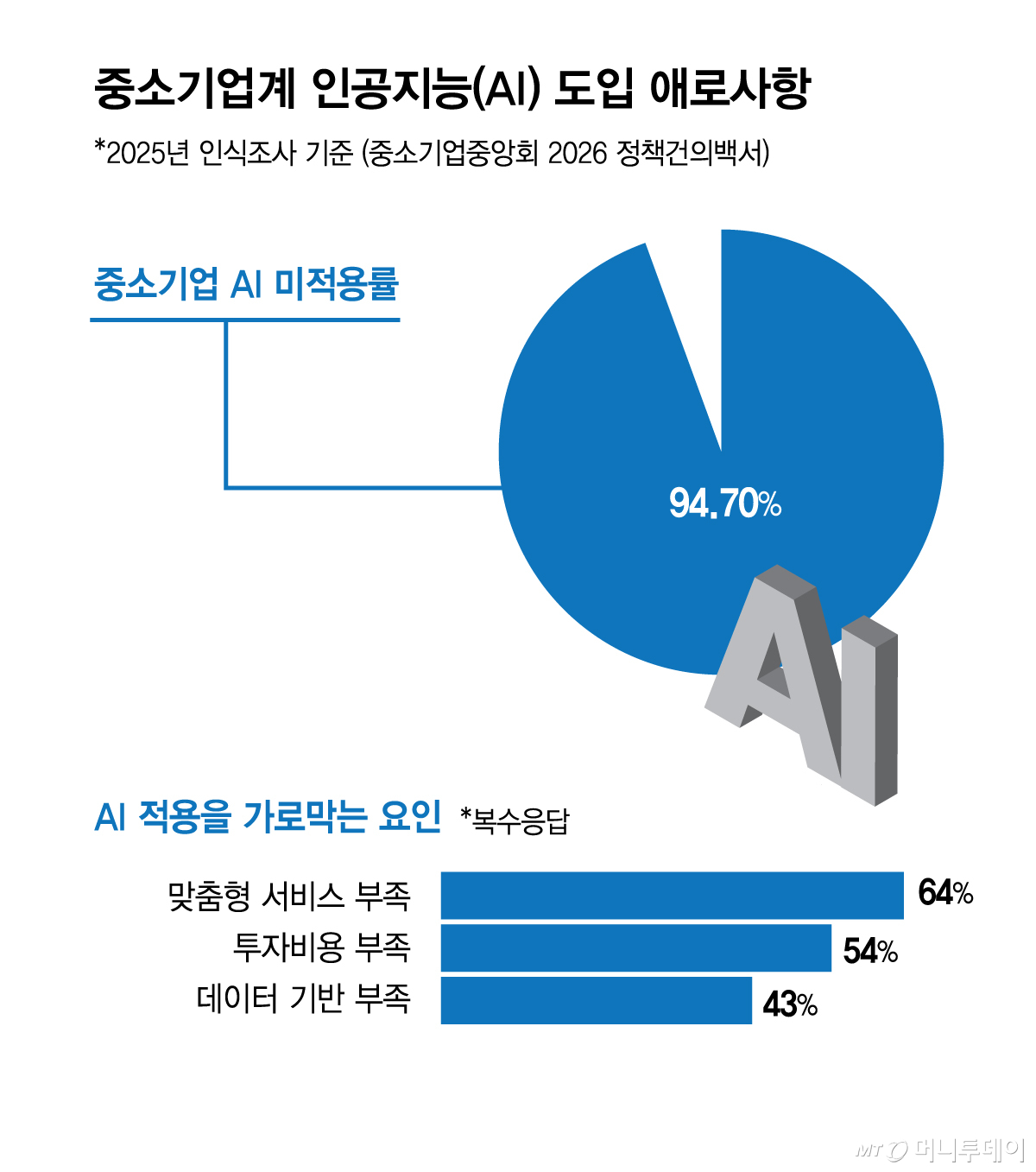
The decision by the SME Central Association to set this year's forum theme as "With SMEs, Toward a Top Three AI Power" stemmed from such a sense of crisis. According to the SME Central Association's "2026 SME (small and medium-sized enterprise) Policy Proposal White Paper," the non-adoption rate of AI among SMEs is 94.7%. The main obstacles to AI adoption cited were a lack of customized services (64%), insufficient investment costs (54%), and a lack of data infrastructure (43%).
Chung Do-ryeong, Speaker of the National Assembly, and Han Seong-suk (Prime Minister) delivered congratulatory messages via video on this day, promising national support. Prime Minister Han stated, "Only when AI innovation is achieved in SMEs can AI innovation be realized for the Republic of Korea." Speaker Chung also said, "I hope today's gathering becomes a time to find solutions for the AI transition of SMEs."
On the 21st, the day after the event, an "AI Innovation Strategy Roundtable" will be held with the participation of Kim (Chairman), former Ministry of SMEs and Startups Minister Park Young-sun, and other experts from civil society, government, and academia. The roundtable is expected to address SME growth strategies and manufacturing innovation measures through physical AI, data assetization, and joint AI development.
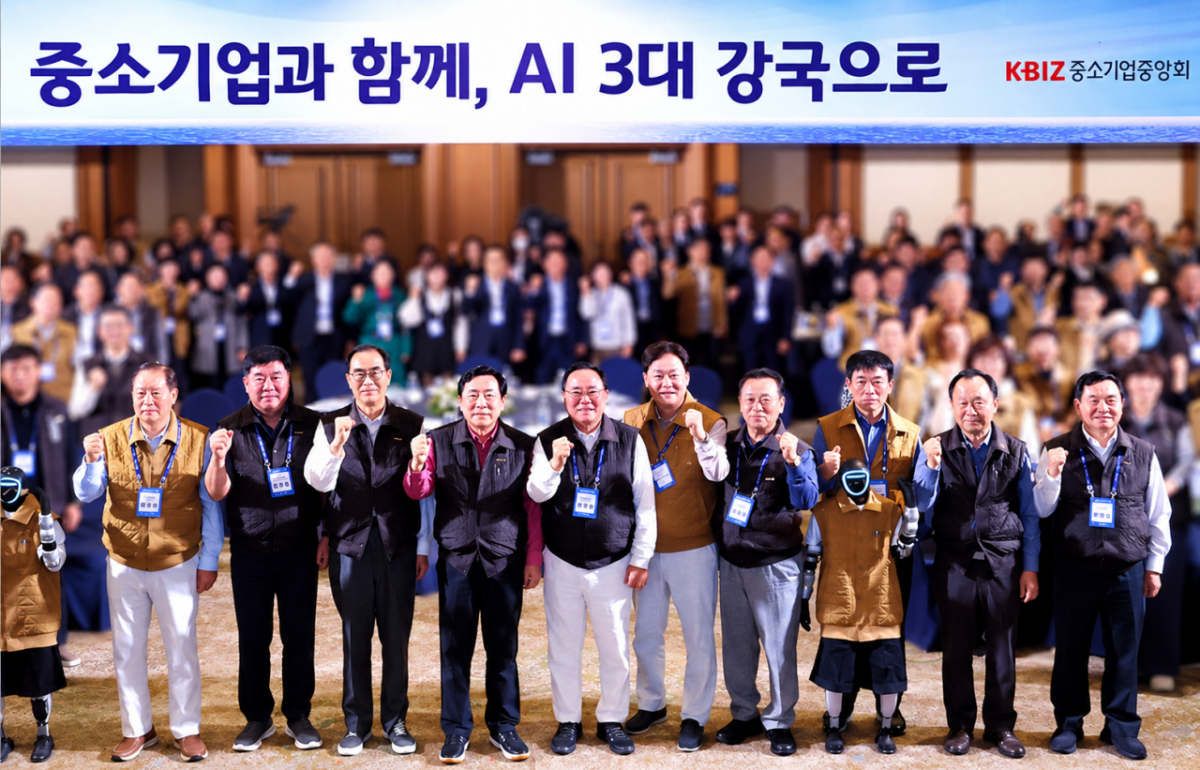
Various programs were prepared at the venue for SME representatives to experience technology and network. Clobot's humanoid robot, which performs special movements such as drawing a heart above one's head, also participated in the opening ceremony commemorative photo session and received applause. SME and organization officials actively participated in events such as the event zone, photo zone, and photography contest, enjoying the forum.
A long line formed at the promotion and experience zone for "Yellow Umbrella," a mutual aid system for small businesses and self-employed workers. Participants are challenging themselves to stop time precisely at "3.7 seconds" in a "timing game" aimed at raising awareness of the 3.7% annual compound interest rate. SME representatives who narrowly missed the timing let out sighs of regret.
The SME Leaders Forum, now in its 19th year, is a representative event for the SME sector. Kim (Chairman) recalled, "Forums that existed at the time were centered on large corporations and did not suit SMEs or yield results." He added, "To create a forum specialized for the SME sector, we formed a task force (TF) and launched the first forum in 2007."
He continued, "While there were shortcomings at first, it received high praise not only from participants but also from the media," evaluating that "it has now become a premium forum that other economic organizations benchmark." He also reflected on the outcome of the sixth forum in 2012, where issues such as economic democracy, unfair transactions, and market imbalance—known as the "Three Economic Imbalances"—were brought into public discourse and subsequently reflected in the key campaign pledges of presidential candidates at the time.

 in LIVING


