

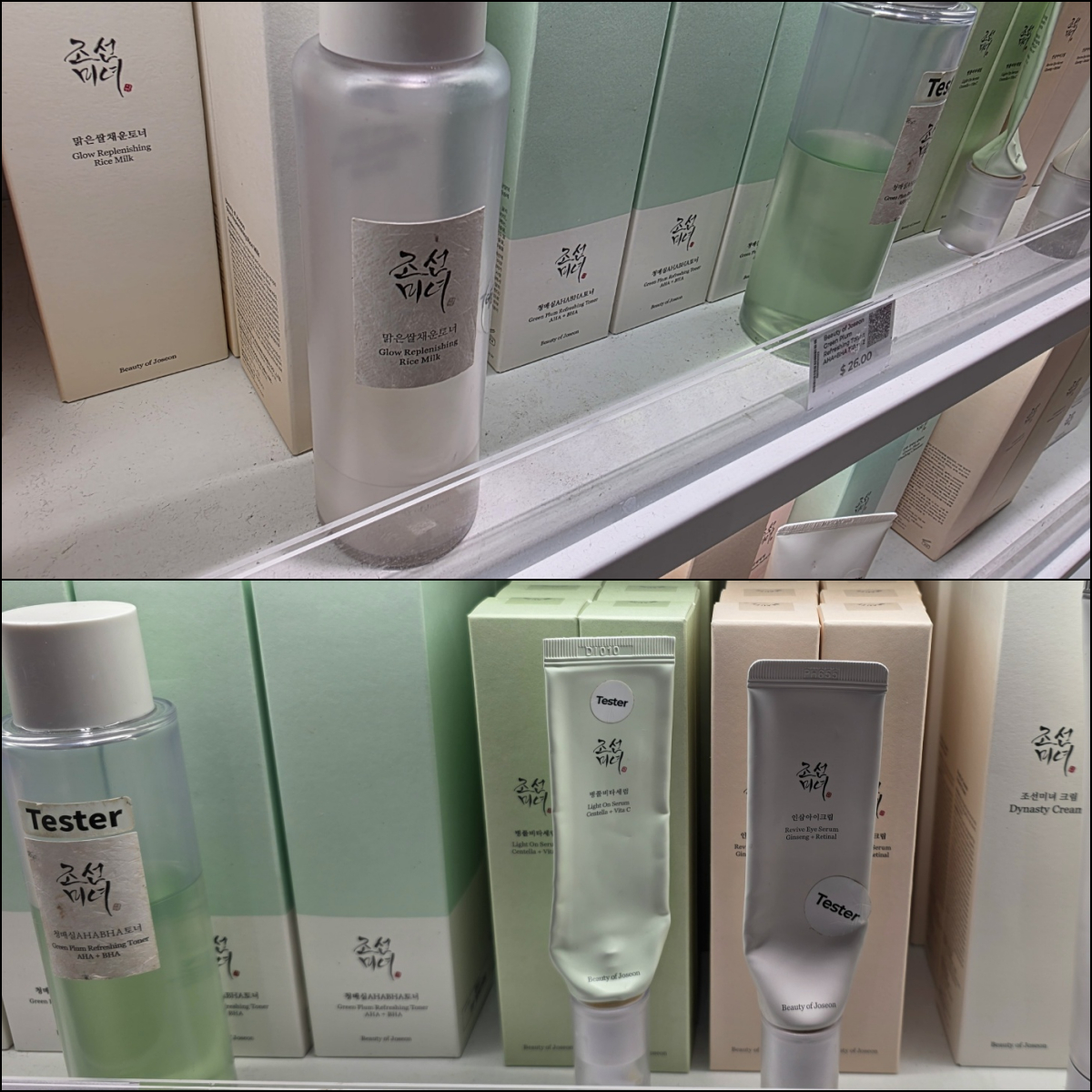
At around 2 p.m. on Oct. 18 (local time), testers of Beauty of Joseon's Revive Eye Serum: Ginseng + Retinal at W Cosmetics' World Square store in Sydney, Australia, were nearly empty. The same was true of its Rice Milk Toner displayed nearby. A store employee said, "On weekends, testers of popular products run out quickly, and we usually go through at least two bottles."
K-beauty, which highlights traditional Korean ingredients such as rice, ginseng, and plum, is gaining attention in the Australian cosmetics market. This is because Korean ingredients have emerged as a trendy choice among local consumers who meticulously scrutinize ingredients and efficacy.
Elements that reveal Korea's identity, such as Hangul labeling, also serve as effective "selling points" in the local market. This is the background behind Coles, one of Australia's two major supermarket chains, deciding to stock Joseon Beauty among various K-beauty brands.
Kerby Halfpenny, assistant category manager for the Skincare and Makeup division at Coles, said, "Australian consumers are now much more informed about ingredients, efficacy, and new global beauty trends than before. Beauty of Joseon's strength lies in connecting traditional Korean ingredients like rice and ginseng to benefits that consumers can easily understand."
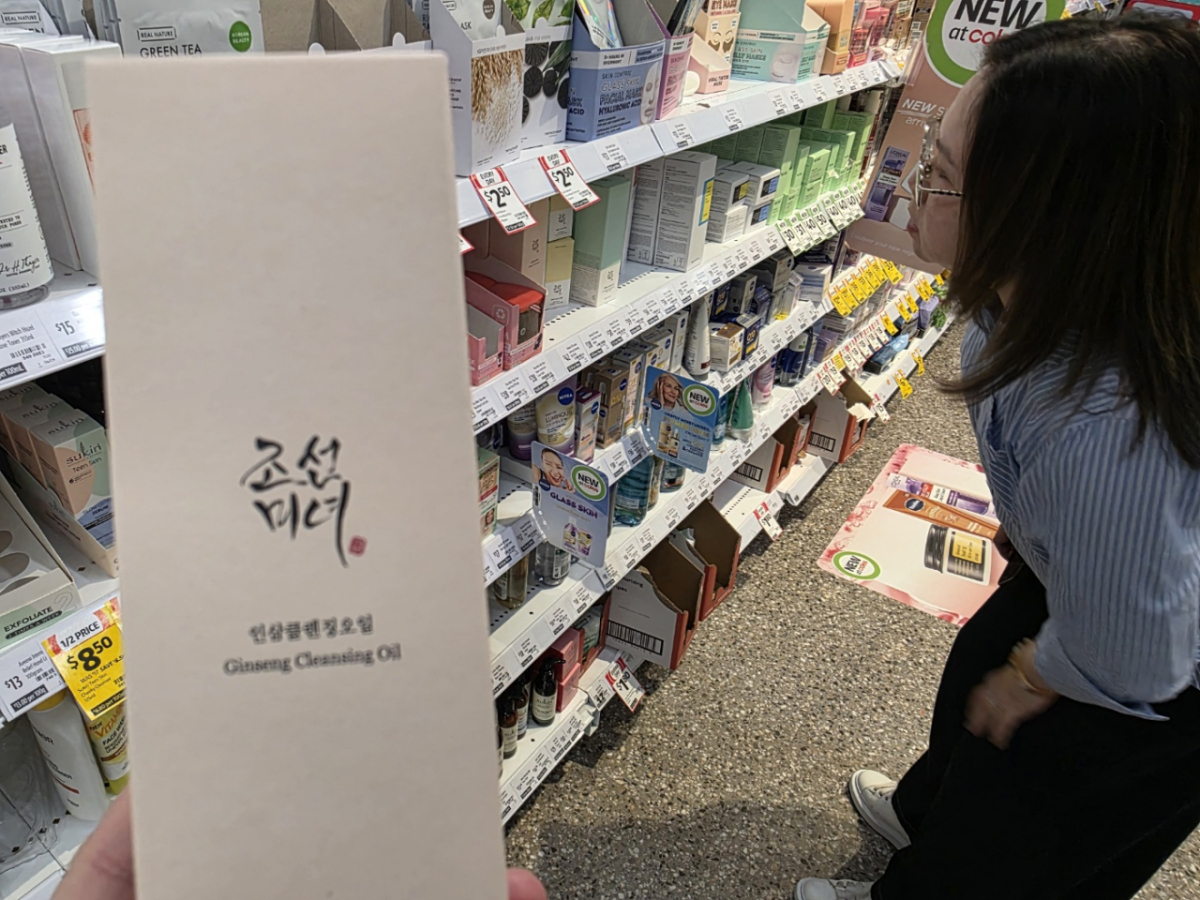
Australian consumers, exposed to strong ultraviolet rays and a dry climate, have high interest in moisturizing, soothing, and skin texture management. A Goodai Global official said, "We are addressing local consumers' skin concerns through daily skincare products that embody the brand's unique identity, including its 'Hanbang' (traditional Korean medicine) ingredients."
Coles analyzed the popularity of Beauty of Joseon in a similar manner. The best-selling Beauty of Joseon product at Coles is the "Clear Rice Serum," which combines rice bran water and albutin. The company explained that the purchase was driven by clearly presenting skin tone improvement and brightening (whitening) benefits, using rice—an ingredient familiar to global consumers yet distinctly Korean.
The word "Hangul" printed on product packaging is also used as-is. In the past, packaging had to be changed to match local languages for product names and ingredient labeling, but now maintaining the domestic packaging design as much as possible overseas has become a means of building trust.
Hwang In-jae, deputy director of the KOTRA Sydney Trade Office, said, "Local consumers want to buy products they have seen in dramas or on social media exactly as they appear. There is also a tendency for buyers to perceive products with Hangul as 'authentic K-beauty' from Korea, so buyers sometimes request it themselves."

 in LIVING

