

As the global economy grows together, food, clothing, and shelter across nations are rapidly converging. In the past, one could distinguish between people from developed and emerging countries just by their attire, but now that difference is minimal. While gaps remain in some areas, excluding the extreme ends of the distribution, consumption levels have become roughly similar everywhere.
However, while consumption patterns may resemble each other, ways of living still differ. This is due to the foundational culture built up over a long period in each society. The workplace is where this difference is most clearly visible. Korean office workers are accustomed to having everything from a single ballpoint pen to uniforms provided and managed by their company. Even hospital nurse uniforms are supplied and laundered by the hospital. Although individualism has grown, the culture of organizations equipping members before sending them out remains deeply ingrained.
The United States is different. While companies may provide office pens, it is a country where individuals purchase items for daily living themselves. Automotive mechanics often save money to buy their own toolboxes. The mindset is that while the workplace belongs to the company, tools belong to me, and therefore so does my skill. U.S. mechanic job postings frequently list “must have own tools” as a qualification requirement.
U.S. hospitals require medical staff to purchase their own scrubs
The healthcare sector is no exception. While individuals do not buy expensive medical equipment, they must purchase their own work uniforms. Healthcare workers, including nurses, mostly buy and wear scrubs with their own money. Hospitals only set regulations on colors—green, wine red, white, etc.—by job category. The only places where hospitals provide scrubs along with laundering and sterilization are operating rooms requiring sterile conditions. Personal scrubs must be washed at home or paid for at a laundry service.
As such, scrubs have formed a unique market as a medical consumable category that undergoes significant changes over time. Until the 1970s, the white dress and cap symbolizing U.S. nurses were items purchased by nurses from uniform shops according to standards set by nursing schools and hospitals. However, in the 1980s–1990s, scrubs with various advantages spread throughout the healthcare industry.
Scrubs typically consist of a V-neck short-sleeve top and elastic-waist pants. Buttons were eliminated to prevent bacteria from getting into gaps, and necklines were widened so that contaminated clothing would not touch the face when removing them over the head. With the convenience of quick donning and doffing added to hygienic advantages like easy boiling and washing, scrubs became a kind of school uniform.
At that time, scrubs were sold in boxes at medical supply stores outside hospitals. They had many drawbacks: no distinction between men’s and women’s sizes, stiff fabric, and pockets too small even to hold a stethoscope. Yet they were worn for decades with almost no improvement because the advantage of low price outweighed the inconvenience.
Change arrived in the 2000s. Workwear companies like Cherokee and Dickies introduced tailored cuts distinguishing men’s and women’s body shapes and blends with spandex. As medical dramas such as ER and Grey’s Anatomy aired, healthcare workers’ scrubs gained attention as fashion icons. In the 2010s, U.S. medical apparel brand FIGS emerged, marking the beginning of a full-fledged trend toward fashionization and premiumization of scrubs.
FIGS founder Heather Hasson was not someone connected to healthcare. A graduate of the University of Wisconsin who achieved great success in the fashion industry, she was shocked one day by her nurse friend’s bulky scrub outfit and altered it to improve its appearance and allow for comfortable movement. Word spread, and as other nurses began requesting alterations, she saw potential and decided to start a business. Hasson was introduced to Trina Spear, who had worked on Wall Street, and founded FIGS in Los Angeles in 2013.
Comfortable, stylish, functional, and personalized… The medical apparel wave sparked by FIGS
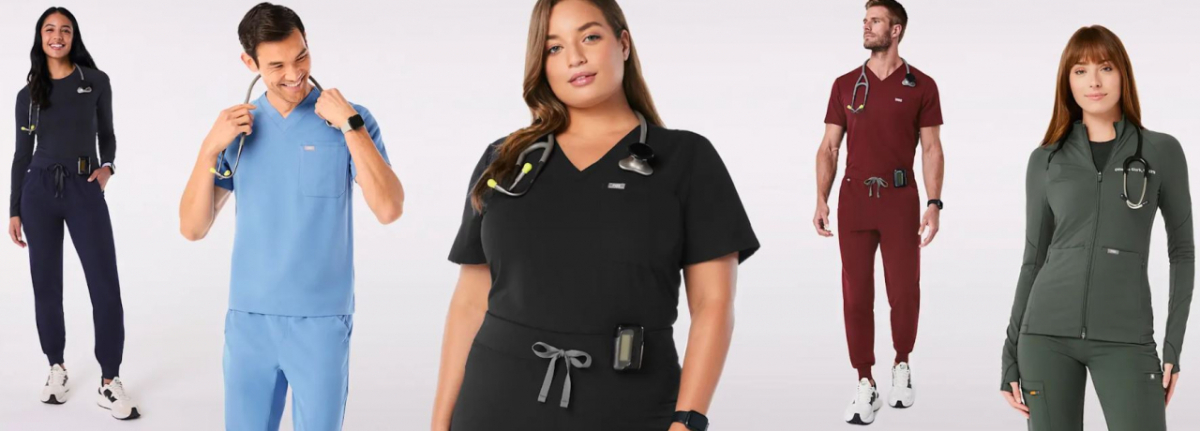
Initially, FIGS began selling its newly designed scrubs by setting up stalls in hospital emergency rooms. The response was better than expected. Hospitals are places where thousands of medical staff work together in confined spaces, so word-of-mouth spread quickly.
Wall Street also took notice of the company’s potential and secured substantial investments. Among investors were Campfire Capital, founded by former Lululemon executives. Later, Thomas Tull, founder of Legendary Pictures, invested $65 million, becoming the largest shareholder. Will Smith and former Lululemon CEO Christine Day also joined the investor list.
FIGS was named among the fastest-growing companies in the U.S. in 2018, with a three-year growth rate of 9,948%. In 2020, when the pandemic struck, revenue reached $263 million, 2.4 times the previous year’s figure, and profits amounted to 700 billion won (0.5 billion won). That same year, the company donated 30,000 sets of scrubs to New York hospitals and secured a contract to produce 10 thousand won N95 masks. In May 2021, FIGS successfully listed on the New York Stock Exchange, drawing attention by allocating 1% of its IPO shares in advance to retail investors via Robinhood, particularly targeting medical staff.
FIGS’s competitiveness lies in creating clothing that thoroughly meets the needs of healthcare workers. The company even developed a fabric called “FIONx” for medical professionals. By using core-spun yarn structures, durability was enhanced, and four-way stretch, antimicrobial, deodorant, wrinkle-resistant, and moisture-wicking quick-dry functions were added. It is designed to withstand environments where contaminants splash, staff repeatedly sit and stand during 12-hour shifts, and garments are washed hundreds of times in industrial washing machines.
Design also comes from the field. Products are developed through customer data, focus groups, and actual wear tests by medical professionals. Zippered pockets designed to hold stethoscopes, scissors, smartphones, and ID badges are representative examples. Holding 21 U.S. design patents, 112 overseas design registrations, and 18 U.S. trademarks as of the end of last year demonstrates its competitive edge. Although prices reach two to four times those of low-cost scrubs, many consumers are satisfied with the materials, functionality, and style. More than 70% of revenue comes from repeat customers.
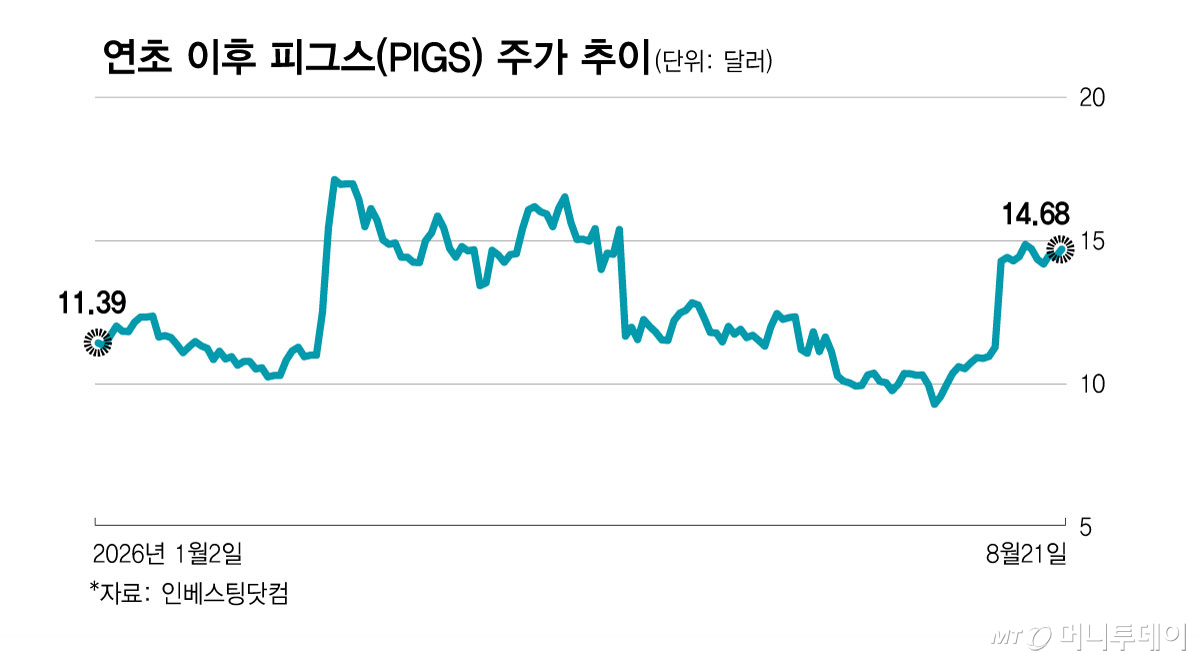
FIGS also faced difficulties shortly after its listing. While it experienced high growth in 2021–2022, once pandemic-related special demand faded, its scale stagnated for the following three years, and profitability declined. Revenue remained flat at 763.8 billion won ($545.6 million, based on an exchange rate of 1,400 won per dollar) in 2023 and 777.8 billion won ($555.6 million) in 2024. Net profit margin fell to just 0.5% in 2024. The stock price dropped from an IPO price of $22 to as low as the $6 range at one point.
However, a turnaround began last year. Revenue reached 883.5 billion won ($631.1 million) in 2025, growing by 13.6% and regaining momentum. In the second quarter of this year, revenue rose to 275.2 billion won ($196.6 million), a 28.8% increase compared to the same period last year. This marks three consecutive quarters of growth exceeding 25%. Second-quarter net profit was 39.8 billion won ($28.4 million), four times the 9.9 billion won from the same period last year. Net profit margin stood at 14.4%, and adjusted EBITDA margin reached 18.6%. Most revenue comes from D2C (direct-to-consumer) sales via its own website and app. With no intermediate distributors, gross profit margins reached 66.5% last year and 71.8% in the first half of this year.
Core scrub sales grew by 27% (accounting for 82% of revenue), while non-scrub items such as outerwear, underscrubs, and shoes increased by 40% (18%). In the U.S. market, revenue grew by 22%, while overseas sales in Europe, Latin America, and other regions surged by 67%. The number of countries where FIGS operates expanded from 58 last year to 85 as of July this year. The 2026 revenue growth forecast was revised upward from the previous 14–16% to 20%. Adjusted EBITDA margin expectations were also raised from 13.0–13.2% to 14.8–15.0%. The share buyback limit was doubled from 140 billion won ($1 million won) to 280 billion won ($200 million). In the second quarter alone, FIGS repurchased and retired $24 million worth of shares. As of late June, cash and short-term investments totaled 414.8 billion won ($296.3 million), with no outstanding debt.
Surging performance prompts Wall Street to raise target prices
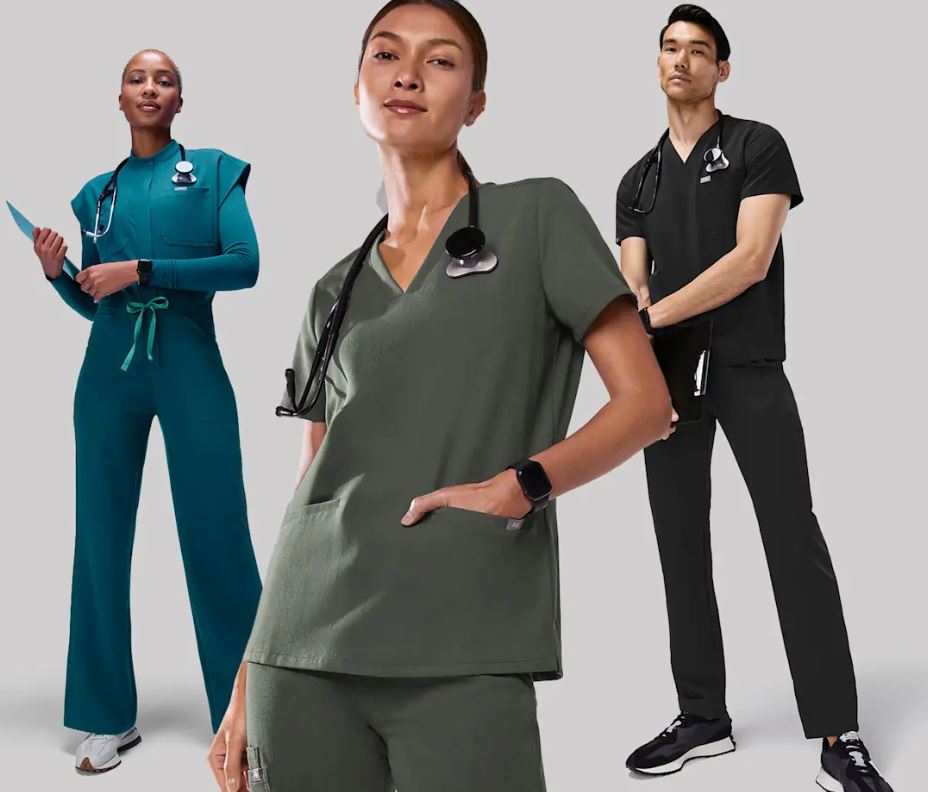
There are approximately 24 million healthcare and social service workers in the United States. The U.S. Bureau of Labor Statistics projects that among all industries, healthcare will be the fastest-growing sector by both volume and rate from 2024 to 2034. This is driven by aging populations and rising chronic diseases. Scrubs are not subject to fashion trends; they are consumables replaced when worn out, and hospitals mandate their use.
A recent notable trend is the growing movement among institutional investors in healthcare to standardize employee uniforms. In the U.S. scrub market, B2B bulk purchases by hospitals and healthcare institutions have accounted for only about 15% of total sales, but this market is now opening up. Taking note of this trend, FIGS is strengthening its “TEAMS” platform designed for institutional investors. The company is also expanding offline stores. Currently operating five direct stores (community hubs) in Los Angeles, Philadelphia, New York, Houston, and Chicago, it plans to open four more in the second half of the year.
Wall Street is giving FIGS high marks. Although the current stock price has more than doubled from its 52-week low of 9,100 won ($6.50), experts believe there remains significant growth potential. Second-quarter earnings per share of $0.15 was a surprise, exceeding the consensus estimate of $0.07 by double. However, the market expects only gradual strength as market share gains occur incrementally. This year’s performance includes one-time benefits from tariff refunds, and import bans (WROs) were issued for products from Jordanian partner factories, which are FIGS’ major production bases.

 in STOCK


