

[For more diverse corporate information on startups, you can view it on the Unicorn Factory big data platform 'Data Lab.]
"For deep tech startups to grow and establish themselves in the global market, simply taking risks with 'venture capital' is not enough. 'Patient capital' that can wait for a company's growth over a long horizon is absolutely necessary."
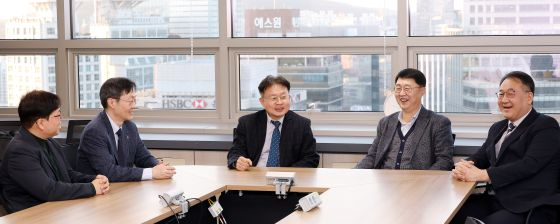
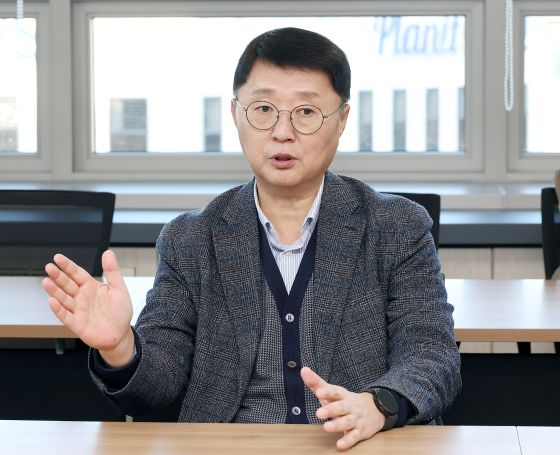
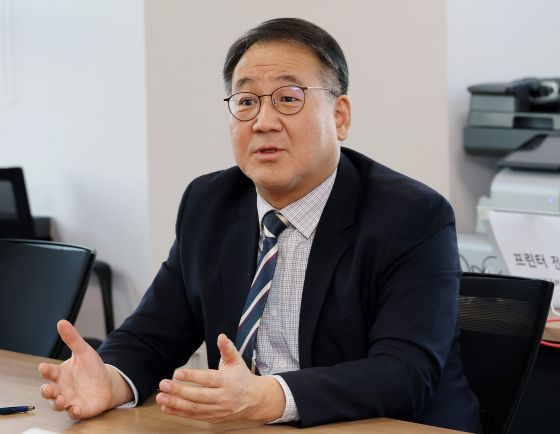
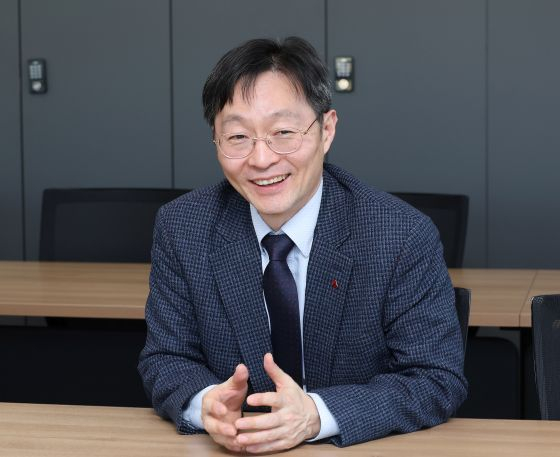
Son Byeong-ho, Senior Researcher at the Korea Institute for Science and Technology Evaluation and Planning (KISTEP) (Technology Management Gyeong Je-hak-hoe (Chairman)), emphasized this at an expert roundtable held on the 29th of last month in a conference room on the 23rd floor of Danam Tower, Sowol-ro, Jung-gu, Seoul. The event was attended by Son (Chairman), as well as Professor An Jun-mo, Department of Public Administration, Korea University; Lee Kyu-tae, Sogang University, Technology Management Major Moon Dae-hak-won (Prof.)(Yeon Gu (Director)); Professor Lee Byung-hun, Kwangwoon University (Chairman of the 5th-Pole 3-Special Task Force of the Local Era Committee); and Noh Min-seon, Research Fellow at the Small and Medium Business Venture Company Research Institute SME (small and medium-sized enterprise)Jeong Chaek-yeon-gu (Head). They discussed policy finance innovation and institutional improvement measures to support deep tech companies in sustaining growth after their founding.
-What do you see as the biggest obstacle to domestic deep tech startups?
▲Son Byeong-ho=For deep tech startups to increase, they require a much longer development period and massive capital compared to general startups. However, in Korea, a "funding gap" occurs at the intermediate stage after initial startup when companies prepare for market entry and overseas expansion. In particular, there is a problem where funds are not properly supplied during the Series B to pre-IPO stages following technology validation. In fact, scale-up investments account for only about 10% of all venture investments.
▲An Jun-mo=Funding is relatively well-supplied during the R&D stage, but investment drops sharply once commercialization begins in earnest, such as at TRL (Technology Readiness Level) 7. If this disconnect is not bridged, deep tech technology commercialization and startup success will be structurally difficult.
-The regional deep tech startup ecosystem seems even more difficult.
▲Noh Min-seon=The role of a fund of funds (Korea venture fund) can be likened to "blood circulation that keeps the blood flowing in venture companies." However, the problem is that the flow of these funds is overly concentrated in the Seoul metropolitan area. Currently, the proportion of non-metropolitan venture investment is only about 25%, and there is also a large disparity within regions. In situations where regional innovative finance does not function properly, it is difficult for the technology startup ecosystem to grow in a balanced manner.
▲Lee Kyu-tae=The reason Yozma Fund withdrew from Busan was due to the judgment that "there are no investable companies." This means that many companies called deep tech in regions do not appear as "real deep tech" from the perspective of foreign investors. They are evaluated as having names like deep tech but lacking technological differentiation or market competitiveness for long-term betting.
An increase in deep tech investment is not necessarily a purely positive signal. Recently, a significant portion of Korea's 3.6 trillion won in deep tech investments has been concentrated in biotechnology and AI. In the AI sector, there are concerns that the depth of technology is weakening as service-type models like "Agent AI" increase. This is criticized as being different from "pure deep tech" mentioned abroad, which refers to innovation that solves fundamental technical challenges. There are also concerns that such short-term commercialization-focused investments could weaken the diversity of the ecosystem.
-What needs to change to compensate for this?
▲Son Byeong-ho=Since deep tech companies find it difficult to recover profits in the short term, they require "patient capital" that waits over a long period. Because it takes a long time from technology development to market establishment and the risk of failure is high, existing policy funds with short recovery structures cannot sufficiently support scale-ups. Deep tech fields require long-term investment designs of at least 10 years or more. Major countries are utilizing various mechanisms such as subordinated capital contributions so that the government first bears some risk and private capital follows. A representative example is the UK's British Patient Capital "Future Fund: Breakthrough," where the government makes initial investments and private entities participate subsequently.
▲Noh Min-seon=The government is promoting "Regional Growth Funds" where local governments, universities, and financial institutional investors co-invest with a fund of funds (Korea venture fund) as a catalyst. However, in some regions, there are not enough institutional investors or resources to participate in capital contributions, making the establishment of funds itself difficult. This is because disparities between regions are large depending on local government fiscal conditions. Therefore, incentive designs that consider even regions with weak capital contribution bases are needed. Measures such as increasing the fund of funds (Korea venture fund) contribution ratio, providing put options, or expanding priority loss reserves must be introduced to create conditions for private capital inflow in regional areas as well.
-What kind of ecosystem design and investment structure is needed to fundamentally grow the deep tech industry in regions?
▲Lee Kyu-tae=An alternative case is the Netherlands' quantum technology innovation program "Quantum Delta NL" (QDNL). QDNL received support of over 600 million euros from the National Growth Fund to build a support system from R&D to industrialization and startups centered on quantum computing, networks, and sensing. The strength of the Netherlands lies in its emphasis on ecosystem design. Companies divide labor across value chains such as chips, inspection equipment, and cables to reduce duplication and create a structure where the entire field grows together. This perspective should also be applied to regional policies.
If regions try to follow industries like Seoul, talent and capital will inevitably flow to Seoul. Regions must start with unique industries and data. For example, based on regional strengths such as Busan's fisheries data or Jeollanam-do and Jeollabuk-do's agricultural data, roles should be divided and industrial ecosystems created through long-term investment so that people stay in the region and sustainable growth becomes possible.
▲Lee Byung-hun=Recently, conditions for private capital to flow into startup investments have generally improved. Now is the time to redefine the roles of government and the private sector. While the government and private sector have grown the market together until now, there is a need to shift to a more specialized division of labor structure according to each party's strengths. The direction is clear: the government should focus on areas just before and after startup, early market entry, and deep tech fields with long investment recovery periods, while the stage after scale-up requires private capital such as pension funds to take the lead. In addition, institutional foundations must be established to readjust the roles of public and private investment institutional investors, including the establishment of regional investment corporations and strengthening the equity investment functions of the Korea Technology Finance Corporation.
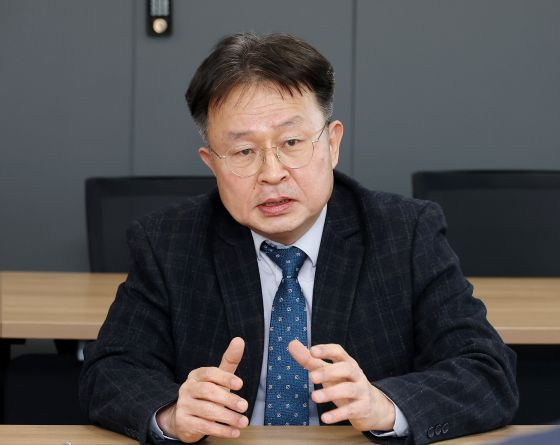
-There is currently intense discussion on new financial techniques to support deep tech company growth.
▲Son Byeong-ho=Recently, discussions have been underway for ultra-long-term technology investment funds within the National Growth Fund, but there are limitations in the practice of evaluating policy finance solely based on rate of return (IRR). Since policy funds have public purposes such as industrial cultivation, they must consider various outcomes including job creation, technological competitiveness, and industrial ripple effects. Furthermore, if a large fund is launched, it may overlap with existing funds of funds (Korea venture fund) or ministry-specific policy funds, so establishing systems for information sharing and coordination between funds is also important. It is expected that the foundation for long-term investment will be strengthened in the future through various financial techniques such as expanding deep tech-exclusive long-term policy funds, subordinated capital contributions, and performance-based recovery.
▲Noh Min-seon=The fact that venture investment participation by pension funds like retirement pension funds or statutory funds is being discussed as a national agenda is meaningful. However, since pension funds have a strong nature of being a safety net for the people, a cautious approach is also necessary. To expand participation, institutional measures must be established, and more active capital contributions should be induced by providing incentives based on investment performance.
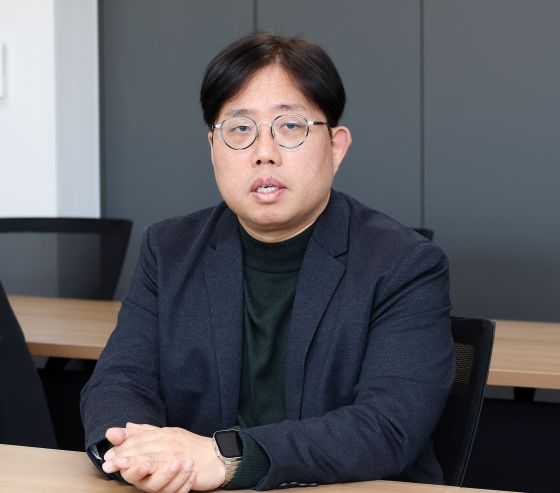
-There are indications that innovation is also needed in funding methods and technology value evaluation systems to expand deep tech investments.
▲An Jun-mo=Innovative financial techniques include two types: Braided Funding and Blended Funding. Braided Funding is a method where public, private, and non-profit funds are loosely connected while maintaining their own rules, whereas Blended Funding structures different resources into a single fund to more effectively attract larger amounts of private capital. Overseas, the trend is moving toward integrated management of funds rather than separate support by ministries. In Korea, it is not easy due to differences in systems and fund structures between ministries, but if one successful pilot case emerges, there is potential for expansion.
For innovative finance to function properly, a system for evaluating technology value must also be supported. Recently, with the development of AI, trends are spreading where institutions like KIBO build evaluation models that combine past data with financial and tax information, supplementing expert evaluations. However, practices such as patent-centered evaluation or collateral and joint guarantees still remain, requiring bolder improvements.
[Money Today startup media platform 'Unicorn Factory']

 in TECH


