

[For more diverse company information on the startups mentioned in this article, please visit the Unicorn Factory big data platform 'Data Lab'.]
"Only when technologies validated in space are expanded to terrestrial industries, and conversely, technologies accumulated on the ground are extended to the space industry, can we truly create greater achievements and new opportunities."
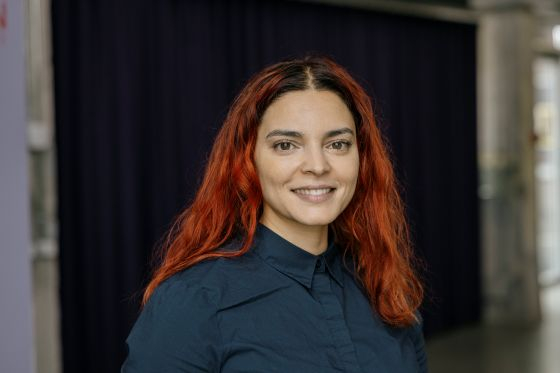
Maddy Tizar Hansson, Head of Space Startup Ecosystem at ESA BIC Denmark headquarters, explained the core of its own startup incubation program in this manner. In a written interview with MoneyToday's startup media platform 'Unicorn Factory,' he emphasized that "the space industry is not limited to specific sectors but has a structure that connects and expands across various industries."
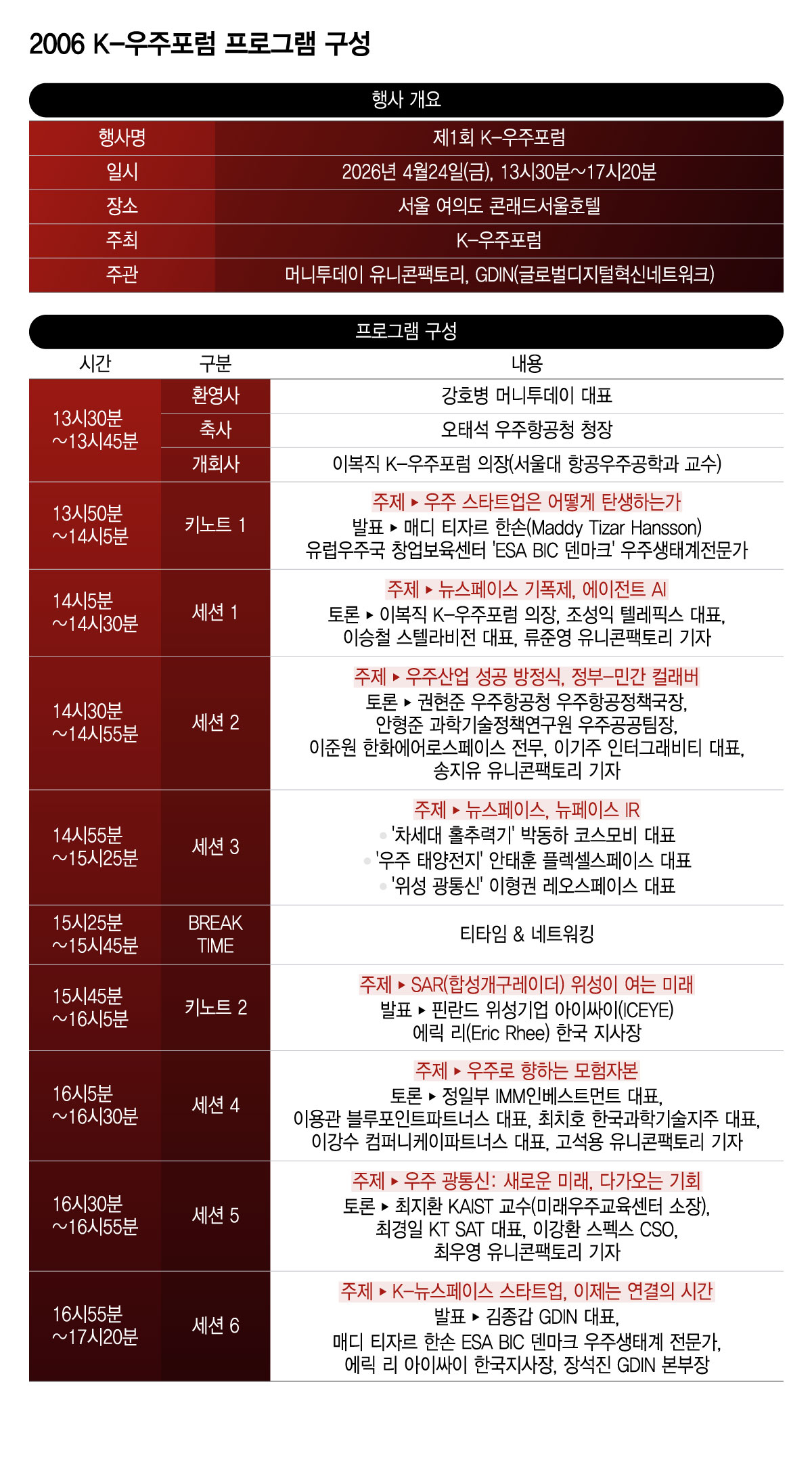
Hansson is an entrepreneur (accelerator) who has carried out industry-academia-government cooperation projects in the field of space science and technology for over 10 years. He will appear as the first keynote speaker at the '2026 Key Platform Special Program K-Space Forum,' part of MoneyToday's Global Conference, to be held this Thursday afternoon at Seoul Yeouido Conrad Hotel.<☞Click here to register>
ESA BIC differentiates itself as a 'commercialization platform' that connects space technology and industry, going beyond simple startup support programs. Its incubation targets include not only traditional space technology fields such as satellite communications, navigation, and Earth observation but also startups applying these technologies to various industries.
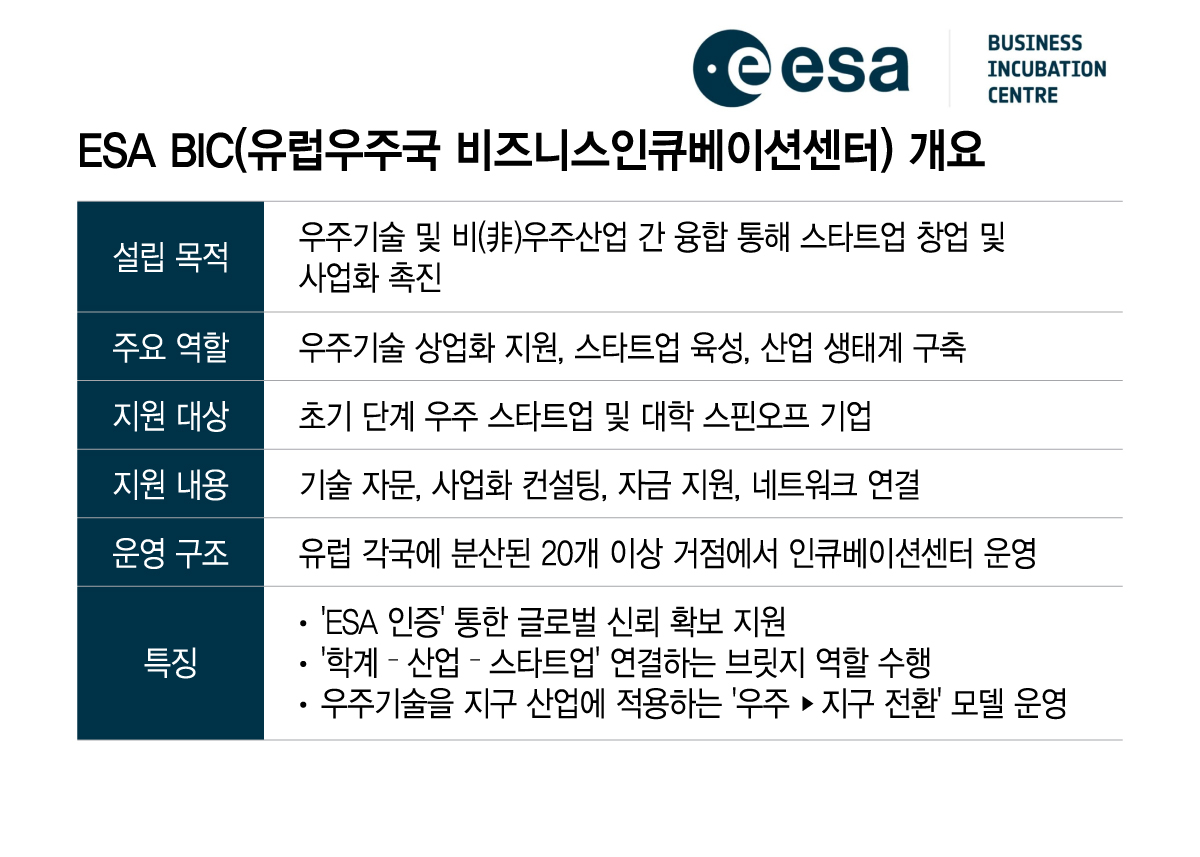
ESA BIC Denmark does not operate as a single institutional investor running the program alone; instead, it functions as a 'consortium' involving universities, companies, and research institutions. Centered around the Technical University of Denmark, Aarhus University and Aalborg University also participate, supporting startups through incubation hubs located throughout the country. This structure helps ensure that R&D (research and development) results from laboratories are directly transferred to industrial sites.
Startups selected as ESA BIC incubated companies receive initial commercialization funding up to 60,000 euros (approximately 0.1 billion won). In addition, they are provided with technical consulting from ESA and university and research institution experts, business model coaching, and connections to global investors, helping them overcome the high entry barriers and complex regulations unique to the space industry.
The concept particularly emphasized by this program is 'cross-innovation.' This refers to creating new opportunities by connecting technologies across different industries. For example, technologies used in space may be applied to agriculture, logistics, or energy industries, while AI or sensor technologies developed on the ground may expand into the space industry. ESA BIC actively encourages such 'two-way movement of technology.'
The 'ESA certification' provided by the ESA BIC program also serves as an important trust asset for startups. Hansson stated, "When early-stage companies meet investors or customers to explain their products and services, ESA certification plays a decisive role."
Global expansion strategies are also noteworthy. ESA BIC operates more than 20 centers across Europe, all closely connected. Thanks to this network, startups can secure overseas partners from the early stages of their founding and naturally gain opportunities to enter markets in other countries. This structure reflects the fact that the space industry has always operated on the premise of a global market.
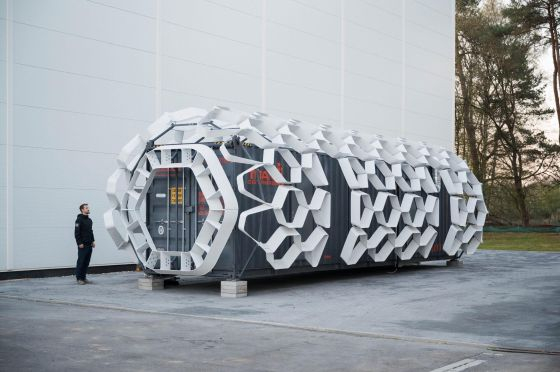
To date, approximately 700 startups have been established through ESA BIC. Hansson cited the design studio 'SAGA Space Architects' as a representative success story. The company developed 'FlexHab,' a lunar base module for astronauts to inhabit, using containers, and verified the technology's reliability by conducting actual living experiments lasting about 100 days in Greenland's extreme environment.
Notably, they are also actively pursuing strategies to expand space technologies into terrestrial industries. Technologies capable of responding to extreme conditions required in space environments are directly linked to energy efficiency, resource circulation, and enclosed space design, which can be applied as-is to eco-friendly architecture or future residential space design. Hansson said, "SAGA Space Architects started in the niche market of space architecture but is expanding into the terrestrial construction market to establish its growth foundation."
He identified two business models based on space that will grow rapidly in the future. The first is 'low-orbit communication.' He projected that the low-latency data communication market utilizing low-orbit satellite constellations, similar to satellite internet services like Starlink, will grow rapidly. The second is 'rocket logistics.' Hansson stated, "The model of using large rockets to transport cargo at ultra-high speeds to the opposite side of the Earth is still in its early stages, but if successful, it could become a 'game-changer' that fundamentally transforms existing air and sea logistics systems."
Regarding the possibility of cooperation between Korea and Europe, particularly Denmark, in the space industry, he evaluated it as "very high." However, he emphasized that to achieve results, it is crucial to identify concrete projects that can combine each other's strengths based on mutual trust.
Hansson said, "The space industry is no longer a domain limited to specific countries or institutions; it is a fully global industry where technology, data, and markets transcend borders, with startups at its center." He added, "If Korea applies models like ESA BIC to its local startup ecosystem, it can quickly foster space startups and expand the industrial ecosystem."
[MoneyToday startup media platform Unicorn Factory]

 in TECH


