

As major hacking incidents have occurred one after another, companies are expanding their investments in information security, and leading domestic security firms have posted strong results. Both revenue and operating profit grew simultaneously. Contract liabilities, which will be recognized as revenue, also increased significantly. With large-scale information security investment plans continuing, particularly in the telecommunications and financial sectors, the earnings growth of the security industry is expected to persist.
According to the Financial Supervisory Service's electronic disclosure system on the 24th, Anlab recorded consolidated revenue of 79.5 billion won and an operating profit of 10.9 billion won for the third quarter of this year. These figures increased by 23.1% and 38.7%, respectively, compared to the same period last year. This was driven by growth in the network security business and expanding demand for security solutions such as EDR (Endpoint Detection and Response).
Igloo Corporation recorded revenue of 47.1 billion won and an operating profit of 1.7 billion won for the third quarter of this year. These figures increased by 75.9% and 16.5%, respectively, compared to the same period last year. Igloo Corporation focuses on security monitoring services and integrated security management solutions as its core businesses.
Notably, both companies showed an increasing trend in contract liabilities. As of the end of September, the combined contract liabilities of the two firms totaled 85.9 billion won, a 35.5% increase from the end of last year (63.4 billion won). This represents an increase of approximately 22.5 billion won over nine months.
Contract liabilities refer to amounts received or rights to receive payment before providing products or services to customers. Although classified as liabilities in accounting, they differ in nature from borrowed funds from financial institutions. Since these amounts are recognized as revenue upon the provision of products or services according to contracts, contract liabilities serve as one of the indicators for gauging performance. For example, if a security firm signs a 12 billion won annual security monitoring service contract with a client and receives payment in advance, it recognizes 100 million won as revenue each month while providing the service, leaving the remainder as contract liabilities.
Anlab's contract liabilities increased by 29% from 60.9 billion won at the end of last year to 78.5 billion won at the end of September this year. By business segment, these include products at 70.1 billion won (a 26.5% increase), services at 3.8 billion won (a 17.4% increase), and consulting at 3.5 billion won (a 191.7% increase). In particular, contract liabilities in the consulting segment, which involves reviewing corporate information security systems and diagnosing vulnerabilities, rose significantly from 1.2 billion won at the end of last year to 3.5 billion won at the end of September this year. Igloo Corporation's contract liabilities also increased by 193.6% over the same period, from 2.5 billion won to 7.3 billion won.
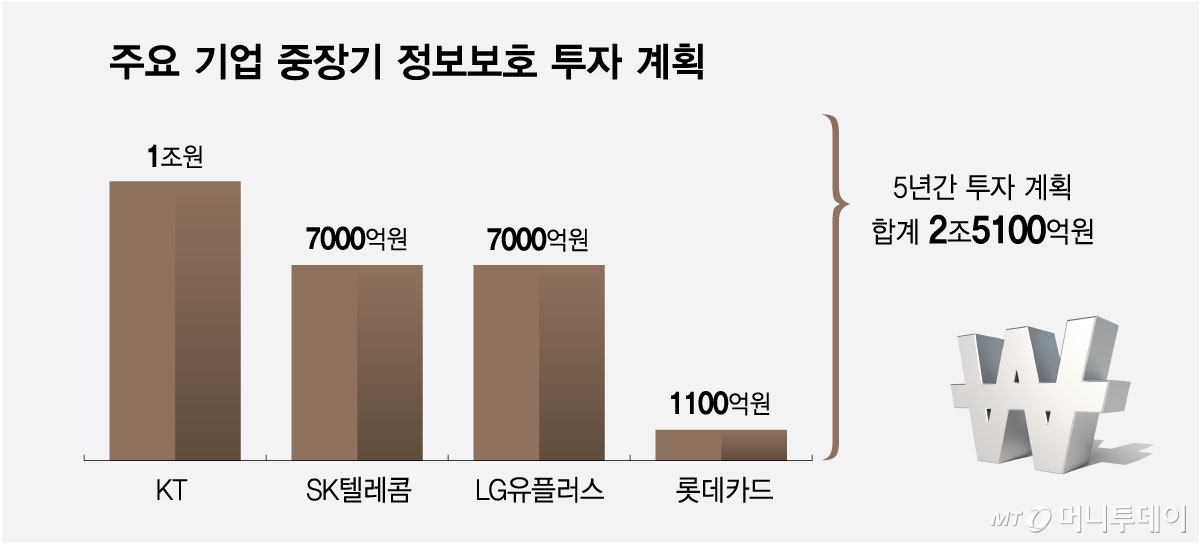
The security industry is paying close attention to the trend of companies expanding their information security investments following major hacking incidents. In fact, SK Telecom and KT, which experienced hacking incidents last year, announced plans to invest 700 billion won and 1 trillion won, respectively, in the information security sector over the next five years. LG Uplus also decided to invest 700 billion won in the information security sector over five years. The combined medium- to long-term information security investment plans of the three major mobile carriers amount to 2.4 trillion won.
The financial sector is no different. Lotte Card, which suffered a customer data leak due to a hacking incident last year, announced a plan to invest 110 billion won in information security over the next five years.

 in TECH
