

Starting this month, national health insurance will cover the combination therapy of 'Padcev injection' and 'Keytruda injection' used in the treatment of urothelial carcinoma, as well as 'Viloy injection,' a treatment for advanced or metastatic gastric cancer. As a result, patient out-of-pocket costs are expected to decrease significantly, with assessments indicating that the cancer treatment environment has taken a step forward to a world-class level.
Astellas Korea held a press conference on the 8th at Conrad Seoul to commemorate the national health insurance coverage of its antibody-drug conjugate (ADC) therapy 'Padcev' (generic name: enfortumab vedotin) and Claudin 18.2-targeted therapy 'Viloy' (generic name: zolbetuximab).
Padcev/Keytruda combination therapy, Viloy to be covered by national health insurance starting this month
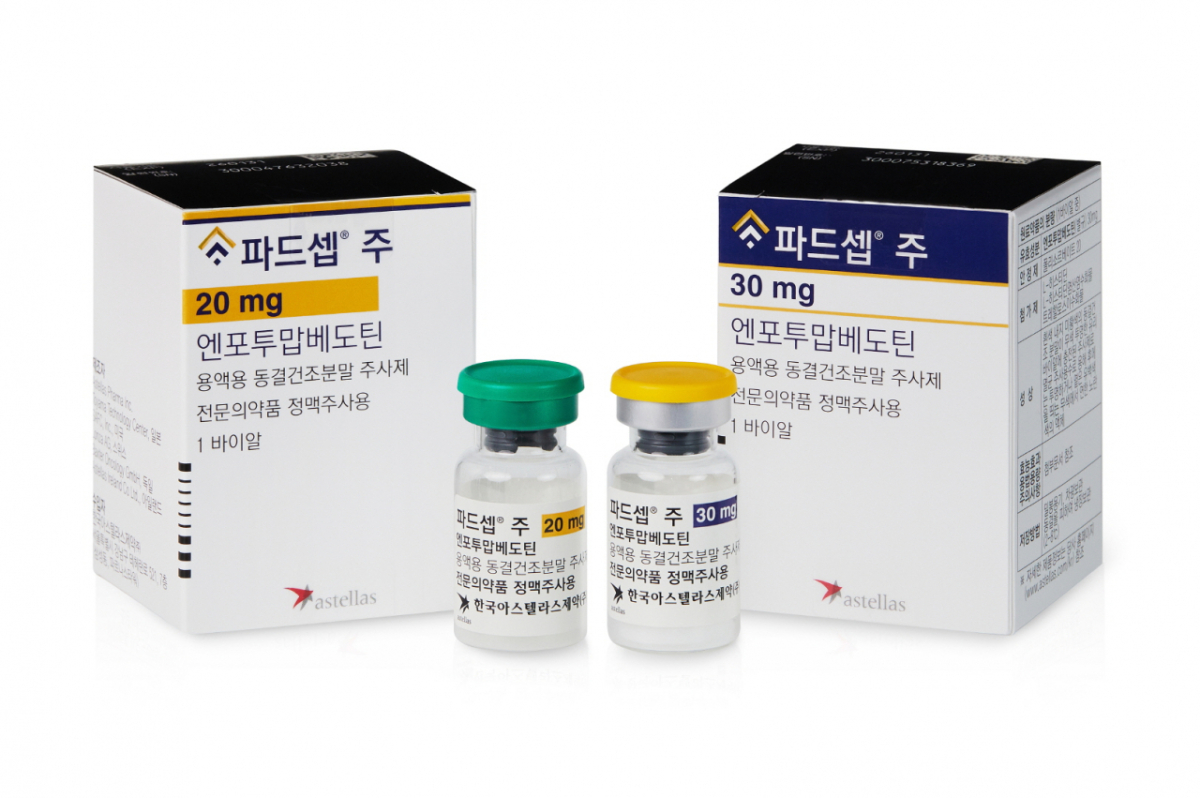
In accordance with a Ministry of Health and Welfare announcement, Padcev has been covered by national health insurance as first-line treatment for adult patients with locally advanced or metastatic urothelial carcinoma in combination with Keytruda (generic name: pembrolizumab) since the 1st of last month. This achievement was reached two years and three months after domestic approval for the indication.
The first-line Padcev combination therapy marks the first case of national health insurance coverage for a combination therapy between new drugs patented by different pharmaceutical companies, while also becoming the first instance in Korea where an ADC and immunotherapy combination has been covered by national health insurance.
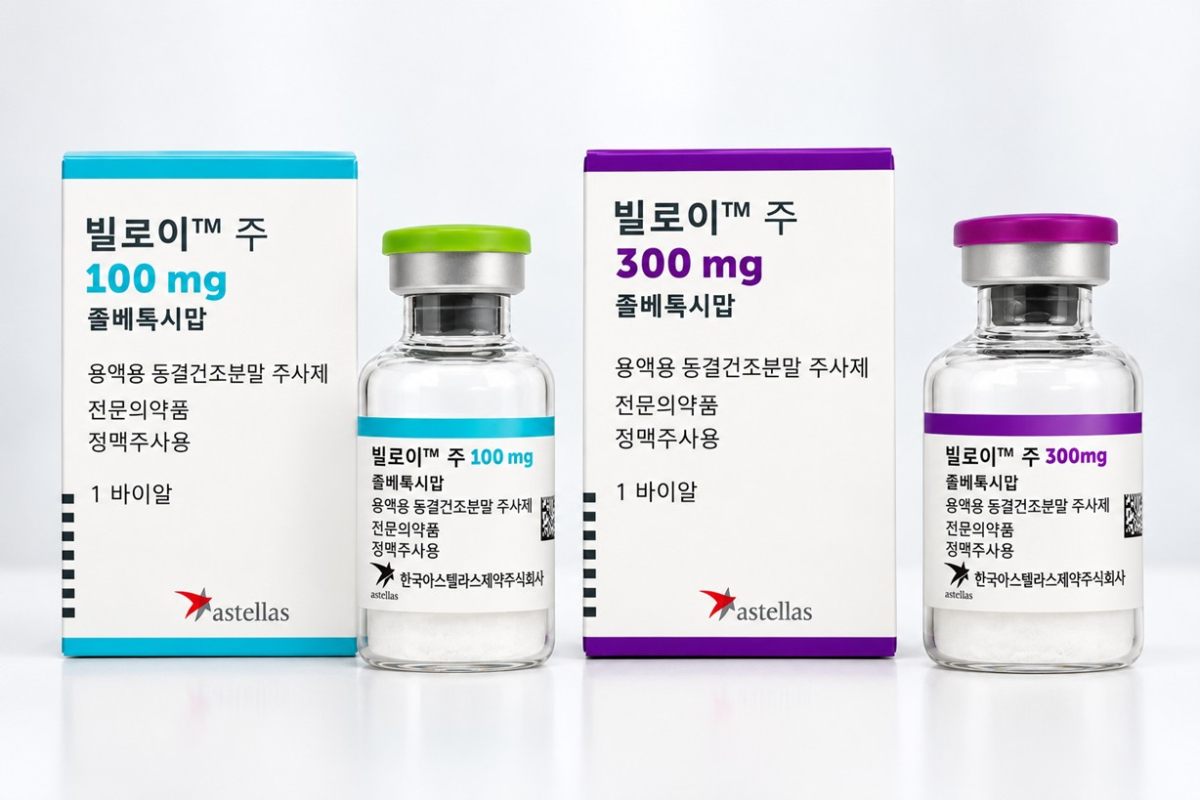
Viloy was covered by national health insurance on the 1st of last month, approximately two years after its domestic approval. Viloy received insurance coverage as a first-line treatment in combination with fluoropyrimidine- and platinum-based chemotherapy for patients with unresectable locally advanced or metastatic gastric adenocarcinoma and gastroesophageal junction adenocarcinoma who are Claudin 18.2-positive and HER2-negative.
Cancer patient treatment costs significantly reduced… "Padcev combination therapy extends median overall survival by more than two-fold"
As a result, the financial burden of treatment for domestic cancer patients is expected to be alleviated, and their chances of survival are likely to increase.
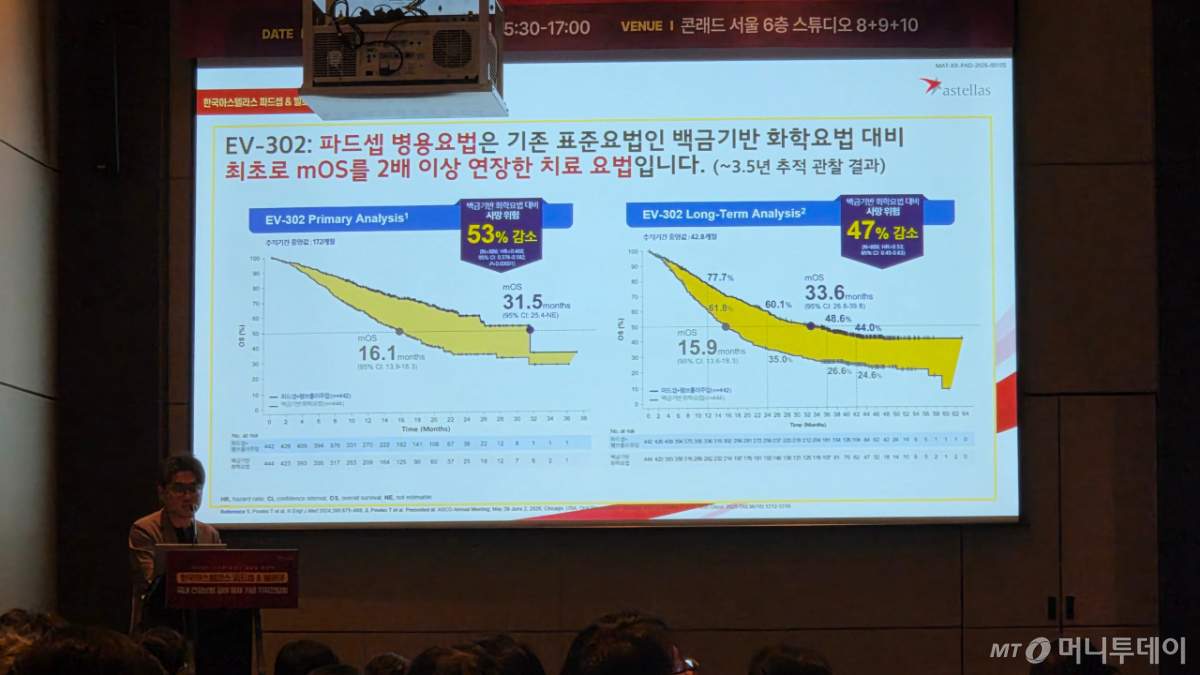
Professor Kim In-ho of the Department of Medical Oncology at St. Mary's Hospital, Catholic University of Korea Seoul, who served as a speaker at the press conference, explained that "Padcev combination therapy is a treatment regimen that, based on 3.5 years of follow-up results, has for the first time extended the median overall survival (mOS) by more than two-fold compared to the existing standard platinum-based chemotherapy."
He added, "The first-line Padcev combination therapy has firmly established itself as the de facto first-line standard treatment for metastatic urothelial carcinoma. However, in Korea, its widespread use in clinical practice had been limited due to cost burdens until now," and stated, "This insurance coverage is of great significance above all else in that it has narrowed the gap between global standard treatments and the actual domestic treatment environment."
Viloy expected to extend survival for metastatic gastric cancer patients, whose 5-year relative survival rate is only 7.5%
Viloy is expected to significantly improve the treatment environment for metastatic gastric cancer patients with low survival rates. The 5-year relative survival rate for metastatic gastric cancer patients is 7.5% (2019–2023), which is markedly lower than that of early-stage, localized gastric cancer patients (97.6%).
Professor Lee Geun-wook of the Department of Hematology and Medical Oncology at Bundang Seoul National University Hospital, College of Medicine, Seoul National University (Chairman of the Gastric Cancer Committee of the Korean Society for Anticancer Therapy), stated, "In the case of metastatic gastric cancer, biomarker-based targeted therapy has been very limited compared to other cancer types," and noted that "until the emergence of Claudin 18.2, HER2-negative patients, who account for approximately 90% of metastatic gastric cancer patients, had virtually no targeted therapy Seon Taek-ji-ga (EVP)."
He further added, "Viloy, which emerged in this situation, is the world's first approved targeted therapy option for Claudin 18.2-positive metastatic gastric cancer patients," and emphasized that it holds great significance as a treatment option that has demonstrated consistent and clear clinical benefit even in Korean patients.
Among Korean patients, the median progression-free survival (PFS) was 12.3 months (HR=0.588) in the Viloy treatment group and 8.1 months in the placebo group, showing a significant extension. It also demonstrated higher clinical efficacy compared to the overall integrated population, where the median PFS for the Viloy treatment group was 9.2 months (HR=0.71). Additionally, among Korean patients, the median overall survival (OS) for the Viloy treatment group was 30.5 months (HR=0.480), showing a result nearly twice as long as the 15.8 months in the placebo group.
In response, the Korean Gastric Cancer Association released newly revised gastric cancer treatment guidelines in January of last year, recommending Viloy as a "top-level" first-line treatment option for patients with unresectable locally advanced or metastatic gastric cancer who are Claudin 18.2-positive and HER2-negative.
Professor Lee stated, "The insurance coverage of Viloy is a turning point that will bring comprehensive effects, capable of advancing not only the gastric cancer treatment environment in Korea but also the diagnostic environment to another level," and added, "With the insurance coverage of Viloy, Claudin 18.2 diagnostic testing is also expected to be activated, which can greatly contribute to improving gastric cancer treatment outcomes in our country." He further added, "I am grateful that the gastric cancer treatment environment can be improved to a world-class level through this insurance coverage."
Meanwhile, Astellas Korea, which has simultaneously achieved insurance coverage for both Padcev and Viloy, is strategizing to accelerate its business expansion based on its current anticancer drug portfolio in the domestic market.
Kim Jun-il, President of Astellas Korea, emphasized that "Padcev and Viloy are treatment options that present new medical value capable of addressing unmet needs of patients that have existed for a long time in the fields of metastatic urothelial carcinoma and metastatic gastric cancer, respectively," and stated, "We will do our utmost to continue delivering innovative science with value and fulfill our mission of illuminating the future of our patients."

 in THEBIO


