

The government has officially formalized adjustments to its tax reform plan and begun comprehensive review. The move aims to prepare an adjusted proposal before submission to the National Assembly, which is unusual as such adjustments are typically made after discussions begin in the regular session. This decision appears driven by strong public opposition to the overall real estate tax reform and growing concerns over the stock market's recent correction phase, prompting caution against pushing forward with related tax measures.
As of 2 p.m. on the 12th, over 5,300 legislative opinions had been submitted to the National Participation Legislation Center's website regarding the proposed amendment to the comprehensive real estate tax (hereinafter referred to as "comprehensive real estate tax"). The majority of these opinions oppose the government's plan to strengthen the tax.
The Ministry of Economy and Finance's real estate tax reform plan announced on the 3rd includes provisions to strengthen the comprehensive real estate tax, primarily targeting non-residents and multi-homeowners. Under this plan, even single-homeowners who are non-residents would face increased tax burdens.
Residency status is central to the comprehensive real estate tax reform. The Ministry of Economy and Finance stated that cases such as school enrollment, illness, transferring schools, staying abroad, or caring for parents will be classified as "unavoidable non-residence," and the period spent under these circumstances will count toward residency duration. The maximum recognized exception period is three years.
However, calls are growing to broadly recognize "unavoidable non-residence" and extend the exception period. The government appears to have acknowledged these concerns to some extent. The adjustment plan is expected to include softened exceptions for non-residence.
Numerous opinions were also raised regarding jointly owned single-homes by couples. While the comprehensive real estate tax is levied on an individual basis, critics pointed out that under the reform plan, a couple's jointly owned single-home would be treated as a multi-property holding. However, the Ministry of Economy and Finance maintains this claim is factually incorrect. The ministry explains that couples with jointly owned single-homes can choose between individual taxation or one of the special exemptions for one-household-one-property owners, allowing taxpayers to select the more favorable tax treatment. A ministry official stated, "Under comprehensive real estate tax rules, couples with jointly owned homes are treated as general single-homeowners, not multi-property holders. Even under the reform plan, taxpayers can apply for and receive the one-household-one-property special exemption based on their own discretion, as currently practiced." Additionally, negative opinions persist regarding other measures, such as the phased increase of the deduction limit to 10 billion won for the long-term holding special deduction under the capital gains tax (hereinafter referred to as "capital gains tax").
Negative voices against the government's plan are also emerging within the ruling party. Song Young-gil, a candidate in the upcoming Democratic Party of Korea leadership election, appeared on KBS Radio and stated that the root cause of declining approval ratings for the Lee Jae-myung administration is "problems arising from mishandling real estate." He added, "I believe we should not touch real estate taxes. Even if we adjust policies like one-household-one-property, comprehensive real estate tax, and capital gains tax, the additional revenue would amount to only 1 trillion won. Yet, the potential additional tax revenue could reach 50 trillion won. Why risk everything for just 1 trillion won?"
Tax reforms related to capital markets also became unavoidable. President Lee Jae-myung ordered a full review of the tax reform plan concerning ISA (Individual Comprehensive Asset Management Accounts) and the "Stock Price Suppression Prevention Act" on the 8th. The reform plan included provisions that would reduce benefits for existing ISAs by introducing a new "Productive Finance ISA," which allows investments only in specific sectors. Regarding the Stock Price Suppression Prevention Act, critics pointed out that its scope of application is narrow and contains numerous loopholes.
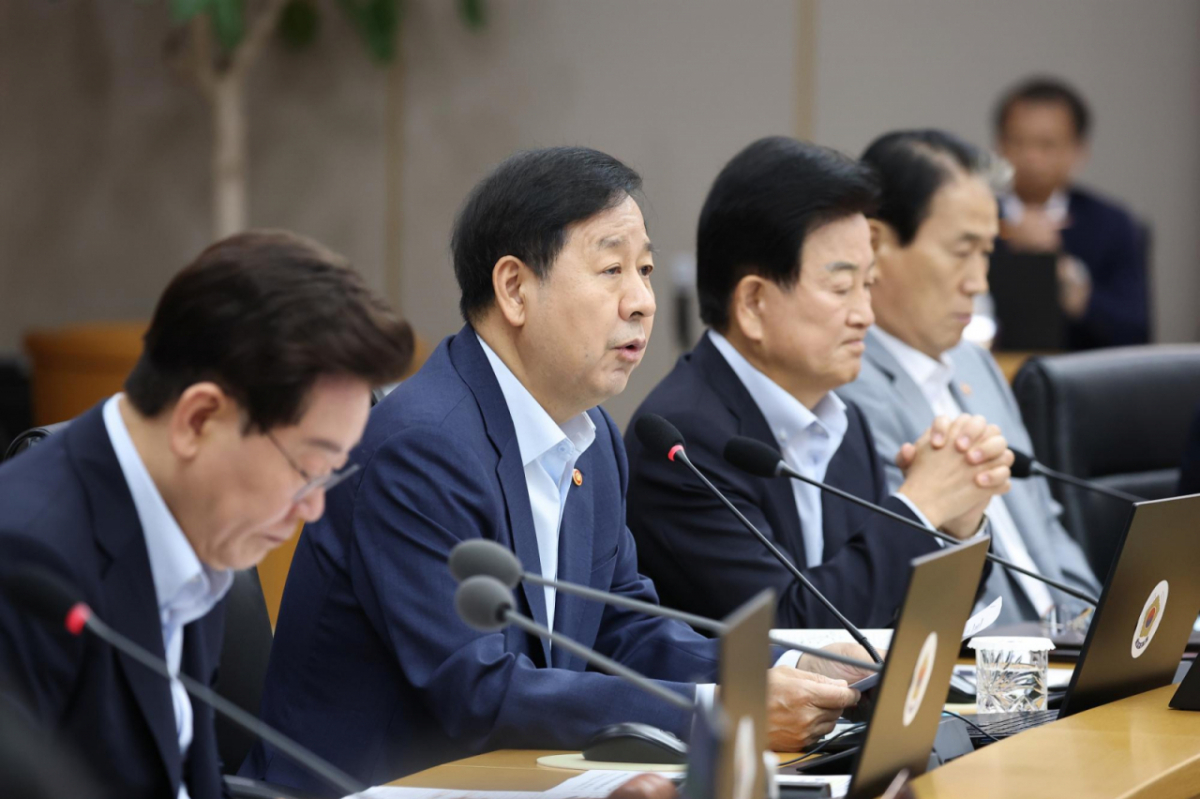
It is rare for the government to revise tax-related proposals before submitting them to the National Assembly. While various opinions for and against annual tax reform plans have been expressed each year, the Ministry of Economy and Finance has traditionally maintained its original proposal, with amendments typically discussed within the National Assembly. Vice Prime Minister and Ministry of Economy and Finance Minister Koo Yun-cheol (photo) stated during a State Council meeting held on the 11th: "We will listen to sufficient public opinions during the legislative notice period until the 20th, make necessary revisions, and submit the finalized plan to the National Assembly to ensure its completeness."

 in ECONOMY
