

Projections indicate that peak power demand in 2040 will reach 165 gigawatts (GW), a 70% increase from current levels. This figure represents an upward revision of approximately 20% compared to the forecast made four months ago. The sharp rise is attributed to new power demands from projects such as semiconductor industrial complexes in Honam and AI data centers.
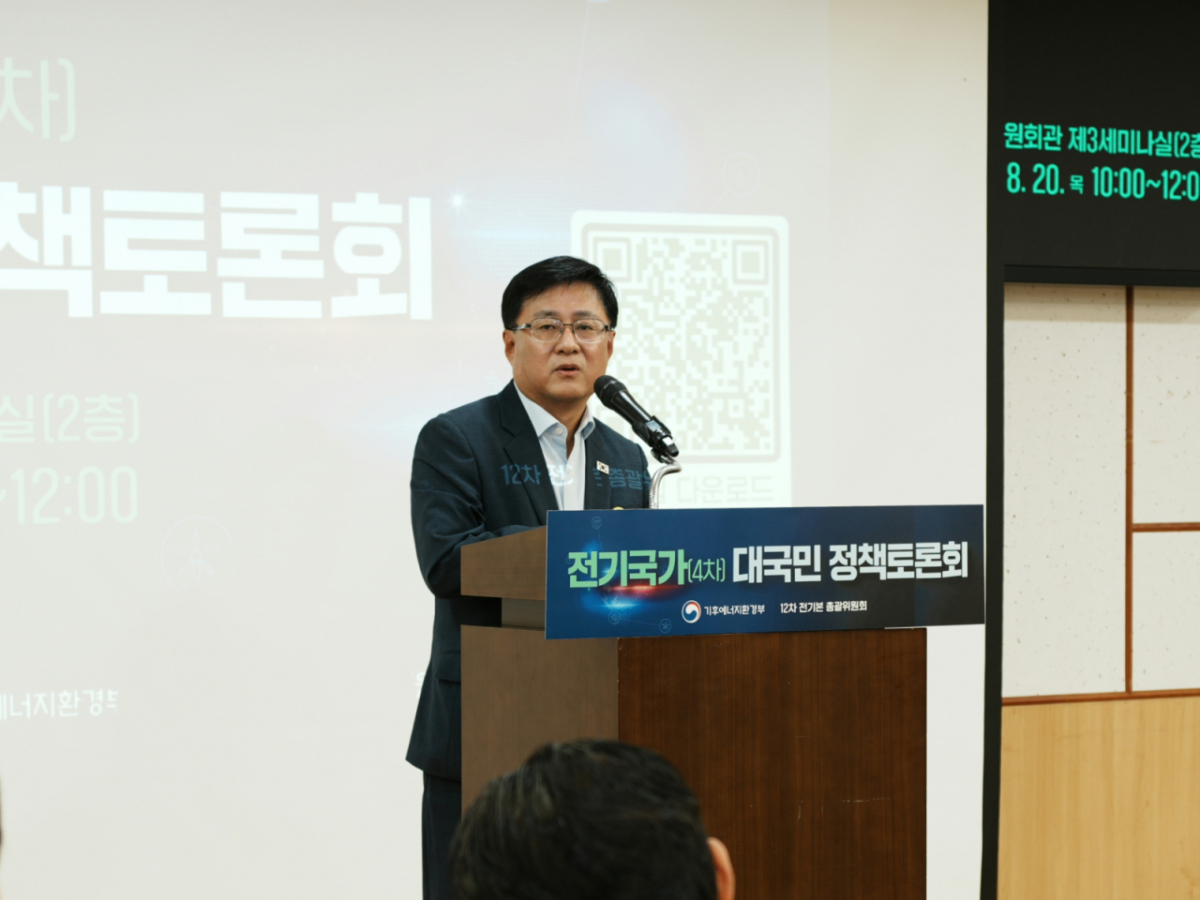
The Ministry of Climate, Energy and Environment and the General Committee for Establishing the 12th Basic Plan for Electricity Supply and Demand (Electricity Plan) unveiled the projected electricity demand for 2040—the plan's target year—during the fifth public policy forum on establishing the 12th Electricity Plan held at the National Assembly Member Hall on the 20th.
70% Increase in Power Demand by 2040… Impact of Three Mega-Projects
Earlier, during a forum held last April, power demand for 2040 was projected at 131.8 GW under the baseline scenario and 138.2 GW under the upward revision scenario. However, following the announcement of three mega-projects, new power demands required for these projects were newly incorporated into the forecast.
The General Committee revised its projection upward to 158.4 GW (baseline)–165 GW (upward revision) for peak power demand in 2040 through a re-evaluation. This represents an approximate 20% increase from the previous forecast and is expected to be a 70% rise compared to last year's peak power demand of 95.9 GW.
Peak power demand is calculated by summing model-based demand reflecting economic growth rates, demand from advanced industries such as semiconductors, demand from AI data centers, and electrification-related demand.
The projected model-based demand for 2040 has been slightly revised upward to 125.8–132.5 GW from the initial forecast of 124.8–131.2 GW, primarily due to an upward adjustment in the economic growth rate projections incorporated into the model.
The sectors showing a significant expansion in projected demand are advanced industries and AI data centers. According to the three mega-projects announced by the government, four new semiconductor factories will be built in the Honam region, and AI data centers with a total capacity of 18.4 GW will be constructed nationwide.
In this re-evaluation, demand from advanced industries is expected to reach 24.3–24.6 GW (based on net incremental increase). This marks a substantial upward revision from the previous forecast of 3.7–4 GW, following the additional inclusion of early completion of the Yongin semiconductor cluster and demand from the Honam semiconductor industrial complex. AI data center demand is also projected to expand to 11.9 GW from the previous 4 GW. The electrification demand forecast remains similar to the prior estimate at 17–17.7 GW.
Chung-Ang University Professor Choi Yong-ok, who presented the findings, stated, "Demand from advanced industries will be prioritized in the 12th plan with a baseline of 36.8 GW for 2040, considering corporate investment plans and future investment uncertainties. Medium- to long-term demand will be reviewed for inclusion in the next plan." He further explained, "Regarding AI data centers, the first-phase target of 10.8 GW will be prioritized for review, while the second-phase target of 10 GW will be examined in the next Electricity Plan."
Renewable Energy Alone Insufficient… Momentum Grows for New Nuclear Power Discussions
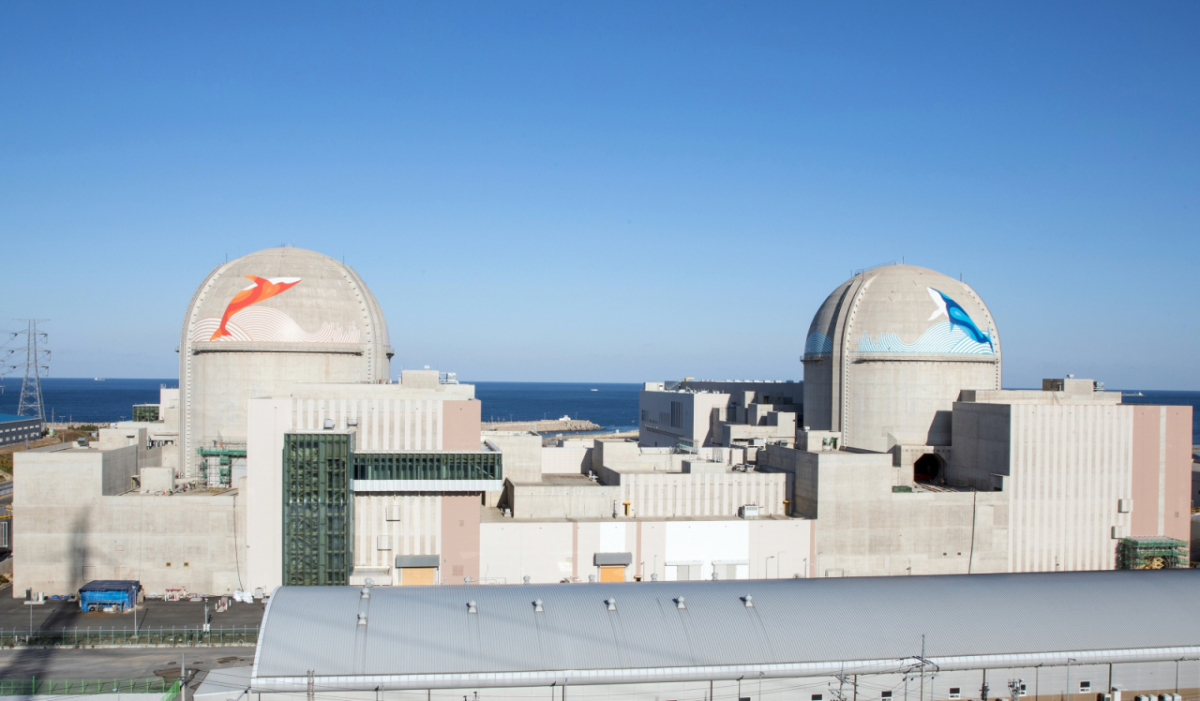
Analyses suggest that discussions on constructing new nuclear power plants as baseload power sources will gain momentum due to expected significant increases in future power demand driven by the three mega-projects.
If the 2040 power demand projection is fully reflected in the 12th Electricity Plan, a substantial expansion of generation capacity will be necessary. Under the 11th Electricity Plan, peak power demand for 2038 was projected at 129.3 GW, and with a reserve margin of 22%, the target capacity was calculated at 157.8 GW. By 2038, planned nuclear, thermal, and renewable facilities total 147.5 GW; subtracting this from the target capacity reveals a shortfall of 10.3 GW in power generation capacity.
Using the same calculation method, the target capacity for 2040 is expected to reach 201.3 GW (applying a 22% reserve margin). However, since only 147.5 GW of facilities are planned by 2038, an additional 50 GW or more in power generation capacity will be required to meet the target. This is equivalent to approximately 35 large-scale nuclear reactors (based on 1.4 GW per unit).
The government plans to expand renewable energy generation capacity to 100 GW by 2030, tripling current levels. However, relying solely on renewables will be insufficient to meet the rapidly increasing power demand.
During the fourth forum held earlier that morning, Park Woo-young, an energy transition researcher at the Korea Energy Economics Institute, pointed out, "Even if the 100th GW renewable energy target is achieved without delay, total generation would reach only about 150 TWh (terawatt-hours), which cannot meet the additional demand from mega-projects (approximately 260 TWh)." He emphasized that semiconductor factories and AI data centers require stable power supply, highlighting the limitations of relying solely on intermittent renewable energy.
The government plans to decide on the construction of new nuclear power plants through additional forums and public deliberation processes. Kim Seong-hwan stated, "There is a need for societal debate on whether we must build more nuclear power plants, along with numerous issues such as grid systems and flexible resources that follow. We will discuss these matters with experts and citizens and incorporate the outcomes into the 12th Electricity Plan."

 in ECONOMY

