

The government has officially proposed a point-specific social dialogue involving both labor and management directly to address labor special exemption clauses within the "Mega Special Zone Special Act," which is being promoted to foster advanced industries such as semiconductors and artificial intelligence (AI).
The intention is to resolve numerous sharply conflicting issues between labor and management through a deliberative process, rather than by majority vote or unilateral government promotion.
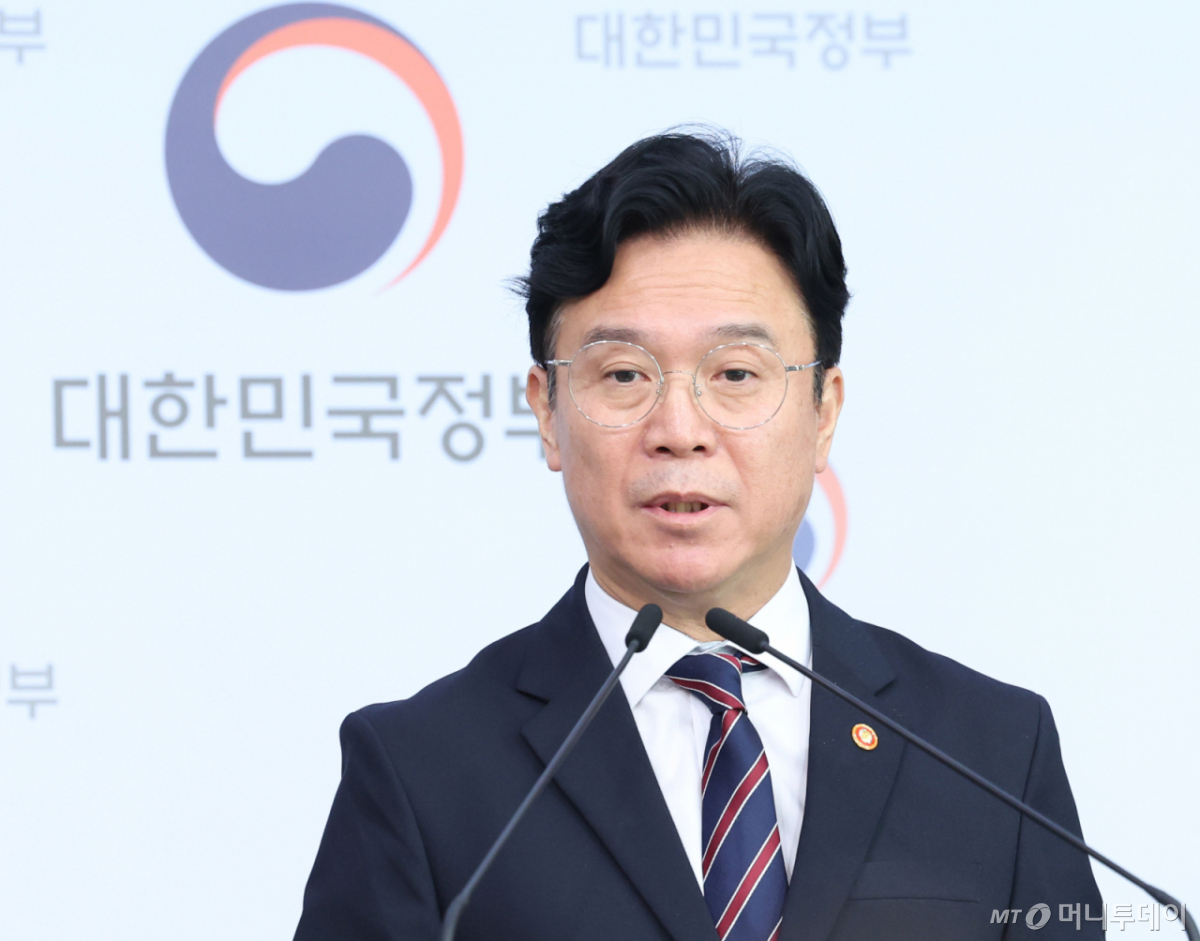
Employment and Labor Minister Kim Young-hoon said during a briefing at the Government Seoul Office on Tuesday that "labor special exemptions being discussed in the process of drafting the Mega Special Zone Special Act represent a path our society has never taken before."
He added, "Since there will inevitably be differences of opinion between companies requesting exemptions and workers raising concerns, labor and management, as interested parties, must participate directly to engage in sufficient mutual dialogue."
Kim (Minister) said, "On September 3, the President also urged at a meeting with both major Noh Chong (Chairman) unions that solutions be found through a social dialogue involving all major labor unions. Reflecting the will gathered at that meeting, today the government officially proposes a point-specific social dialogue on labor special exemptions for the Mega Special Zone Special Act."
The Mega Special Zone Special Act proposed by the government is a bill that designates key hubs to support economic growth in five regions and three special zones and provides extensive regulatory exemptions in areas such as finance, fiscal policy, and infrastructure to foster strategic industries. However, there is a stark divergence of views between labor and management regarding "labor special exemptions dedicated to special zones" included in the bill.
The current major issue revolves around flexibility in working hours and easing employment regulations. Management strongly demands "White Collar Exemption," which excludes high-income R&D personnel from working hour regulations, extension of fixed-term contract periods (2+2 years), and expansion of industries eligible for dispatch work.
In contrast, labor strongly opposes these measures, citing infringement on workers' health rights and regression in working conditions.
Regarding this, Kim (Minister) stated, "In terms of working hours, it is true that management's demand for White Collar Exemption and labor's demand for a four-day workweek are at opposite ends."
He added, "The era of competing based on quantity has already passed, and it is self-evident that we cannot defeat competitor nations by competing on quantity. Labor and management must jointly find an innovation method for the Republic of Korea that enhances the competitiveness of the entire industrial ecosystem where pro-labor becomes pro-business and pro-industry policies."
Regarding labor's criticism of the government as "government sets the answer, no discussion allowed," Kim (Minister) drew a line. He said, "The reason social dialogues have repeatedly failed in the past is due to a long-standing trauma that the government set the answers in advance and instrumentalized dialogue."
He added, "This proposal is significant because it does not request an answer already decided but proposes finding solutions together. We must find growth solutions with labor through a new perspective, not using the grammar of the past."
This dialogue will be promoted as a point-specific special body operating separately from the existing procedure for returning to the Economic and Social Labor Council (ESLC).
Participants include relevant ministries such as the Ministry of Employment and Labor, the Ministry of Trade, Industry and Energy, and the State Council Adjustment Office; both major labor unions (Korean Confederation of Trade Unions and Korean Federation of Trade Unions); and management groups (Federation of Korean Industries, Small and Medium Business Central Association, etc.). The operating period and detailed agenda for the dialogue are expected to be finalized through tripartite negotiations at the first meeting to be held in the future.
Regarding concerns about legislative delays if the social dialogue agreement fails, Kim (Minister) replied, "Since the social dialogue body is not a legislative body, regardless of whether it produces results on its own, the deliberative process and each party's demands and actual condition surveys will be sufficiently reflected in the National Assembly discussion process." He added, "I believe in the power of dialogue."

 in ECONOMY
