


Young people find it difficult to cross the employment threshold even after completing vocational training. As companies demand practical experience from new hires, the gap between "course completion" and "first job" is widening. In response, the government is expanding support measures that encourage companies to participate from the training stage, enabling trainees to gain on-the-job experience and build their first careers, thereby facilitating their transition into employment.
According to the government on the 16th, the youth employment rate in August was 44.1%, a 1.0 percentage point decline compared to the same month last year. Against the backdrop of a challenging youth employment situation, acquiring practical skills and experience that can be utilized in actual jobs has become an important challenge for young people entering the labor market to break through narrow employment doors.
The Ministry of Employment and Labor is strengthening enterprise-participatory training and on-the-job experience support to enable young people to transition from vocational training directly into actual jobs. This approach goes beyond merely providing educational opportunities; it enables companies to cultivate the talent they need while supporting young people in gaining real-world work experience.
A representative project is the K-New Deal Academy, a company-led vocational training program where large corporations with high youth preference participate in curriculum design to teach skills and job competencies needed on the front lines. Its key feature is connecting education with actual corporate workplaces through specialized job training tailored to specific companies and mentoring by current employees.
Young people can learn jobs that companies need and gain experience close to the actual workplace, while companies can discover talent needed during the training process. In the digital and AI fields, practical education through K-Digital Training (KDT) is also expanding.
However, employment is not guaranteed solely through corporate-linked training. Even after completing the training, young people without actual work experience at companies like Navy Headquarters face a barrier known as "first career." This is because they must go through hiring competition again as new hires despite having the necessary job competencies.
The Ministry of Labor is also planning to launch a pilot program called "Youth AI First Job Career Support" starting next year to fill this gap. The program provides partial salary support for young people who have completed AI vocational training but have not yet found employment, enabling them to participate in companies' AI transformation (AX) projects, gain real work experience, and build their first career track record.
The participating companies will also be expanded beyond AI solution specialists to include firms that have benefited from government AX support projects, public and social enterprises, and general companies that are independently pursuing AX. The initiative aims to reduce the gap between training and employment by enabling young people who complete the program to participate in actual corporate AX projects.
The government's support for youth employment is expanding beyond simple education provision to a model that connects training, on-the-job experience, initial career building, and eventual employment. The scope of support is being broadened to enable young people who have completed their education to gain real work experience in companies and link that experience to securing their first jobs and building careers.
The key issue is whether this will lead to actual hiring. It is expected that the main indicators for evaluating the future success of the policy will be whether the job skills and on-the-job experience accumulated by young people through corporate-participation training are connected to real employment, and whether companies actually hire the talent they developed during the education process.
The Director of the Vocational Ability Policy Bureau at the Ministry of Employment and Labor stated, "For young people to smoothly enter the labor market, improving job skills, matching with companies, and providing post-employment support through initiatives such as the Youth Growth Incentive Fund and AI training coach programs must be organically linked like a single chain." He added, "The government will take full responsibility until the end to ensure that individual policies do not end as one-off projects but enable motivated young people to successfully secure employment."
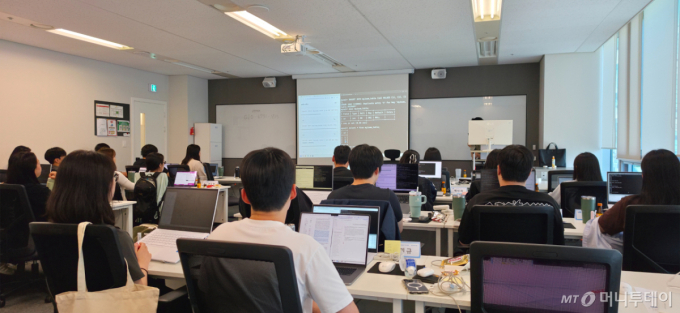
"These days, people call it the 'Gold Internship.' Companies only hire those who have been interns before, and even the internships are filled by people who were previously interns."
On the 14th, college student Choi Min-seong (26), whom I met at the training site of 'Our WON Youth IT Academy,' a program under Our Financial Group's K-New Deal Academy, expressed this regarding the recent difficulties in youth employment. He pointed out the reality that it is becoming increasingly difficult to secure not only regular recruitment positions but even internships without prior work experience, amidst a trend among companies favoring "new hires with experience."
A student named Choi, who is currently on leave after completing his third year's second semester at a university, reportedly applied to 20 internships during this summer break but was rejected from all of them. He stated, "These days, with the rapid advancement of AI (artificial intelligence) technology, general recruitment has significantly decreased, and it feels like there are far fewer opportunities for new graduates."
This is not a concern unique to Choi. A visit to four sites of the K-New Deal Academy currently operating in Seoul and Busan revealed that all young people attending the training share the same worries. The K-New Deal Academy is a youth employment program supported by the government, where companies directly operate job training programs.
In the past, having sufficient 'specs' such as professional certifications or awards in extracurricular activities was enough to secure employment, but the current trend requires work experience as well. Park Jun-hyeong (26), who is taking SK Planet's "Smart Port and Marine Logistics Data Practical Course," said, "After graduating from university, I studied for certifications and adjusted my language test scores, but I had nothing to write in the work experience section of my resume." He added, "I also took programming courses such as Python at university, but they did not provide much help."
The rapid advancement of AI technology has also quickly transformed the job market. Kim Tae-hong, 31, who is taking the same course, said, "Even the format for personal statements has changed." He added, "It wasn't like that in the first half of this year, but when I looked at the personal statement formats for the second half, many asked about experience using AI."
The youth employment issue in local regions is even more serious. Son Jin-young (29), a student enrolled in the 'Ananti Hospitality Service Experience Design' course jointly conducted by Ananti and the Busan Design Promotion Institute in Busan, pointed out that "local areas differ significantly from the capital region in terms of job quality and scale," adding that "there are also differences in salaries and welfare benefits, and opportunities to receive relevant job training are extremely limited."
◇From 1K-pop dance instructors to IT experts... Positive effects of providing 'work experience'
In this context, it is analyzed that the K-Neural Academy is expected to have a positive effect by providing young people with work experience and expanding their employment opportunities. Unlike existing vocational training programs, its distinctive feature lies in the fact that corporate practitioners directly meet with young people to provide practical training and offer them the opportunity to experience the actual workplace.
The part that students expect most while taking the K-New Deal Academy courses is practical experience. Although there are slight differences among programs, companies commonly operate company visits and on-site training sessions alongside theoretical and practical education.
Choi Jong-kwan (27), a student in Woori Financial Group's training program, said, "As an information and communications engineering major, I took many theoretical courses at school, but the K-New Deal Academy provided practical education such as financial app development that is actually needed in the workplace. 'I think I will be able to grow more if I can develop actual services while working on project assignments,' he added. Choi Sol (23) also stated, "It was great that we could experience various finance-related jobs, not just financial IT roles, through company visits and mentoring by current professionals."
The K-Neul Academy provides job training programs for young people not only from major conglomerates such as Samsung, SK, Hyundai, and LG but also from diverse industries including entertainment, finance, and tourism.

SM Entertainment's affiliate, SM Universe, unveiled a differentiated program to train "K-pop dance instructors." The process systematically educates participants on how K-pop dancing can extend beyond a mere hobby and be connected to employment or entrepreneurship.
On the 14th, at SM Universe's practice room in Daechi-dong, Seoul, students were immersed in house dance practice, moving their bodies to upbeat music. In the morning, they spent about three hours practicing various genres including house, locking, K-pop, and popping, while the afternoon featured diverse job training such as foreign language studies and portfolio creation.
In the case of arts and physical education fields, where employment opportunities are fewer, the creation of a new market for K-pop dance instructors is expected to help broaden job prospects for young people. Student Lee Ji-hyun (25) stated, "Most friends who shared my dream have given up on it and become office workers," adding, "Although the future remains uncertain, I would like to try working as an instructor at a dance academy or as a translator related to dance."
The K-New Deal Academy can provide not only job training but also a catalyst for motivation to young people who have lost confidence due to numerous failed job searches. Kim Min-ae, a reporter at Busan Design In Jin-heung-won (Team Lead), said, "Many students have been emotionally hurt by repeated job search failures, and quite a few are undergoing counseling." She added, "I believe the K-New Deal Academy plays a significant role in opening up the minds of job seekers and providing them with motivation."
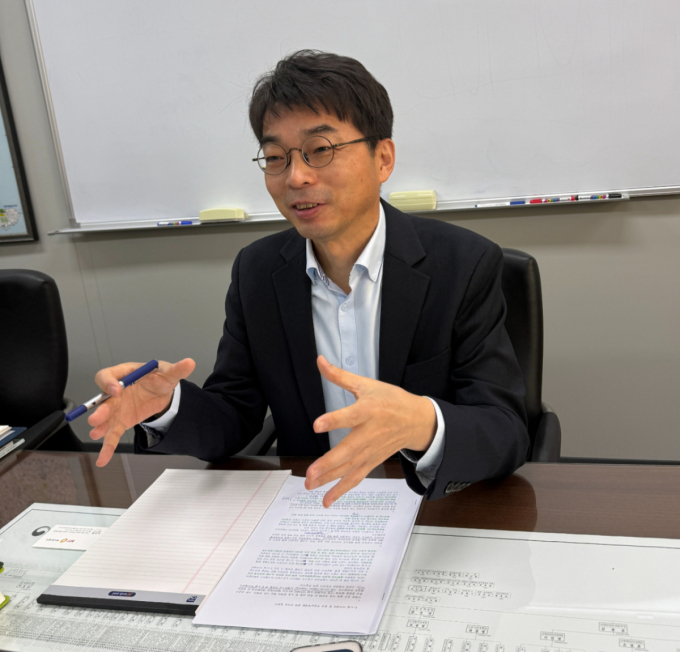
Amid rapid artificial intelligence (AI) and digital transformation, a persistent "mismatch" has emerged between the practical skills that companies need and the entry of young people into the labor market. The government is swiftly pushing for a shift to "company-led" vocational training, where enterprises directly design and operate curricula, moving away from the traditional institutional investor-centered training model.
The Minister of Employment and Labor, Pyeon Do-in, head of the Vocational Policy Bureau, held an interview with Money Today on the 15th at the Sejong Government Complex, explaining the achievements and future roadmap of the current administration's youth vocational skills development policy, centered on 'K-New Deal Academy' and 'K-Digital Training (KDT)'.
Editor-in-Chief Pyun pointed to the rapid changes in industrial sites as the background for shifting the paradigm of vocational training to a "company-led" model. He stated, "Rapid technological innovation and restructuring of industrial structures, including AI and digital transformation, are intensifying mismatches in the labor market." He added, "There were limitations in that existing curricula centered on institutional investors could not quickly reflect the actual demands of industrial sites."
He added, "If KDT aims to cultivate mid-to-senior level on-site practitioners in the field of new technologies, then the K-New Deal Academy is a 'stepping-stone project' led by large corporations and others to support young people in regaining confidence, enhancing their capabilities, and leading them toward employment." He further elaborated that "unlike KDT, which focuses on job training in technology fields such as AI, the New Deal Academy can broadly provide not only job training in youth-preferred sectors like culture and finance but also various soft skills programs necessary for organizational and social adaptation."
This year, the K-Neural Academy officially launched with 53 companies and 72 academies. According to the Ministry of Employment and Labor, during the initial corporate recruitment phase, 107 companies applied for a total of 17,000 participants, demonstrating extremely strong demand from the corporate sector.
Division Chief Pyun said, "As of now, the average recruitment rate for youth in the established academies is approximately 2.8 to 1, and in particular, competition rates at academies in the Seoul metropolitan area exceed 10 to 1 in some places, indicating a positive response from young people." He added, "I visited the operational sites of Hyundai Motor's 'HINT' and Celltrion's 'Cell-In,' where current industry professionals participated as instructors. They provided guidance not only on practical technical skills but also on soft skills necessary for workplace life. Young people expressed very high expectations and satisfaction regarding the opportunity to utilize advanced corporate facilities and equipment."
Deputy Director Byun explained that there is a post-completion management system in place to ensure the program does not end with mere certification, addressing concerns about employment linkage after course completion. He stated, "The New Deal Academy manages training completion rates and participant satisfaction as its core performance indicators rather than focusing solely on hiring results." However, he added that the program will provide customized job search and entrepreneurship support services for three months after completion through the Operation Support Center. Furthermore, to eliminate gaps in employment, the center plans to link with the newly launched "Playground" project to offer continuous support throughout the job-seeking process.
He also proposed active regional balanced development measures to address concerns about the concentration of infrastructure in the capital region. Director Pyeon stated, "In the case of the New Deal Academy, we actively encouraged the opening of regional courses and implemented preferential measures for training fees and allowances by region. As a result, 87% of the selected academies are located outside the capital region." He added, "KDT is currently implementing differentiated support for training allowances by region, and starting next year, we plan to further increase training fee support for regional training institutions that face difficulties in securing instructors and facilities."
A supportive system for non-majors, youth who have given up on job hunting, and high school graduates is also being activated. Director Byun stated, "We are recommending that companies give priority to applicants who are youth who have given up on job hunting when they apply, and we are supporting non-major youth, who may find the KDT process somewhat difficult, by having them supplement their basics through 'K-Digital Basic Competency Training (KDC)' before entering the KDT program." He further announced plans to launch a new 'Youth Stepping Stone Project' in 2027 that will utilize polytechnic infrastructure nationwide for high school graduates and youth not pursuing higher education who wish to enter technical fields, providing one-stop support from initial counseling through experience, training, and employment.
He added that the K-New Deal Academy program will be significantly expanded from 8,200 participants (98.8 billion won) in 2026 to an estimated 50,000 participants and 489.5 billion won in 2027, reflecting strong on-site demand from companies and positive youth response. He also noted that alongside the quantitative expansion, strict quality management focused on results will be implemented, including the introduction of the "Employment Rate Drop-Off System (KDT)."
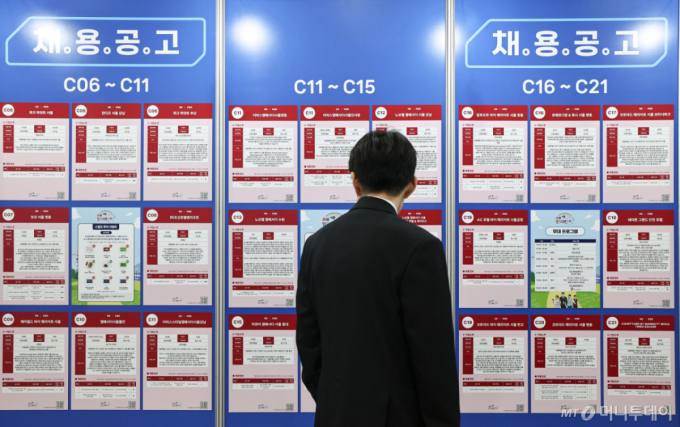
Although the number of young people who are "resting" is declining, the youth employment rate is actually falling. This means that even when young people who had not previously entered the labor market begin seeking jobs again, it remains difficult for them to secure actual employment. Barriers continue to block young people from entering the labor market, compounded by a lack of experience and skills, as well as mismatches between job seekers and companies.
According to the National Data Office on the 16th, the number of young people (aged 15–29) who were "not in the labor force" in August stood at 395,000, a decrease of 51,000 from the same month last year. This marks seven consecutive months since February of a decline compared to the same period the previous year. Meanwhile, the youth employment rate fell by 1.0 percentage points to 44.1% compared to the same month last year. Even as more young people attempt to re-enter the labor market, there remains a gap before they can secure actual employment.
At the heart of this issue lies "first-time work experience." Even if young people acquire necessary skills through vocational training, they struggle to demonstrate their capabilities during the hiring process without actual work experience. From a company's perspective, it is difficult to judge whether an applicant can perform actual job duties based solely on completion certificates or qualifications. While employment is needed to gain experience, the lack of experience makes finding a job difficult, creating a vicious cycle of "lack of experience → difficulty in employment → employment gap." The core problem is that, despite the increasing number of young people receiving training, there is no clear pathway for their training experiences to be recognized in hiring practices.
The mismatch between job seekers and companies follows the same logic. Companies seek talent they can deploy immediately, while young people lack opportunities to gain relevant experience. Compounding this issue is the wage and working condition gap between large corporations and SMEs (small and medium-sized enterprises), widening the divide between the jobs young people want and the talent companies need.
This gap becomes even more pronounced in the field of new technologies. While the number of young people learning new technologies such as AI is increasing rapidly, personnel with actual work experience applying these technologies remain scarce. Ultimately, what young people need is not merely completing training courses but gaining real job experience that allows them to demonstrate their capabilities in the hiring market.
In this context, vocational training is shifting from being confined to the education sector toward connecting directly with companies and job opportunities. Representative examples include K-Need Academy programs, where companies participate in curriculum design to teach job competencies required on the industrial front lines, and K-Digital Training (KDT), which focuses on building practical digital and AI skills through project-based, on-site training. The focus is moving from a model where educational institutions predicted industry demand and trained personnel accordingly to one where companies directly specify needed roles and cultivate talent.
However, even after completing training, young people face the barrier of having no prior work experience if they fail to secure employment. This is the background behind the Ministry of Employment and Labor's plan to launch a pilot program next year called "Youth AI First Job Experience Support." The program will provide salary support for up to two years, allowing young people who have completed AI vocational training but failed to find jobs to participate in companies' AI transformation (AX) projects. This aims to reduce the burden on companies and enable participants to gain actual work experience and build their first professional track record. The scope of support has been expanded to cover gaps in employment history following training.

 in ECONOMY


